Gazdhar Amiq, Blank Fabian, Cesson Valerie, Lovis Alban, Aubert John David, Lazor Romain, Spertini Francois, Wilson Anne, Hostettler Katrin, Nicod Laurent P, Obregon Carolina
Department of Pulmonary Medicine, University Hospital Bern, Bern, Switzerland.
Department of Clinical Research, University of Bern, Bern, Switzerland.
Front Immunol. 2017 Apr 25;8:447. doi: 10.3389/fimmu.2017.00447. eCollection 2017.
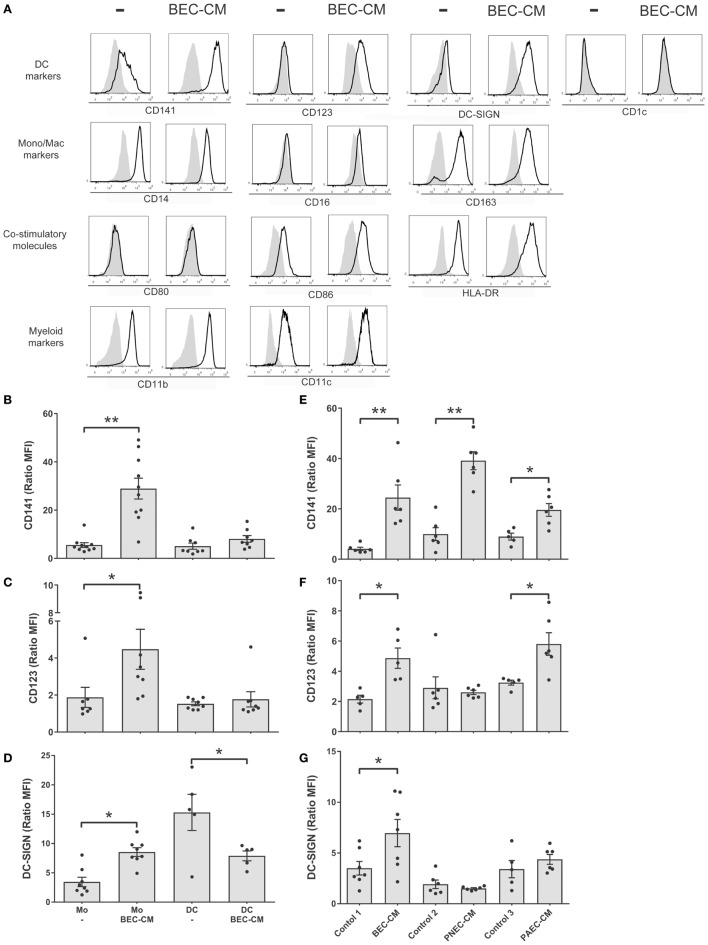
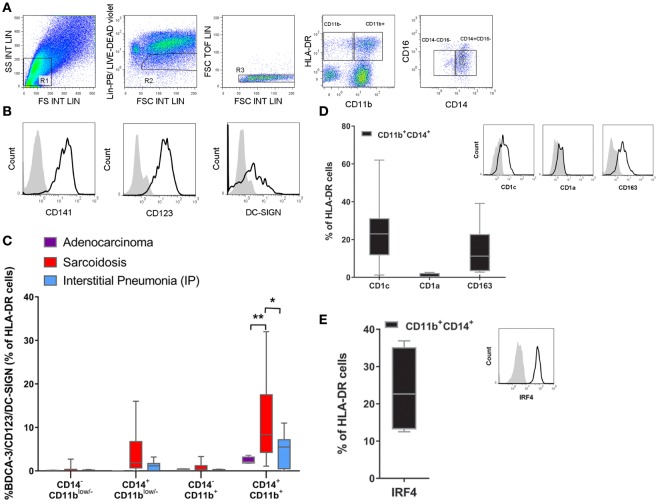
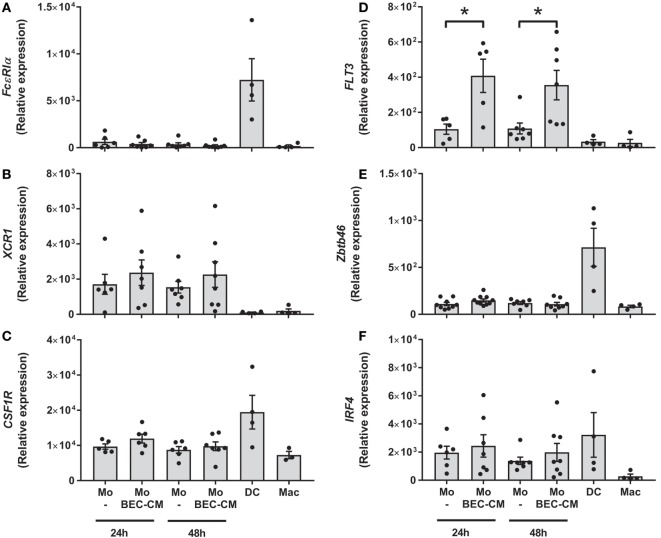
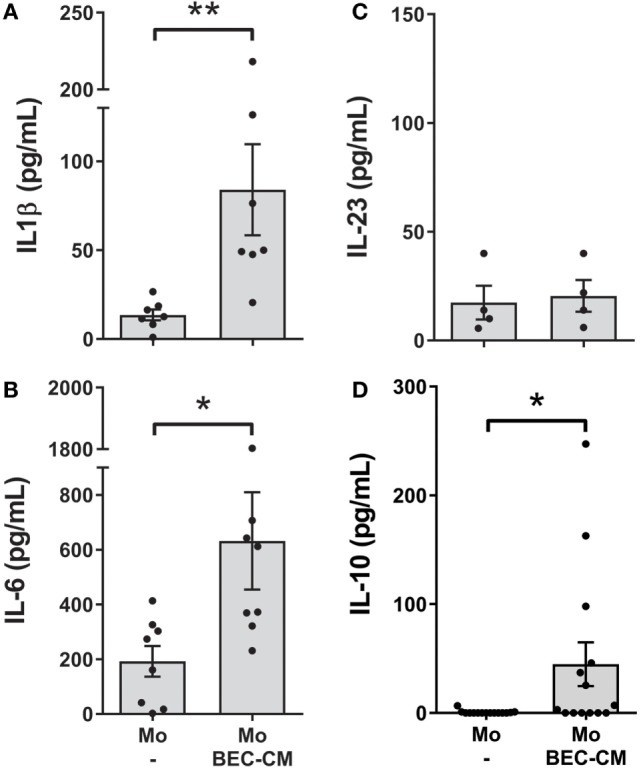
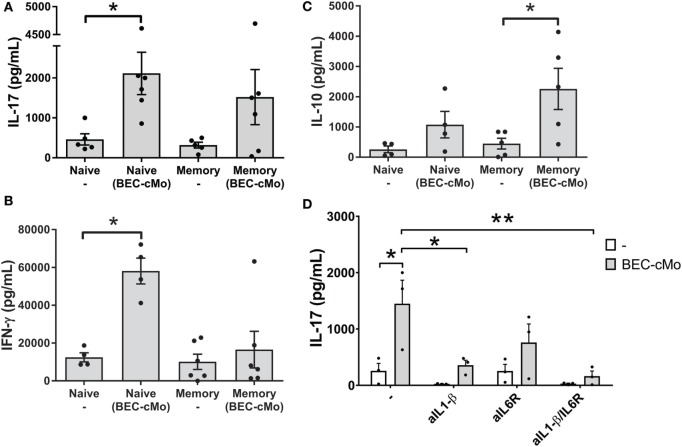
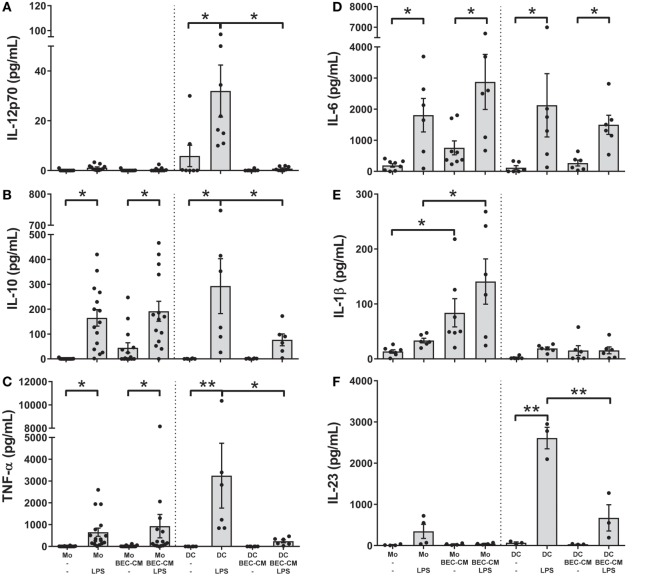
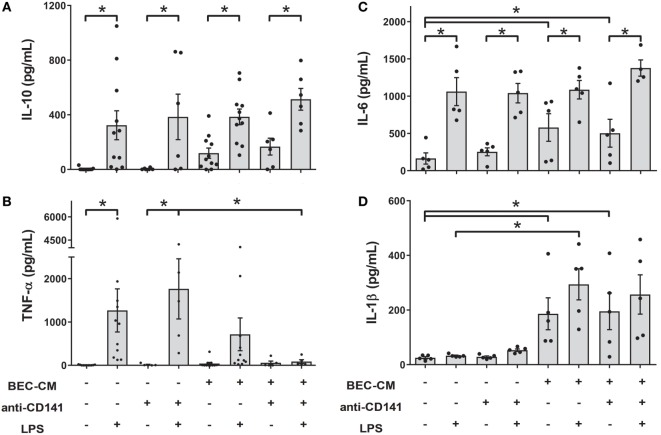
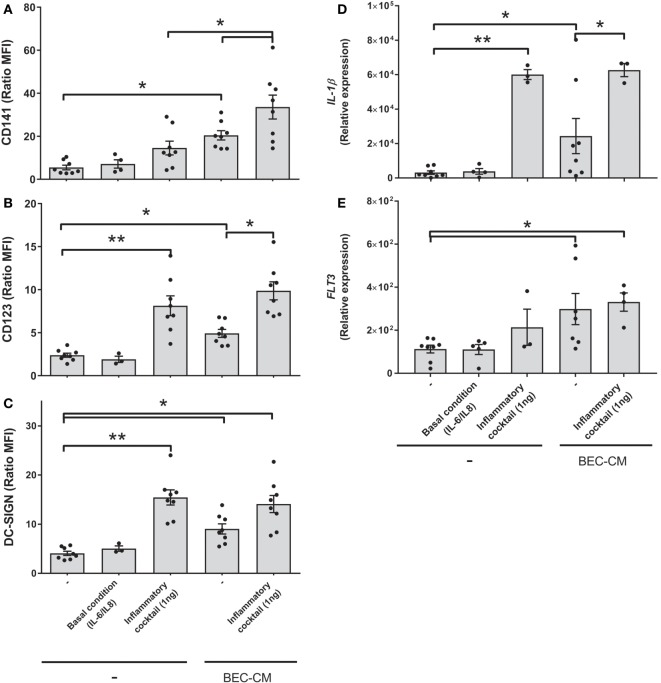
Little is known about monocyte differentiation in the lung mucosal environment and about how the epithelium shapes monocyte function. We studied the role of the soluble component of bronchial epithelial cells (BECs) obtained under basal culture conditions in innate and adaptive monocyte responses. Monocytes cultured in bronchial epithelial cell-conditioned media (BEC-CM) specifically upregulate CD141, CD123, and DC-SIGN surface levels and expression, as well as the release of IL-1β, IL-6, and IL-10. BEC-conditioned monocytes stimulate naive T cells to produce IL-17 through IL-1β mechanism and also trigger IL-10 production by memory T cells. Furthermore, monocytes cultured in an inflammatory environment induced by the cytokines IL-6, IL-8, IL-1β, IL-15, TNF-α, and GM-CSF also upregulate CD123 and DC-SIGN expression. However, only inflammatory cytokines in the epithelial environment boost the expression of CD141. Interestingly, we identified a CD141/CD123/DC-SIGN triple positive population in the bronchoalveolar lavage fluid (BALF) from patients with different inflammatory conditions, demonstrating that this monocyte population exists . The frequency of this monocyte population was significantly increased in patients with sarcoidosis, suggesting a role in inflammatory mechanisms. Overall, these data highlight the specific role that the epithelium plays in shaping monocyte responses. Therefore, the unraveling of these mechanisms contributes to the understanding of the function that the epithelium may play .
关于肺黏膜环境中的单核细胞分化以及上皮细胞如何塑造单核细胞功能,我们知之甚少。我们研究了在基础培养条件下获得的支气管上皮细胞(BECs)的可溶性成分在先天性和适应性单核细胞反应中的作用。在支气管上皮细胞条件培养基(BEC-CM)中培养的单核细胞特异性地上调CD141、CD123和DC-SIGN的表面水平及表达,以及IL-1β、IL-6和IL-10的释放。BEC条件化的单核细胞通过IL-1β机制刺激幼稚T细胞产生IL-17,还触发记忆T细胞产生IL-10。此外,在由细胞因子IL-6、IL-8、IL-1β、IL-15、TNF-α和GM-CSF诱导的炎症环境中培养的单核细胞也上调CD123和DC-SIGN的表达。然而,只有上皮环境中的炎症细胞因子能促进CD141的表达。有趣的是,我们在患有不同炎症疾病患者的支气管肺泡灌洗液(BALF)中鉴定出了一个CD141/CD123/DC-SIGN三阳性群体,证明了这种单核细胞群体的存在。在结节病患者中,这种单核细胞群体的频率显著增加,表明其在炎症机制中发挥作用。总体而言,这些数据突出了上皮细胞在塑造单核细胞反应中所起的特定作用。因此,揭示这些机制有助于理解上皮细胞可能发挥的功能。