
一名患有 PRES 的角蝰咬伤受害者。
A Horned Viper Bite Victim with PRES.
作者信息
Ibrahim Ahmed Mustafa, ElSefi Tarek Talaat, Ghanem Maha, Fayed Akram Muhammad, Shaban Nesreen Adel
机构信息
Faculty of Medicine, Alexandria University, Alexandria, Egypt.
出版信息
Case Rep Neurol Med. 2017;2017:1835796. doi: 10.1155/2017/1835796. Epub 2017 Apr 10.
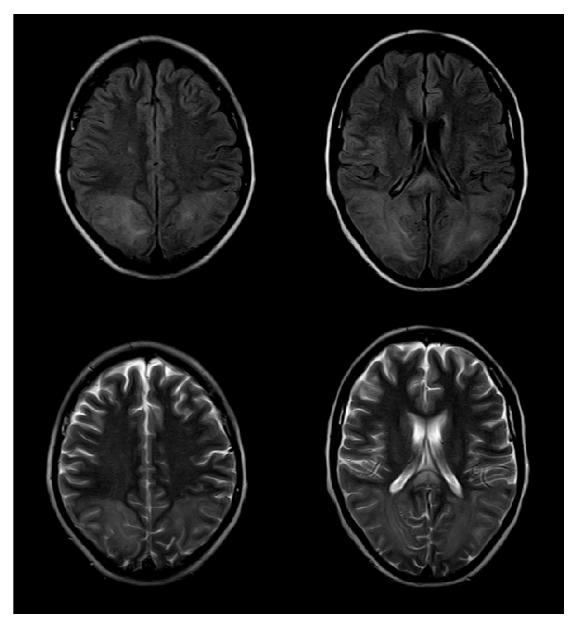
Neurological complications of snake bites have been well documented in the literature as neuromuscular paralysis and cerebrovascular complications; posterior reversible encephalopathy syndrome was rarely described. A 23-year-old lady presented near full term of her pregnancy with a horned snake bite; after successful delivery she started complaining of altered mental status and visual disturbance with ulceration over the site of the snake bite. On admission, the patient had Glasgow Coma Score of 12, blood pressure 130/80 mmHg, temperature 38°C, sinus tachycardia at 120 beats per minute, severe dehydration, and reduction in visual acuity to "hand motion" in both eyes with poor light projection and sluggish pupillary reactions. CT brain was not conclusive; MRI revealed features of PRES. Treatment was mostly supportive within one week; the patient regained consciousness; visual disturbance, however, persisted. This patient as well as the few previously described cases highlights PRES as a possible complication of snake bites.
蛇咬伤的神经系统并发症在文献中已有充分记载,如神经肌肉麻痹和脑血管并发症;而后可逆性脑病综合征很少被描述。一名23岁的女性在妊娠近足月时被角蝰蛇咬伤;成功分娩后,她开始抱怨精神状态改变、视觉障碍以及蛇咬伤部位出现溃疡。入院时,患者格拉斯哥昏迷评分为12分,血压130/80 mmHg,体温38°C,窦性心动过速,每分钟120次,严重脱水,双眼视力降至“手动”,光投射差,瞳孔反应迟钝。脑部CT检查结果不明确;MRI显示为PRES的特征。治疗主要在一周内进行支持性治疗;患者恢复了意识;然而,视觉障碍仍然存在。该患者以及少数先前描述的病例凸显了PRES作为蛇咬伤可能并发症的情况。

 Zotero 插件