Zhang Ruolan
Department of Cardiology, Harrison International Peace Hospital, Hengshui, Hebei 053000, P.R. China.
Int J Mol Med. 2017 Jun;39(6):1421-1427. doi: 10.3892/ijmm.2017.2977. Epub 2017 May 5.
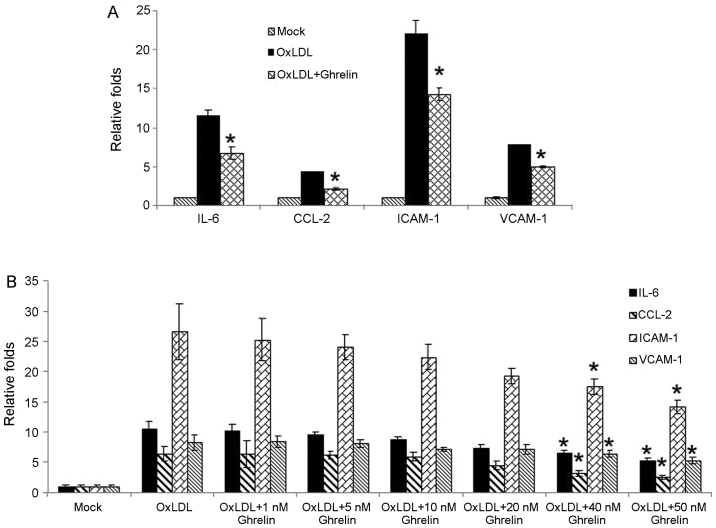
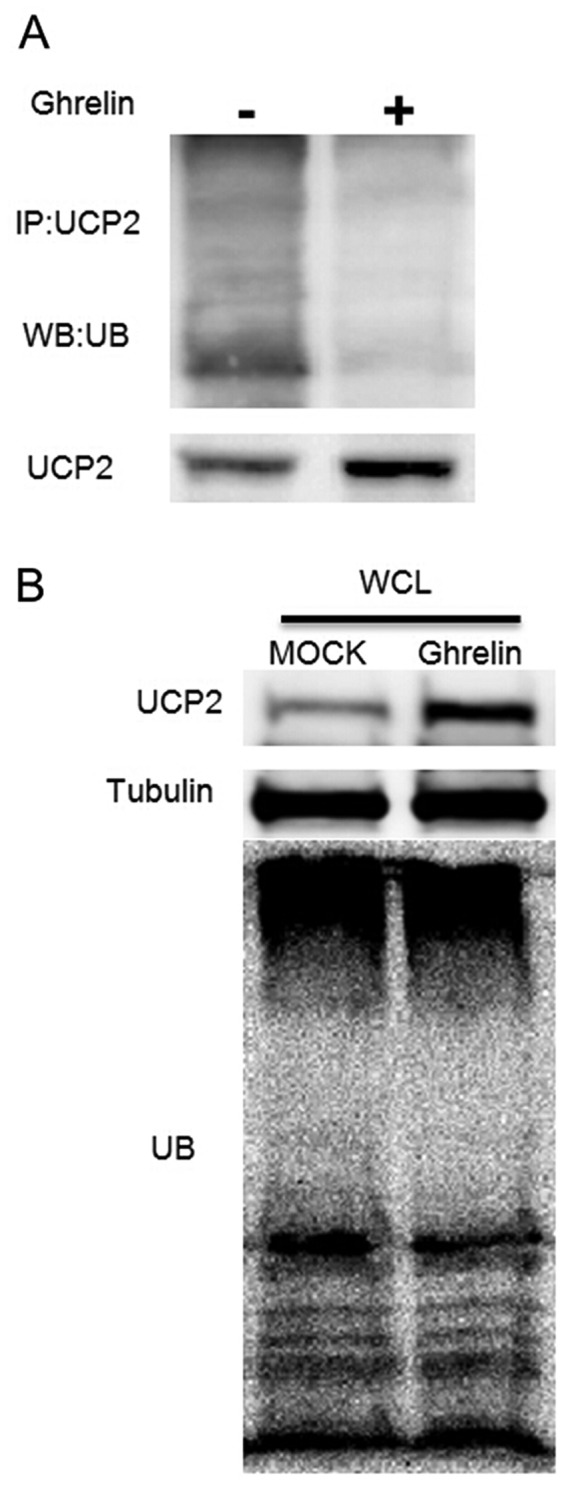
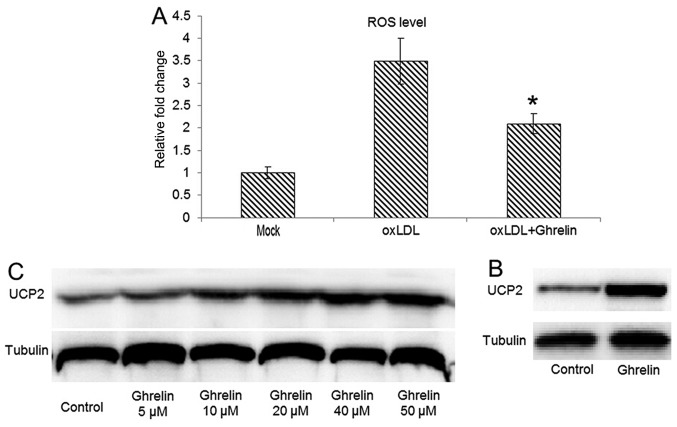
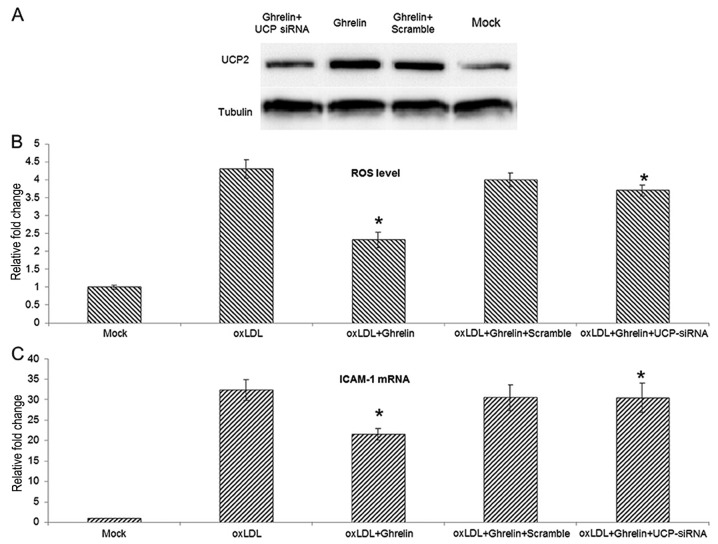
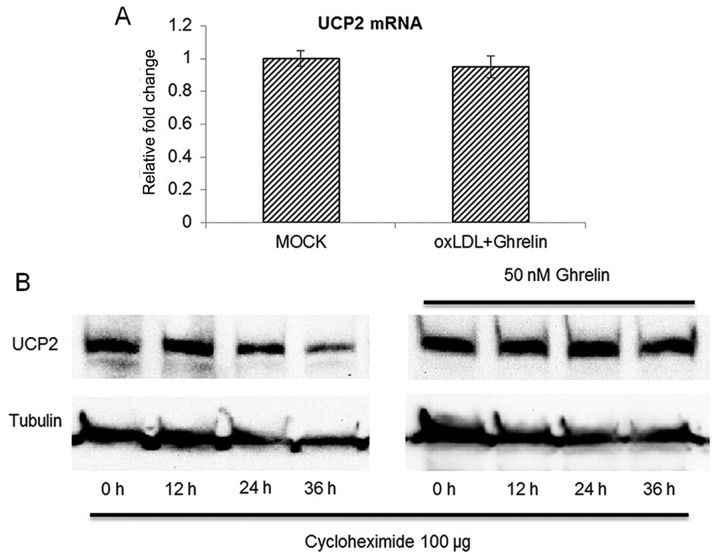
Atherosclerosis is considered the major cause of heart attack, stroke and gangrene of the extremities, which is responsible for 50% of all mortality in Western countries. The pathogenesis and causes of atherosclerosis remain elusive. Recent studies highlight inflammation as a contributing factor for atherosclerosis in all stages of the disease process. In this study, we demonstrate that the treatment of human umbilical vein endothelial cells (HUVECs) with ghrelin inhibits the oxidized low-density lipoprotein (oxLDL)-induced inflammatory response, In addition, treatment with ghrelin led to the accumulation of uncoupling protein 2 (UCP2) in the cells, thus decreasing reactive oxygen species (ROS) generation. Moreover, the siRNA-mediated knockdown of UCP2 expression suggested that the inhibitory effects of ghrelin on the inflammatory response relied on its ability to induce the accumulation of cellular UCP2 levels. Further analysis indicated that the accumulation of UCP2 in the ghrelin-treated cells was due to the ability of ghrelin to inhibit the ubiquitination of UCP2 and prevent UCP2 degradation, resulting in the extended protein half-life of UCP2. On the whole, our data indicate that ghrelin inhibits the oxLDL-induced inflammatory response in HUVECs, and may thus have potential for use as an anti-atherosclerotic agent. Our data may also provide valuable insight into the pathogenesis of atherosclerosis.
动脉粥样硬化被认为是心脏病发作、中风和肢体坏疽的主要原因,在西方国家,它导致了50%的死亡率。动脉粥样硬化的发病机制和病因仍不明确。最近的研究强调炎症是动脉粥样硬化疾病过程各个阶段的一个促成因素。在本研究中,我们证明用胃饥饿素处理人脐静脉内皮细胞(HUVECs)可抑制氧化型低密度脂蛋白(oxLDL)诱导的炎症反应。此外,用胃饥饿素处理导致细胞中解偶联蛋白2(UCP2)的积累,从而减少活性氧(ROS)的产生。此外,siRNA介导的UCP2表达敲低表明,胃饥饿素对炎症反应的抑制作用依赖于其诱导细胞UCP2水平积累的能力。进一步分析表明,胃饥饿素处理的细胞中UCP2的积累是由于胃饥饿素抑制UCP2泛素化并防止UCP2降解的能力,导致UCP2的蛋白质半衰期延长。总体而言,我们的数据表明胃饥饿素抑制HUVECs中oxLDL诱导的炎症反应,因此可能有作为抗动脉粥样硬化药物的潜力。我们的数据也可能为动脉粥样硬化的发病机制提供有价值的见解。