Ding Jiwei, Zhao Jianyuan, Yang Zhijun, Ma Ling, Mi Zeyun, Wu Yanbing, Guo Jiamei, Zhou Jinmin, Li Xiaoyu, Guo Ying, Peng Zonggen, Wei Tao, Yu Haisheng, Zhang Liguo, Ge Mei, Cen Shan
Institute of Medicinal Biotechnology, Chinese Academy of Medical Sciences and Peking Union Medical School, Beijing 100050, China.
School of Pharmacy, Shanghai Jiaotong University, Shanghai 200040, China.
Viruses. 2017 May 10;9(5):105. doi: 10.3390/v9050105.
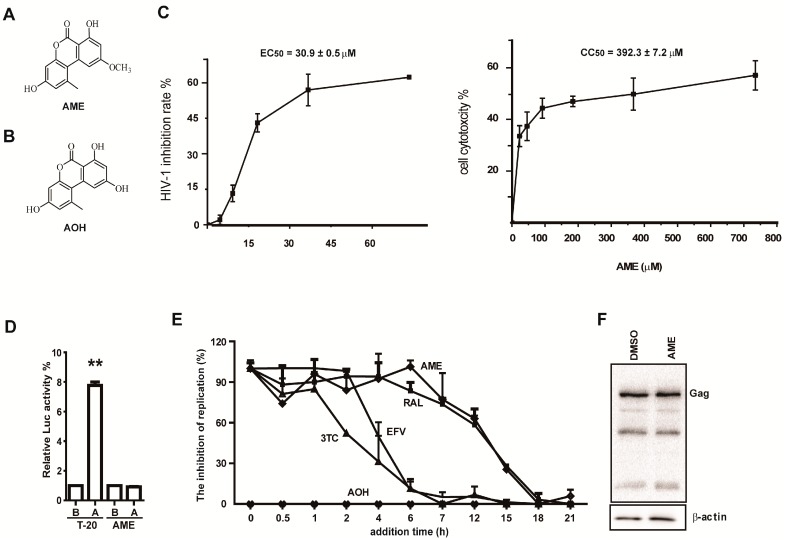
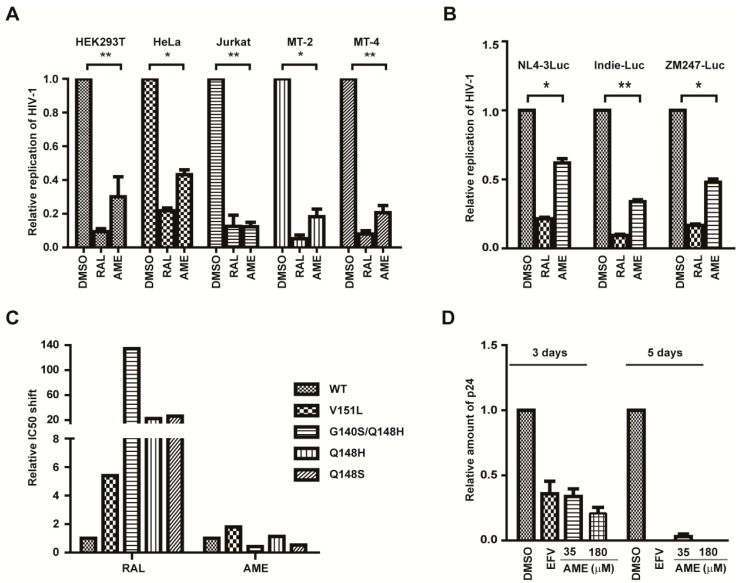
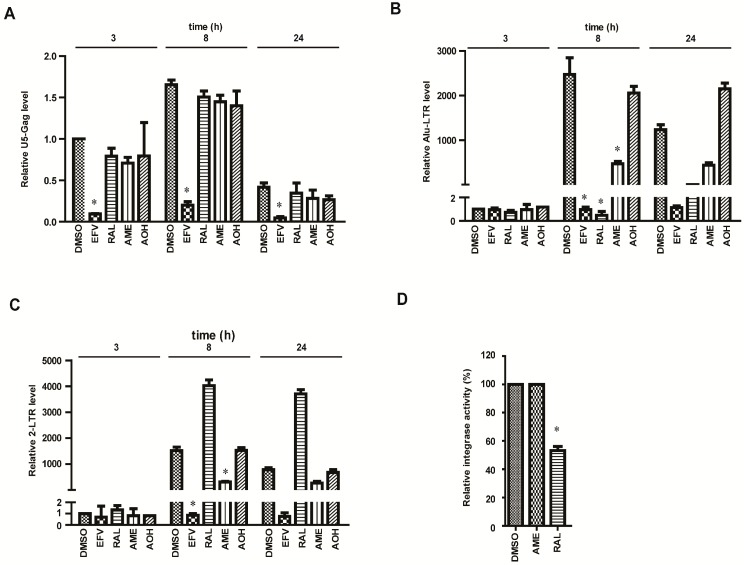
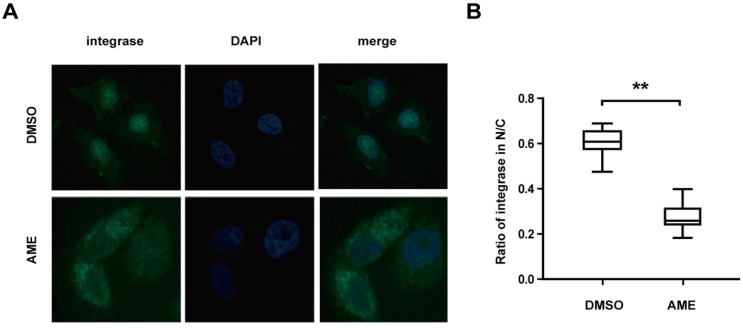
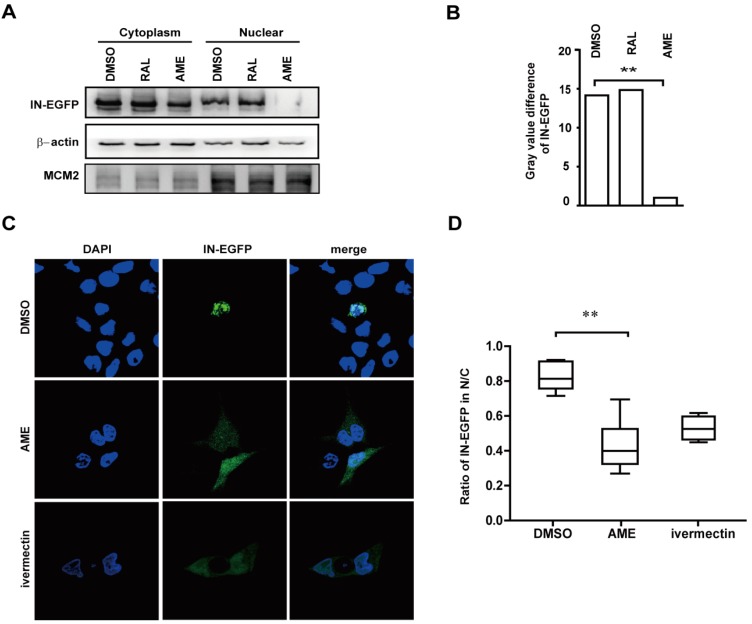
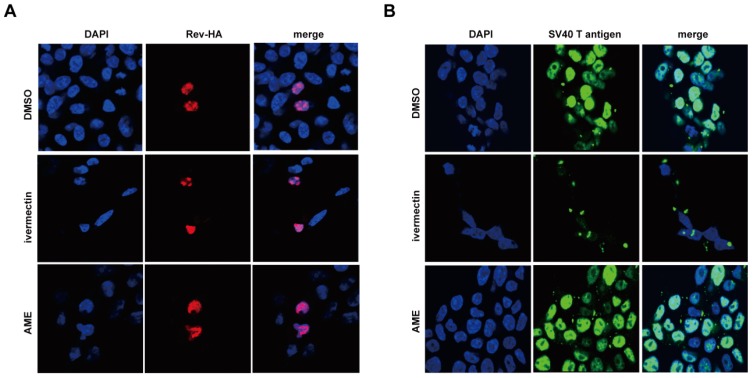
While Highly Active Antiretroviral Therapy (HAART) has significantly decreased the mortality of human immunodeficiency virus (HIV)-infected patients, emerging drug resistance to approved HIV-1 integrase inhibitors highlights the need to develop new antivirals with novel mechanisms of action. In this study, we screened a library of microbial natural compounds from endophytic fungus sp. and identified alternariol 5--methyl ether (AME) as a compound that inhibits HIV-1 pre-integration steps. Time-of addition analysis, quantitative real-time PCR, confocal microscopy, and WT viral replication assay were used to elucidate the mechanism. As opposed to the approved integrase inhibitor Raltegravir, AME reduced both the integrated viral DNA and the 2-long terminal repeat (2-LTR) circular DNA, which suggests that AME impairs the nuclear import of viral DNA. Further confocal microscopy studies showed that AME specifically blocks the nuclear import of HIV-1 integrase and pre-integration complex without any adverse effects on the importin α/β and importin β-mediated nuclear import pathway in general. Importantly, AME inhibited Raltegravir-resistant HIV-1 strains and exhibited a broad anti-HIV-1 activity in diverse cell lines. These data collectively demonstrate the potential of AME for further development into a new HIV inhibitor, and suggest the utility of viral DNA nuclear import as a target for anti-HIV drug discovery.
虽然高效抗逆转录病毒疗法(HAART)显著降低了人类免疫缺陷病毒(HIV)感染患者的死亡率,但对已批准的HIV-1整合酶抑制剂出现的耐药性凸显了开发具有新作用机制的新型抗病毒药物的必要性。在本研究中,我们筛选了来自内生真菌sp.的微生物天然化合物文库,并鉴定出5-甲基间苯三酚(AME)为一种抑制HIV-1整合前步骤的化合物。采用添加时间分析、定量实时PCR、共聚焦显微镜和野生型病毒复制试验来阐明其机制。与已批准的整合酶抑制剂拉替拉韦不同,AME可减少整合的病毒DNA和2-长末端重复序列(2-LTR)环状DNA,这表明AME会损害病毒DNA的核输入。进一步的共聚焦显微镜研究表明,AME特异性地阻断HIV-整合酶和整合前复合物的核输入,而一般不会对输入蛋白α/β和输入蛋白β介导的核输入途径产生任何不利影响。重要的是,AME抑制了对拉替拉韦耐药的HIV-1毒株,并在多种细胞系中表现出广泛的抗HIV-1活性。这些数据共同证明了AME进一步开发成为新型HIV抑制剂的潜力,并表明病毒DNA核输入作为抗HIV药物发现靶点的实用性。