Wang Ning-Ping, Erskine James, Zhang Wei-Wei, Zheng Rong-Hua, Zhang Li-Hui, Duron Garret, Gendreau Julian, Zhao Zhi-Qing
1 Cardiovascular Research Laboratory, Mercer University School of Medicine, USA.
2 Department of Internal Medicine, Navicent Health, USA.
J Renin Angiotensin Aldosterone Syst. 2017 Apr-Jun;18(2):1470320317706653. doi: 10.1177/1470320317706653.
The purpose of this study was to determine whether macrophages migrated from the spleen are associated with angiotensin II-induced cardiac fibrosis and hypertension.
Sprague-Dawley rats were subjected to angiotensin II infusion in vehicle (500 ng/kg/min) for up to four weeks. In splenectomy, the spleen was removed before angiotensin II infusion. In the angiotensin II AT1 receptor blockade, telmisartan was administered by gastric gavage (10 mg/kg/day) during angiotensin II infusion. The heart and aorta were isolated for Western blot analysis and immunohistochemistry.
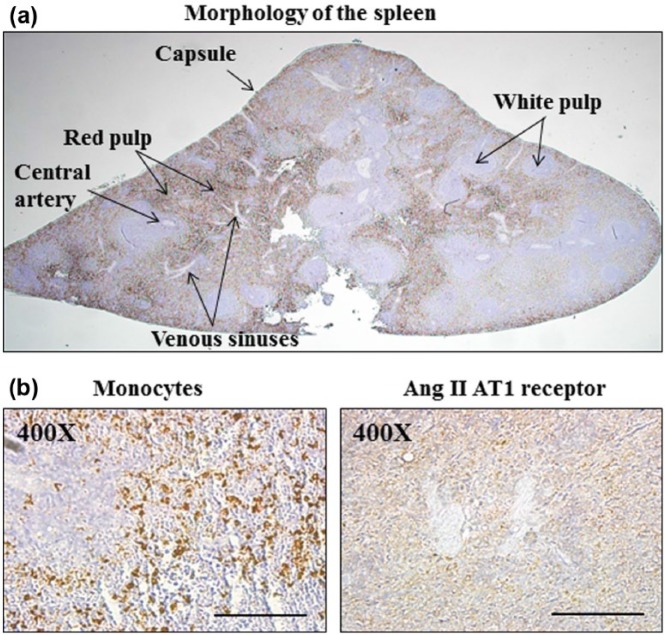
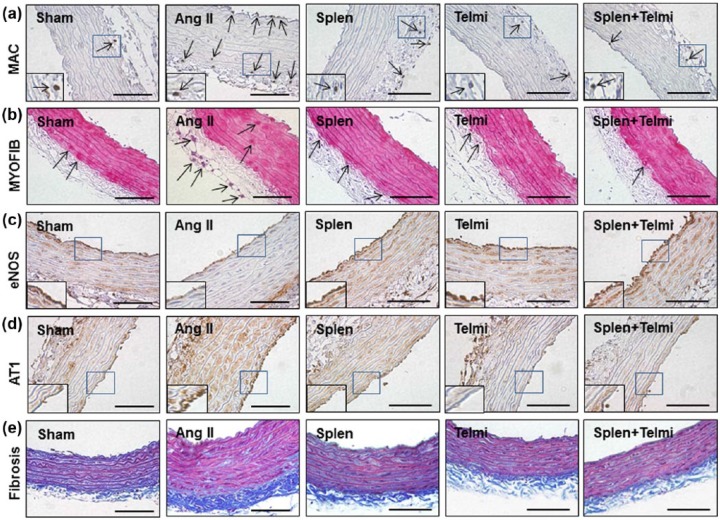
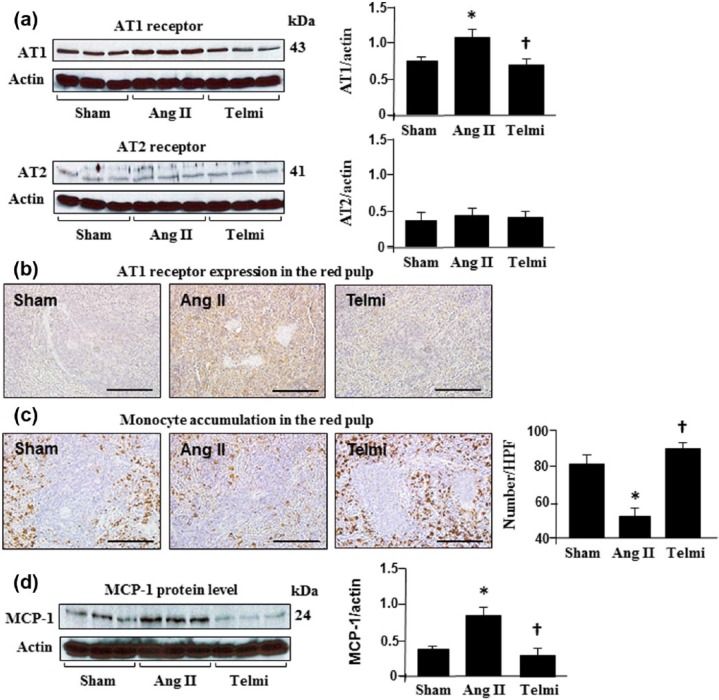
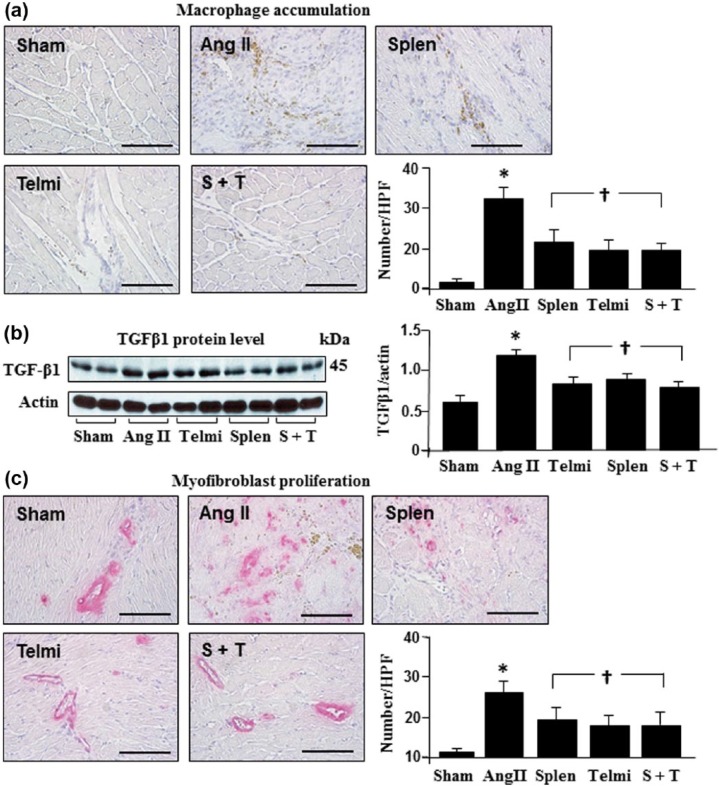
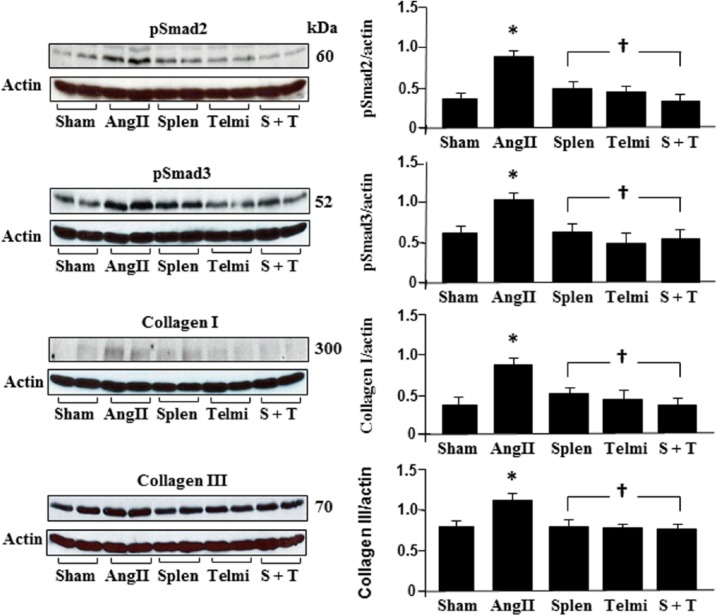
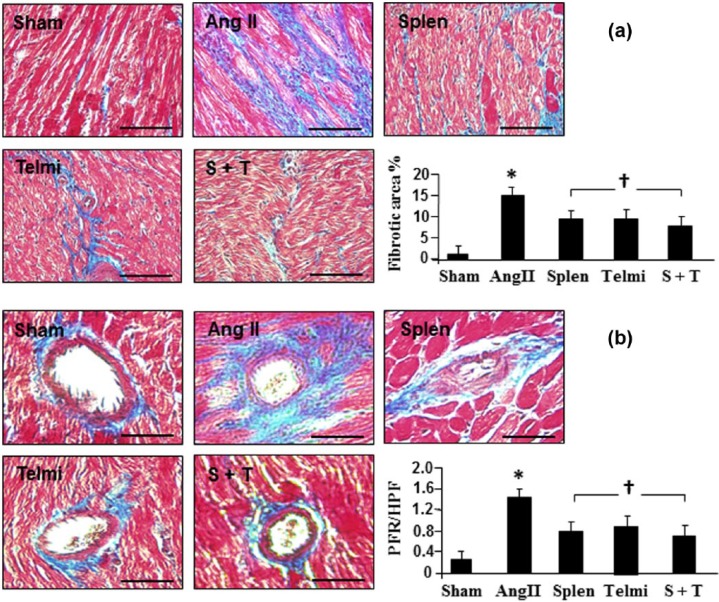
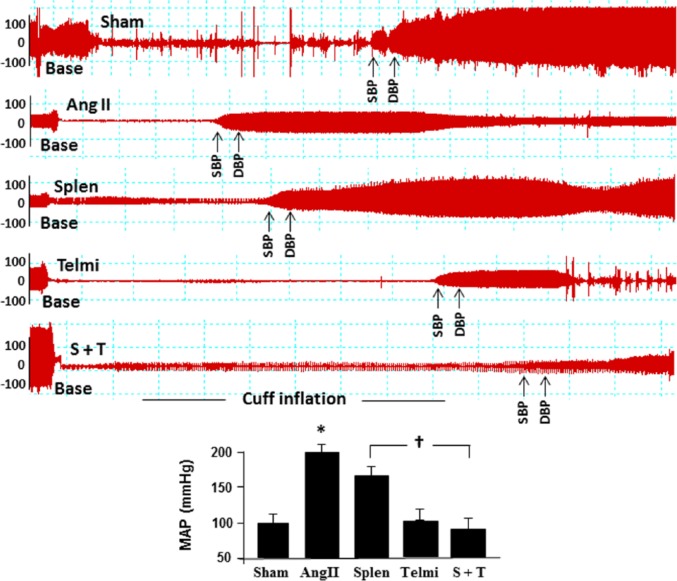
Angiotensin II infusion caused a significant reduction in the number of monocytes in the spleen through the AT1 receptor-activated monocyte chemoattractant protein-1. Comparison of angiotensin II infusion, splenectomy and telmisartan comparatively reduced the recruitment of macrophages into the heart. Associated with this change, transforming growth factor β1 expression and myofibroblast proliferation were inhibited, and Smad2/3 and collagen I/III were downregulated. Furthermore, interstitial/perivascular fibrosis was attenuated. These modifications occurred in coincidence with reduced blood pressure. At week 4, invasion of macrophages and myofibroblasts in the thoracic aorta was attenuated and expression of endothelial nitric oxide synthase was upregulated, along with a reduction in aortic fibrosis.
These results suggest that macrophages when recruited into the heart and aorta from the spleen potentially contribute to angiotensin II-induced cardiac fibrosis and hypertension.
本研究的目的是确定从脾脏迁移的巨噬细胞是否与血管紧张素II诱导的心脏纤维化和高血压有关。
将Sprague-Dawley大鼠用载体(500 ng/kg/分钟)输注血管紧张素II,持续长达四周。在脾切除术中,在输注血管紧张素II之前切除脾脏。在血管紧张素II AT1受体阻断中,在输注血管紧张素II期间通过灌胃给予替米沙坦(10 mg/kg/天)。分离心脏和主动脉用于蛋白质印迹分析和免疫组织化学。
血管紧张素II输注通过AT1受体激活的单核细胞趋化蛋白-1导致脾脏中单核细胞数量显著减少。血管紧张素II输注、脾切除术和替米沙坦的比较相对减少了巨噬细胞向心脏的募集。与此变化相关,转化生长因子β1表达和肌成纤维细胞增殖受到抑制,Smad2/3和胶原蛋白I/III下调。此外,间质/血管周围纤维化减轻。这些改变与血压降低同时发生。在第4周,胸主动脉中巨噬细胞和成纤维细胞的浸润减弱,内皮型一氧化氮合酶的表达上调,同时主动脉纤维化减少。
这些结果表明,从脾脏募集到心脏和主动脉中的巨噬细胞可能促成血管紧张素II诱导的心脏纤维化和高血压。