Shen Xiaoying, Bogers Willy M, Yates Nicole L, Ferrari Guido, Dey Antu K, Williams William T, Jaeger Frederick H, Wiehe Kevin, Sawant Sheetal, Alam S Munir, LaBranche Celia C, Montefiori David C, Martin Loic, Srivastava Indresh, Heeney Jonathan, Barnett Susan W, Tomaras Georgia D
Duke Human Vaccine Institute, Duke University Medical Center, Durham, North Carolina, USA
Biomedical Primate Research Centre, Rijswijk, The Netherlands.
J Virol. 2017 Sep 12;91(19). doi: 10.1128/JVI.00401-17. Print 2017 Oct 1.
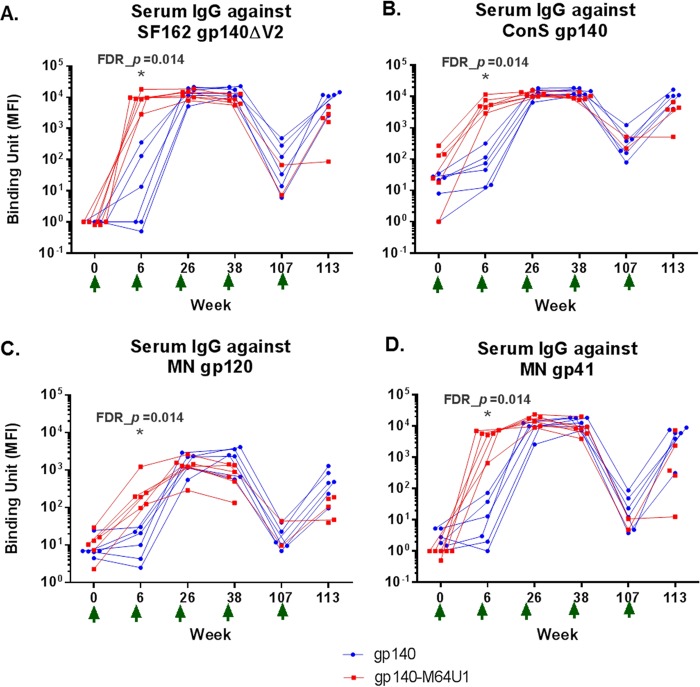
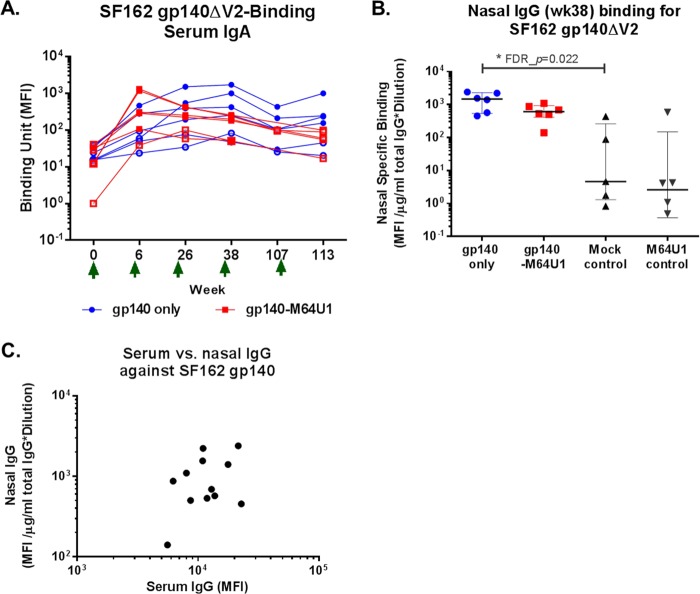
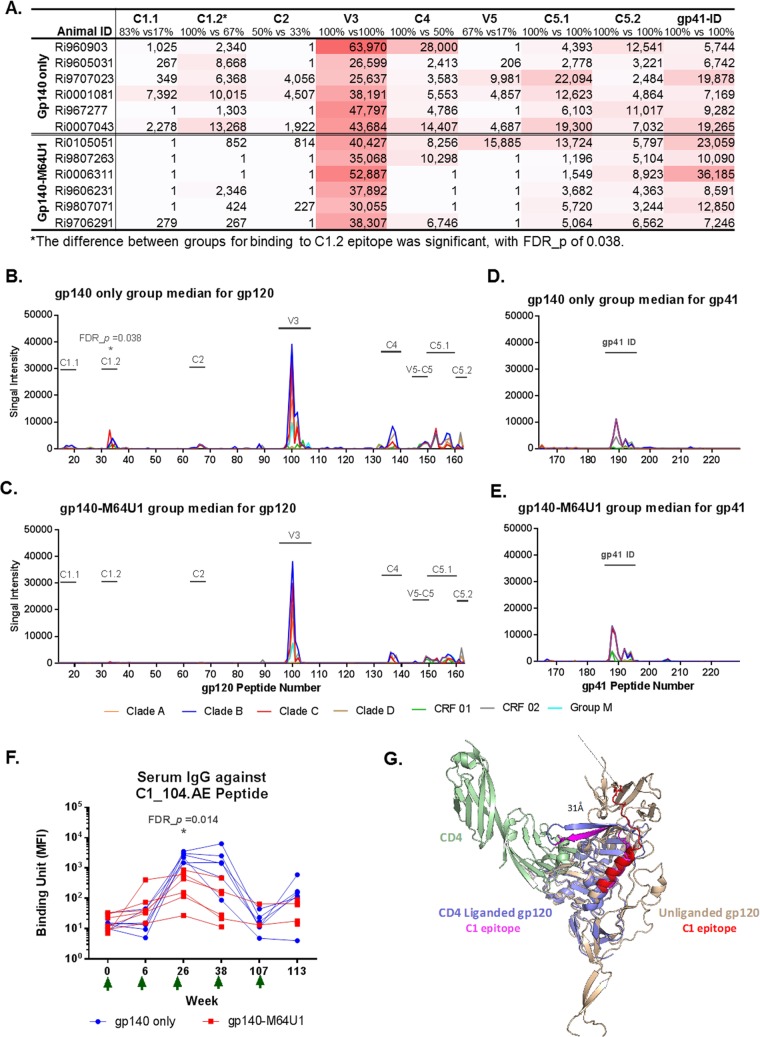
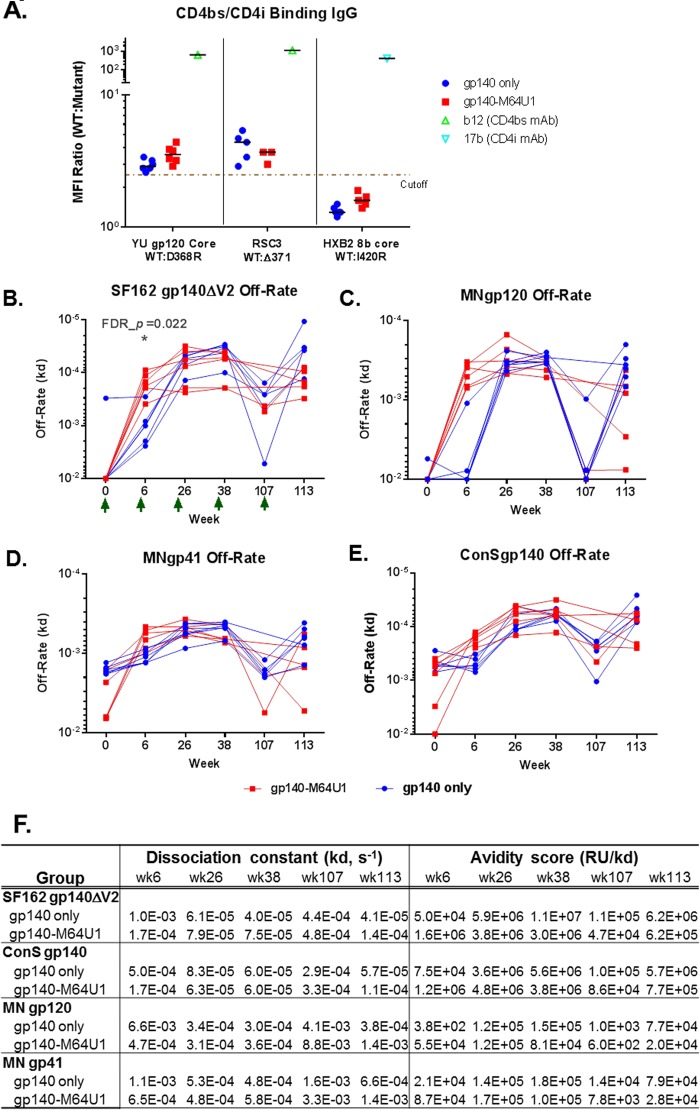
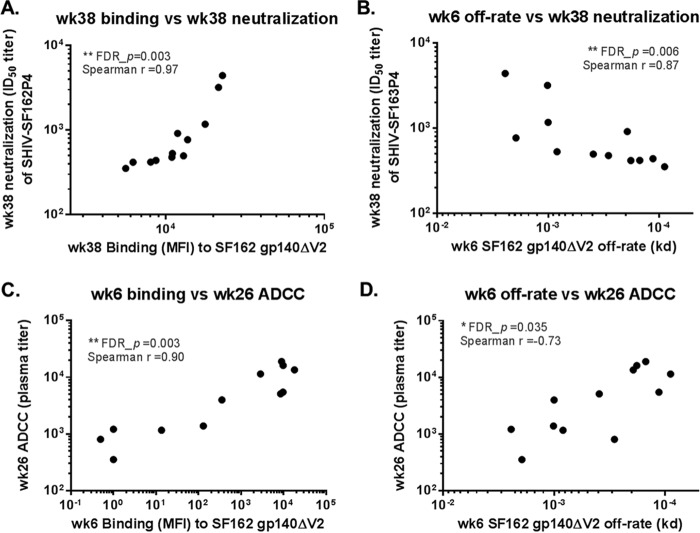
Evaluation of the epitope specificities, locations (systemic or mucosal), and effector functions of antibodies elicited by novel HIV-1 immunogens engineered to improve exposure of specific epitopes is critical for HIV-1 vaccine development. Utilizing an array of humoral assays, we evaluated the magnitudes, epitope specificities, avidities, and functions of systemic and mucosal immune responses elicited by a vaccine regimen containing Env cross-linked to a CD4-mimetic miniprotein (gp140-M64U1) in rhesus macaques. Cross-linking of gp140 Env to M64U1 resulted in earlier increases of both the magnitude and avidity of the IgG binding response than those with Env protein alone. Notably, IgG binding responses at an early time point correlated with antibody-dependent cellular cytotoxicity (ADCC) function at the peak immunity time point, which was higher for the cross-linked Env group than for the Env group. In addition, the cross-linked Env group developed higher IgG responses against a linear epitope in the gp120 C1 region of the HIV-1 envelope glycoprotein. These data demonstrate that structural modification of the HIV-1 envelope immunogen by cross-linking of gp140 with the CD4-mimetic M64U1 elicited an earlier increase of binding antibody responses and altered the specificity of the IgG responses, correlating with the rise of subsequent antibody-mediated antiviral functions. The development of an efficacious HIV-1 vaccine remains a global priority to prevent new cases of HIV-1 infection. Of the six HIV-1 efficacy trials to date, only one has demonstrated partial efficacy, and immune correlate analysis of that trial revealed a role for binding antibodies and antibody Fc-mediated effector functions. New HIV-1 envelope immunogens are being engineered to selectively expose the most vulnerable and conserved sites on the HIV-1 envelope, with the goal of eliciting antiviral antibodies. Evaluation of the humoral responses elicited by these novel immunogen designs in nonhuman primates is critical for understanding how to improve upon immunogen design to inform further testing in human clinical trials. Our results demonstrate that structural modifications of Env that aim to mimic the CD4-bound conformation can result in earlier antibody elicitation, altered epitope specificity, and increased antiviral function postimmunization.
评估经工程改造以改善特定表位暴露的新型HIV-1免疫原所引发抗体的表位特异性、位置(全身性或黏膜性)及效应功能,对HIV-1疫苗研发至关重要。利用一系列体液检测方法,我们评估了恒河猴中由包含与模拟CD4的小蛋白交联的Env(gp140-M64U1)的疫苗方案所引发的全身性和黏膜免疫反应的强度、表位特异性、亲和力及功能。将gp140 Env与M64U1交联导致IgG结合反应的强度和亲和力比单独使用Env蛋白时更早增加。值得注意的是,早期时间点的IgG结合反应与峰值免疫时间点的抗体依赖性细胞毒性(ADCC)功能相关,交联Env组的ADCC功能高于Env组。此外,交联Env组针对HIV-1包膜糖蛋白gp120 C1区域的线性表位产生了更高的IgG反应。这些数据表明,通过将gp140与模拟CD4的M64U1交联对HIV-1包膜免疫原进行结构修饰,可使结合抗体反应更早增加,并改变IgG反应的特异性,这与随后抗体介导的抗病毒功能的增强相关。开发有效的HIV-1疫苗仍然是预防新的HIV-1感染病例的全球优先事项。在迄今为止的六项HIV-1疗效试验中,只有一项显示出部分疗效,对该试验的免疫相关分析揭示了结合抗体和抗体Fc介导的效应功能的作用。正在设计新的HIV-1包膜免疫原以选择性暴露HIV-1包膜上最脆弱和保守的位点,目标是引发抗病毒抗体。评估这些新型免疫原设计在非人类灵长类动物中引发的体液反应,对于理解如何改进免疫原设计以指导人类临床试验的进一步测试至关重要。我们的结果表明,旨在模拟CD4结合构象的Env结构修饰可导致免疫后更早产生抗体、改变表位特异性并增强抗病毒功能。