Bogers Willy M J M, Barnett Susan W, Oostermeijer Herman, Nieuwenhuis Ivonne G, Beenhakker Niels, Mortier Daniella, Mooij Petra, Koopman Gerrit, Remarque Edmund, Martin Gregoire, Lai Rachel Pei-Jen, Dey Antu K, Sun Yide, Burke Brian, Ferrari Guido, Montefiori David, Martin Loic, Davis David, Srivastava Indresh, Heeney Jonathan L
Department of Virology, Biomedical Primate Research Centre (BPRC), Rijswijk, The Netherlands
Novartis Vaccines and Diagnostics Corporation, Emeryville, California, USA.
J Virol. 2017 Sep 12;91(19). doi: 10.1128/JVI.00811-17. Print 2017 Oct 1.
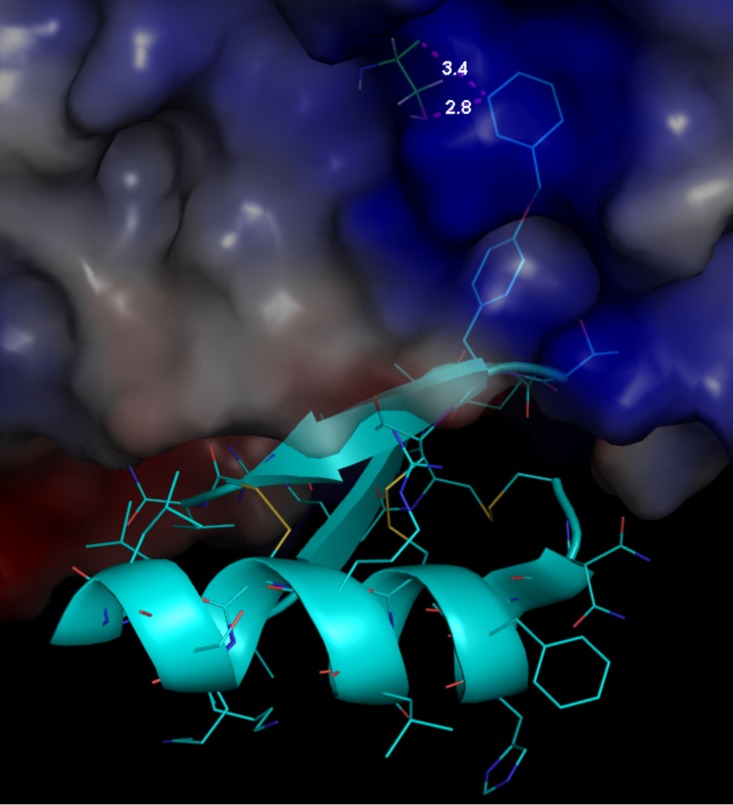
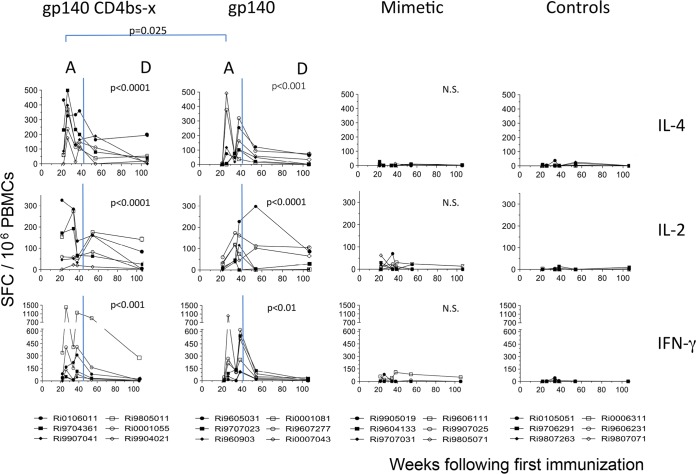
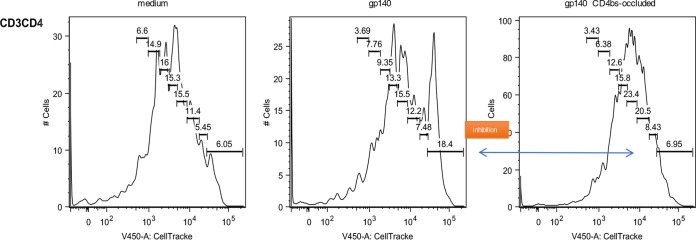
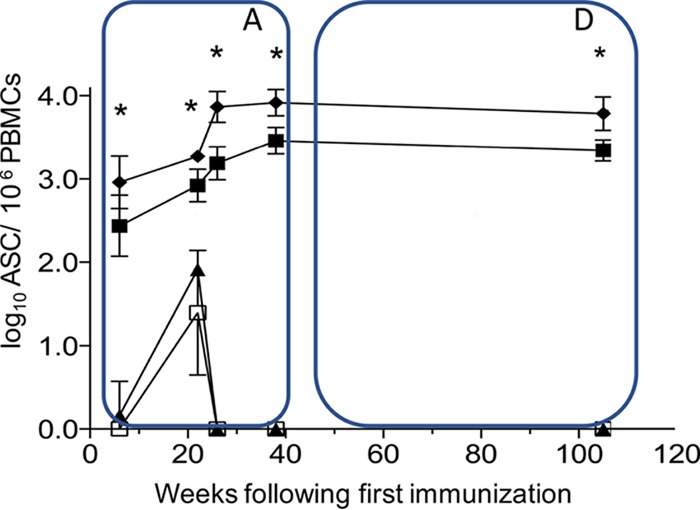
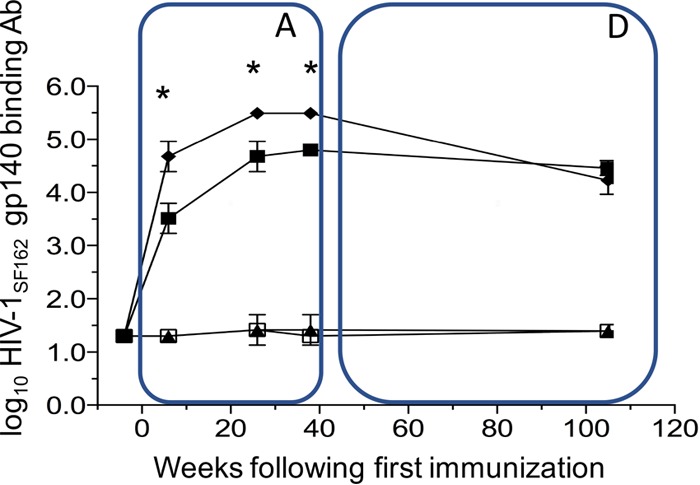
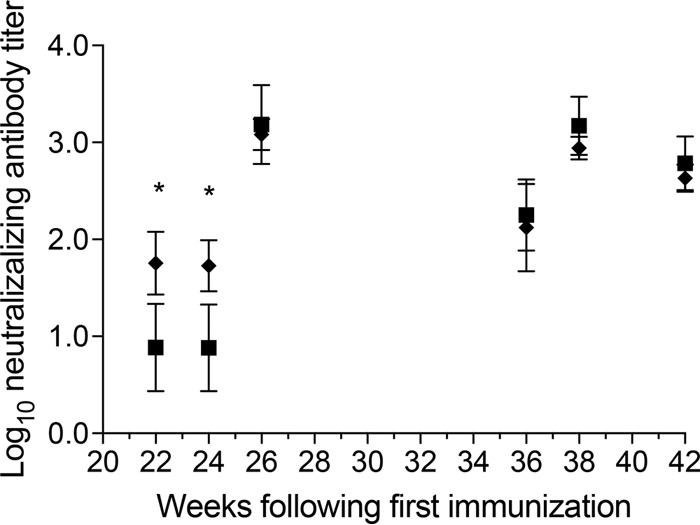
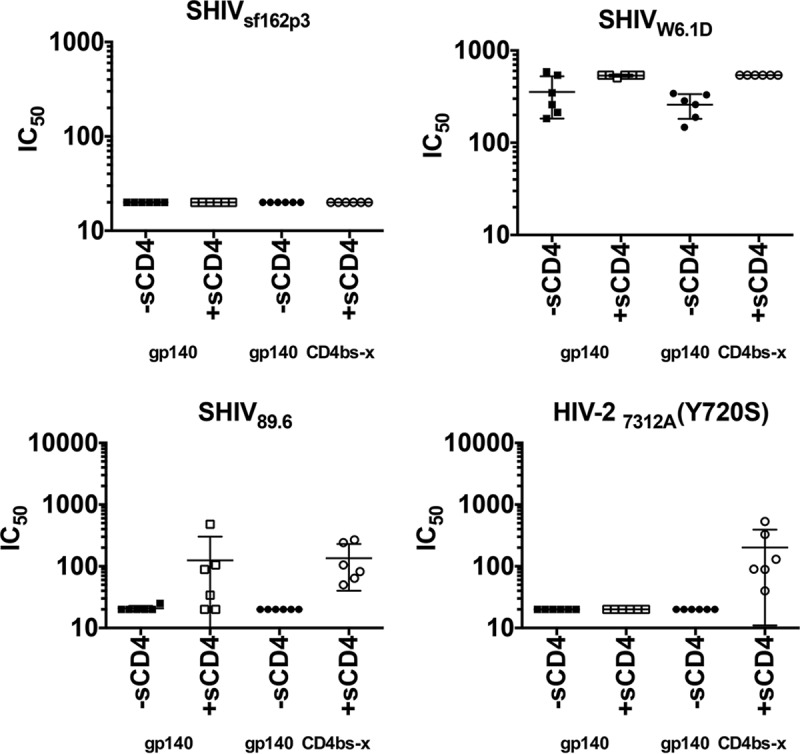
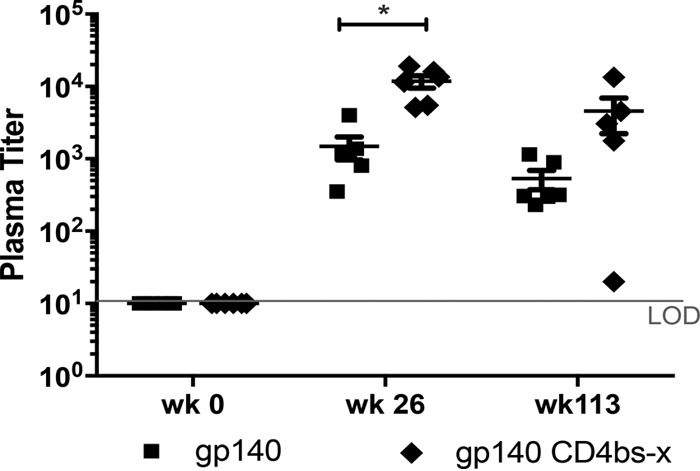
Strategies are needed to improve the immunogenicity of HIV-1 envelope (Env) antigens (Ag) for more long-lived, efficacious HIV-1 vaccine-induced B-cell responses. HIV-1 Env gp140 (native or uncleaved molecules) or gp120 monomeric proteins elicit relatively poor B-cell responses which are short-lived. We hypothesized that Env engagement of the CD4 receptor on T-helper cells results in anergic effects on T-cell recruitment and consequently a lack of strong, robust, and durable B-memory responses. To test this hypothesis, we occluded the CD4 binding site (CD4bs) of gp140 by stable cross-linking with a 3-kDa CD4 miniprotein mimetic, serving to block ligation of gp140 on CD4 T cells while preserving CD4-inducible (CDi) neutralizing epitopes targeted by antibody-dependent cellular cytotoxicity (ADCC) effector responses. Importantly, immunization of rhesus macaques consistently gave superior B-cell ( < 0.001) response kinetics and superior ADCC ( < 0.014) in a group receiving the CD4bs-occluded vaccine compared to those of animals immunized with gp140. Of the cytokines examined, Ag-specific interleukin-4 (IL-4) T-helper enzyme-linked immunosorbent spot (ELISpot) assays of the CD4bs-occluded group increased earlier ( = 0.025) during the inductive phase. Importantly, CD4bs-occluded gp140 antigen induced superior B-cell and ADCC responses, and the elevated B-cell responses proved to be remarkably durable, lasting more than 60 weeks postimmunization. Attempts to develop HIV vaccines capable of inducing potent and durable B-cell responses have been unsuccessful until now. Antigen-specific B-cell development and affinity maturation occurs in germinal centers in lymphoid follicles through a critical interaction between B cells and T follicular helper cells. The HIV envelope binds the CD4 receptor on T cells as soluble shed antigen or as antigen-antibody complexes, causing impairment in the activation of these specialized CD4-positive T cells. We proposed that CD4-binding impairment is partly responsible for the relatively poor B-cell responses to HIV envelope-based vaccines. To test this hypothesis, we blocked the CD4 binding site of the envelope antigen and compared it to currently used unblocked envelope protein. We found superior and durable B-cell responses in macaques vaccinated with an occluded CD4 binding site on the HIV envelope antigen, demonstrating a potentially important new direction in future design of new HIV vaccines.
需要采取策略来提高HIV-1包膜(Env)抗原的免疫原性,以诱导更持久、有效的HIV-1疫苗引发的B细胞反应。HIV-1 Env gp140(天然或未切割分子)或gp120单体蛋白引发的B细胞反应相对较差且持续时间短。我们假设Env与辅助性T细胞上的CD4受体结合会对T细胞募集产生无反应效应,从而导致缺乏强烈、有力且持久的B记忆反应。为了验证这一假设,我们通过与一种3 kDa的CD4微型蛋白模拟物进行稳定交联来封闭gp140的CD4结合位点(CD4bs),以阻断gp140与CD4 T细胞的结合,同时保留抗体依赖性细胞毒性(ADCC)效应反应所靶向的CD4诱导性(CDi)中和表位。重要的是,与用gp140免疫的动物相比,在接受CD4bs封闭疫苗的恒河猴组中,免疫接种始终产生了更优的B细胞(<0.001)反应动力学和更优的ADCC(<0.014)。在所检测的细胞因子中,CD4bs封闭组的抗原特异性白细胞介素-4(IL-4)辅助性T细胞酶联免疫斑点(ELISpot)检测在诱导期更早升高(=0.025)。重要的是,CD4bs封闭的gp140抗原诱导了更优的B细胞和ADCC反应,并且升高的B细胞反应被证明非常持久,在免疫接种后持续超过60周。直到现在,开发能够诱导有效且持久B细胞反应的HIV疫苗的尝试都未成功。抗原特异性B细胞的发育和亲和力成熟通过B细胞与滤泡辅助性T细胞之间的关键相互作用在淋巴滤泡的生发中心发生。HIV包膜以可溶性脱落抗原或抗原-抗体复合物的形式与T细胞上的CD4受体结合,导致这些特殊的CD4阳性T细胞的激活受损。我们提出,CD4结合受损部分导致了基于HIV包膜的疫苗引发的B细胞反应相对较差。为了验证这一假设,我们阻断了包膜抗原的CD4结合位点,并将其与目前使用的未阻断的包膜蛋白进行比较。我们发现,用HIV包膜抗原上封闭的CD4结合位点接种疫苗的猕猴产生了更优且持久的B细胞反应,这表明在未来新型HIV疫苗设计中这是一个潜在的重要新方向。