Tahrir Farzaneh G, Shanmughapriya Santhanam, Ahooyi Taha Mohseni, Knezevic Tijana, Gupta Manish K, Kontos Christopher D, McClung Joseph M, Madesh Muniswamy, Gordon Jennifer, Feldman Arthur M, Cheung Joseph Y, Khalili Kamel
Department of Neuroscience, Center for Neurovirology, Lewis Katz School of Medicine at Temple University, Philadelphia, Pennsylvania.
Department of Bioengineering, College of Engineering, Temple University, Philadelphia, Pennsylvania.
J Cell Physiol. 2018 Feb;233(2):748-758. doi: 10.1002/jcp.26002. Epub 2017 Jul 31.
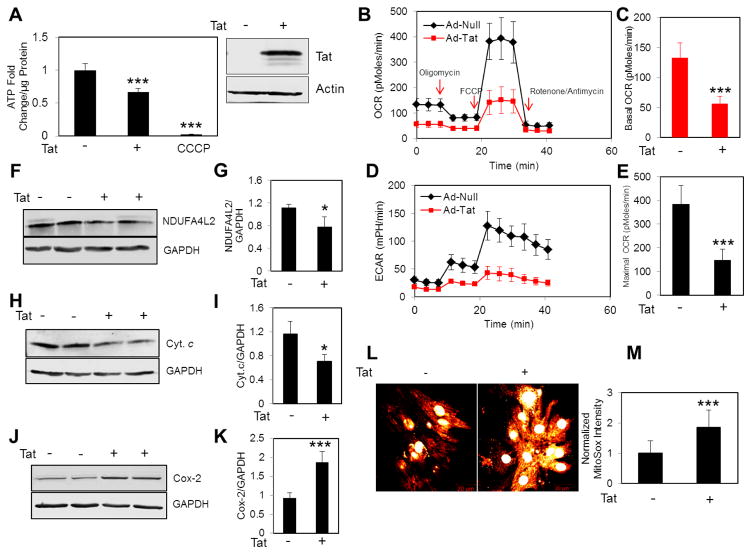
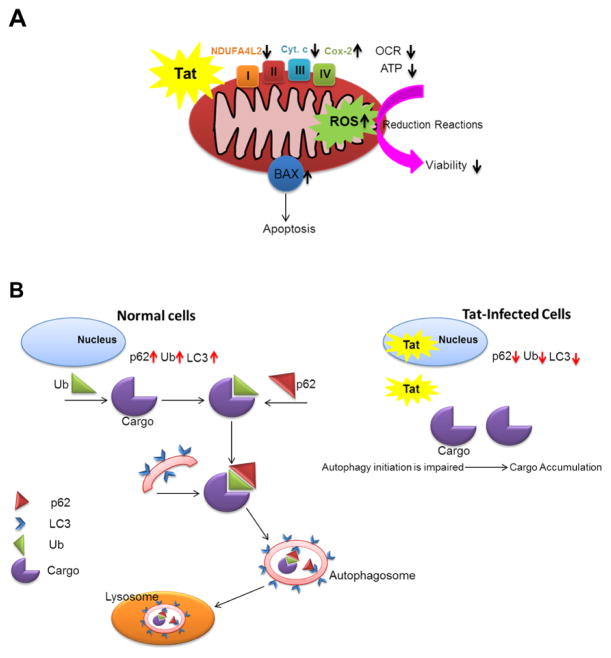
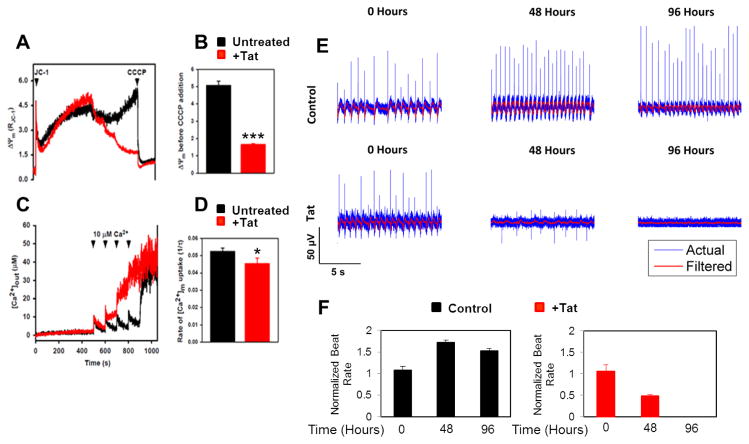
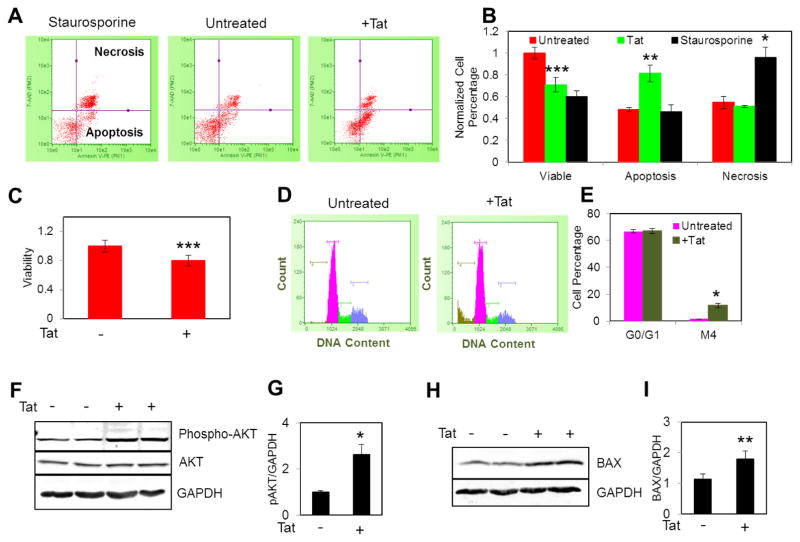
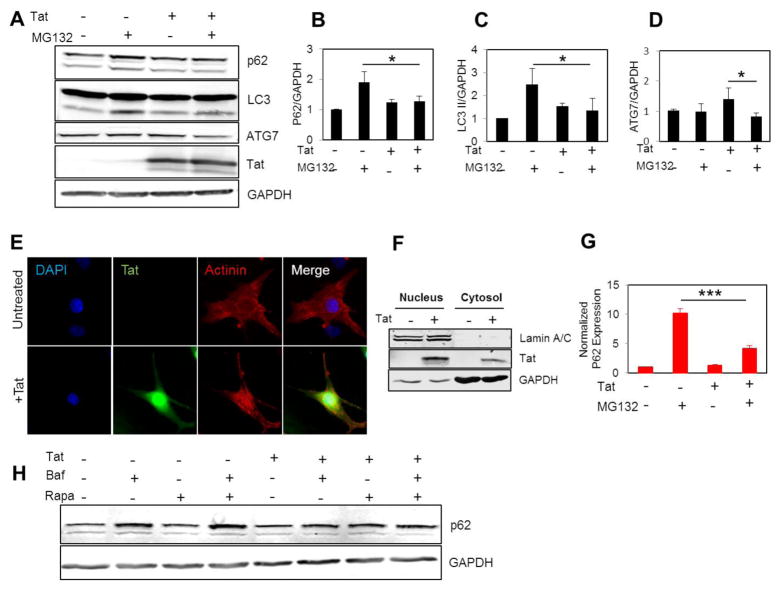
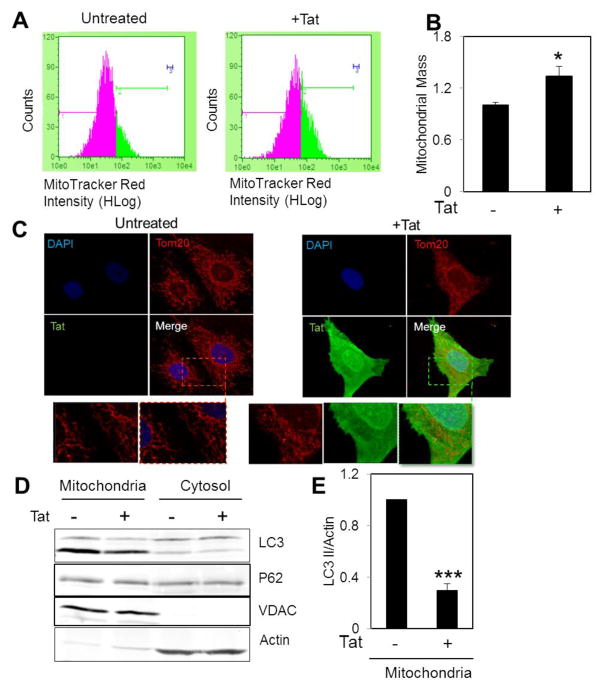
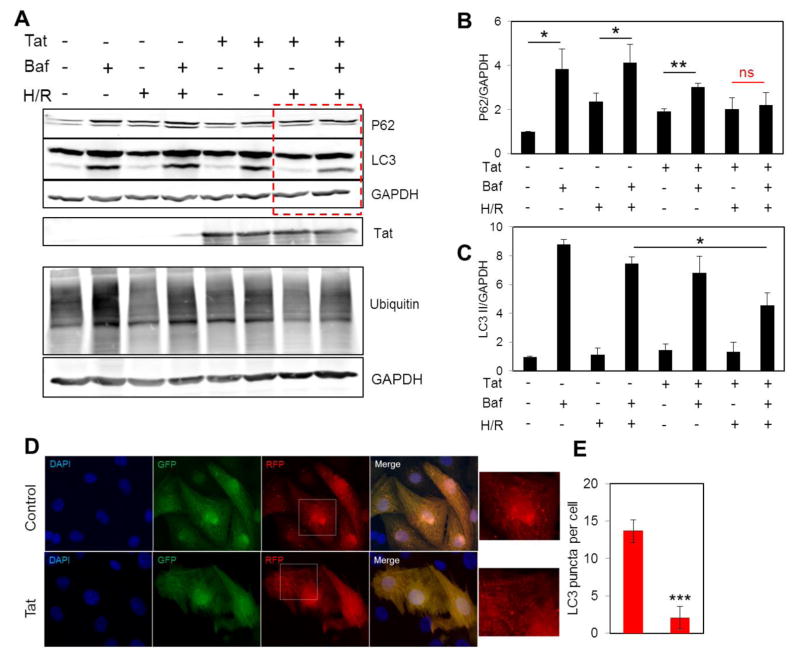
Cardiovascular disease remains a leading cause of morbidity and mortality in HIV-positive patients, even in those whose viral loads are well controlled with antiretroviral therapy. However, the underlying molecular events responsible for the development of cardiac disease in the setting of HIV remain unknown. The HIV-encoded Tat protein plays a critical role in the activation of HIV gene expression and profoundly impacts homeostasis in both HIV-infected cells and uninfected cells that have taken up released Tat via a bystander effect. Since cardiomyocyte function, including excitation-contraction coupling, greatly depends on energy provided by the mitochondria, in this study, we performed a series of experiments to assess the impact of Tat on mitochondrial function and bioenergetics pathways in a primary cell culture model derived from neonatal rat ventricular cardiomyocytes (NRVCs). Our results show that the presence of Tat in cardiomyocytes is accompanied by a decrease in oxidative phosphorylation, a decline in the levels of ATP, and an accumulation of reactive oxygen species (ROS). Tat impairs the uptake of mitochondrial Ca ([Ca ] ) and the electrophysiological activity of cardiomyocytes. Tat also affects the protein clearance pathway and autophagy in cardiomyocytes under stress due to hypoxia-reoxygenation conditions. A reduction in the level of ubiquitin along with dysregulated degradation of autophagy proteins including SQSTM1/p62 and a reduction of LC3 II were detected in cardiomyocytes harboring Tat. These results suggest that, by targeting mitochondria and protein quality control, Tat significantly impacts bioenergetics and autophagy resulting in dysregulation of cardiomyocyte health and homeostasis.
心血管疾病仍然是HIV阳性患者发病和死亡的主要原因,即使是那些通过抗逆转录病毒疗法使病毒载量得到良好控制的患者。然而,在HIV感染情况下导致心脏病发生的潜在分子事件仍然未知。HIV编码的Tat蛋白在HIV基因表达的激活中起关键作用,并通过旁观者效应深刻影响被HIV感染的细胞以及摄取释放的Tat的未感染细胞的内环境稳定。由于心肌细胞功能,包括兴奋-收缩偶联,极大地依赖于线粒体提供的能量,在本研究中,我们进行了一系列实验,以评估Tat对源自新生大鼠心室心肌细胞(NRVCs)的原代细胞培养模型中线粒体功能和生物能量途径的影响。我们的结果表明,心肌细胞中Tat的存在伴随着氧化磷酸化的降低、ATP水平的下降以及活性氧(ROS)的积累。Tat损害线粒体钙([Ca])的摄取和心肌细胞的电生理活性。Tat还影响缺氧-复氧条件下应激状态下心肌细胞的蛋白质清除途径和自噬。在含有Tat的心肌细胞中检测到泛素水平降低以及包括SQSTM1/p62在内的自噬蛋白降解失调和LC3 II减少。这些结果表明,通过靶向线粒体和蛋白质质量控制,Tat显著影响生物能量学和自噬,导致心肌细胞健康和内环境稳定失调。