Sun Wen-Wen, Xu Zhi-Hong, Lian Peng, Gao Bei-Li, Hu Jia-An
Department of Geriatrics.
Department of Respiration, Ruijin Hospital, Shanghai Jiaotong University, Shanghai, People's Republic of China.
Onco Targets Ther. 2017 May 4;10:2413-2424. doi: 10.2147/OTT.S130087. eCollection 2017.
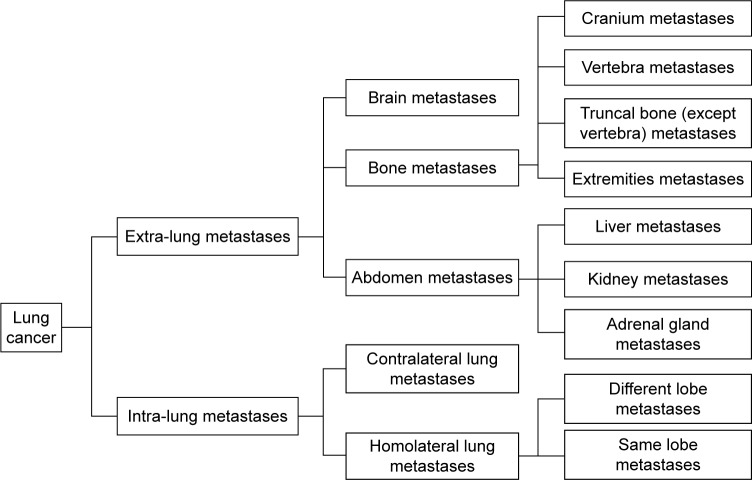
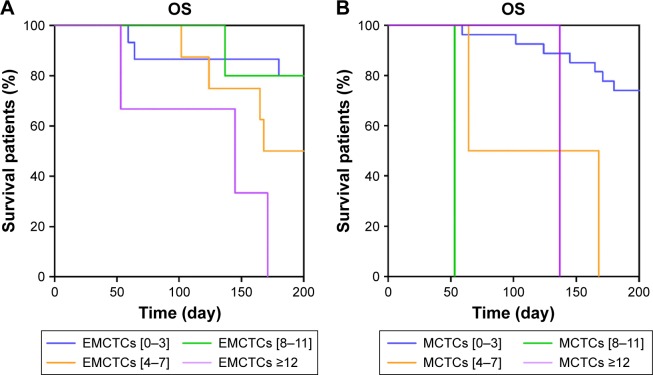
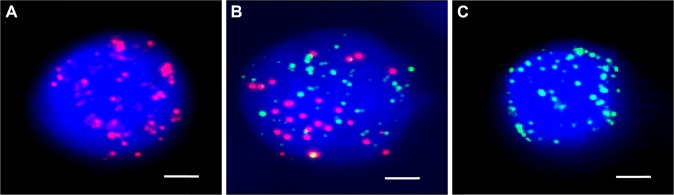
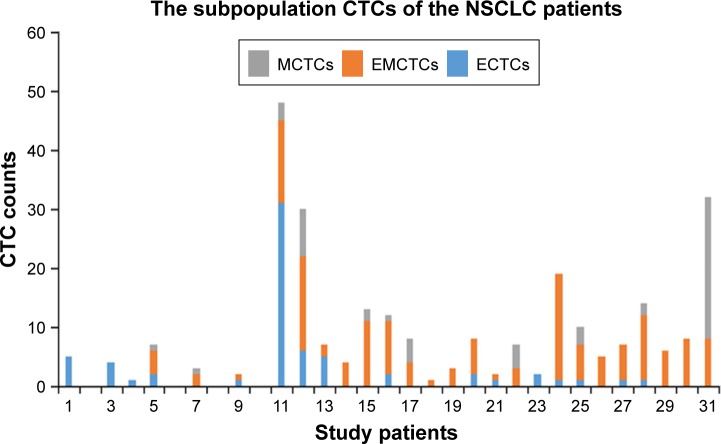
Circulating tumor cells (CTCs) possess profound influence on tumor metastases and disease progression. This study aimed to investigate the correlation of CTCs with clinical characteristics and T-cell immunity, and to explore whether CTCs and the subpopulations can serve as an independent prognostic factor in advanced non-small cell lung cancer (NSCLC). A prospective study was conducted in late stages of NSCLC patients. The levels of overall CTCs and the three subpopulation CTCs were enumerated using the CanPatrol™ CTC enrichment system. The information about the patients which included the clinical characteristics, survival status at the 200th day postdiagnosis, and the levels of T cells was collected. Mann-Whitney test, Kruskal-Wallis test, Cox regression, and Spearman's rank correlation coefficient were the statistical methods used in this study. We detected CTCs in 27 of the 31 eligible patients; the level of epithelial-mesenchymal circulating tumor cells (EMCTCs) was higher than that of epithelial circulating tumor cells and that of mesenchymal circulating tumor cells (MCTCs) in the majority of NSCLC patients. Organ metastases were positively associated with the levels of overall CTCs, EMCTCs, and MCTCs (<0.05). EMCTCs and MCTCs were associated with worse clinical outcomes. Additionally, the levels of EMCTCs were negatively associated with the levels of CD3 T cells (=0.01) and CD8 T cells (=0.04). In conclusion, the levels of CTCs were positively associated with organ metastases, particularly bone metastases, but were negatively associated with T-cell levels. The levels of EMCTCs and MCTCs had negative prognostic value.
循环肿瘤细胞(CTCs)对肿瘤转移和疾病进展具有深远影响。本研究旨在探讨CTCs与临床特征及T细胞免疫的相关性,并探究CTCs及其亚群是否可作为晚期非小细胞肺癌(NSCLC)的独立预后因素。对NSCLC患者晚期进行了一项前瞻性研究。使用CanPatrol™ CTC富集系统对总CTCs水平及三个亚群CTCs水平进行计数。收集了患者的临床特征、诊断后第200天的生存状况以及T细胞水平等信息。本研究采用的统计方法包括曼-惠特尼检验、克鲁斯卡尔-沃利斯检验、Cox回归和Spearman等级相关系数。在31例符合条件的患者中,我们检测到27例存在CTCs;在大多数NSCLC患者中,上皮-间质循环肿瘤细胞(EMCTCs)水平高于上皮循环肿瘤细胞和间质循环肿瘤细胞(MCTCs)水平。器官转移与总CTCs、EMCTCs和MCTCs水平呈正相关(<0.05)。EMCTCs和MCTCs与较差的临床结局相关。此外,EMCTCs水平与CD3 T细胞水平(=0.01)和CD8 T细胞水平(=0.04)呈负相关。总之,CTCs水平与器官转移,尤其是骨转移呈正相关,但与T细胞水平呈负相关。EMCTCs和MCTCs水平具有负面预后价值。