Dong Jingsi, Zhu Daxing, Tang Xiaojun, Qiu Xiaoming, Lu Dan, Li Bingjie, Lin Dan, Zhou Qinghua
Department of Lung Cancer Center, West China Hospital, Sichuan University, Chengdu, China.
Front Oncol. 2019 Oct 29;9:1139. doi: 10.3389/fonc.2019.01139. eCollection 2019.
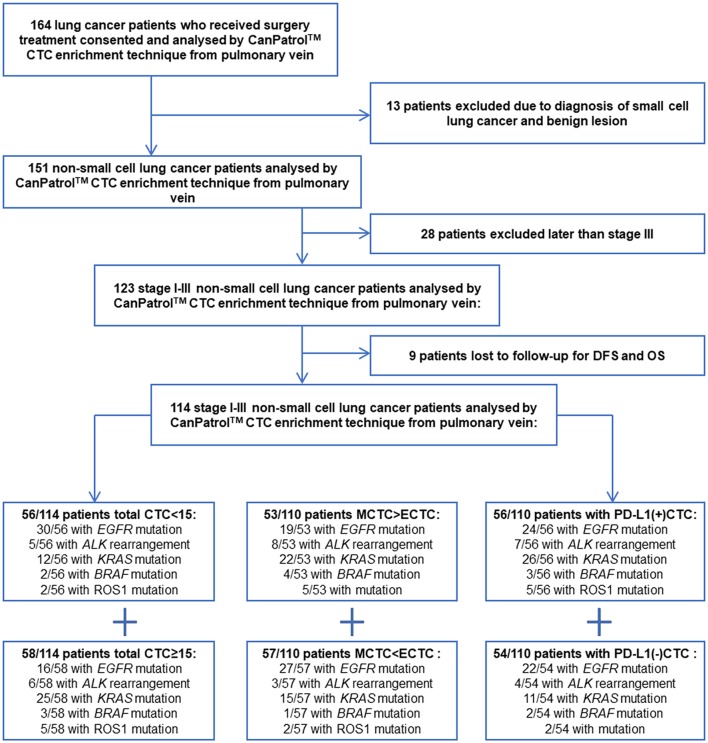
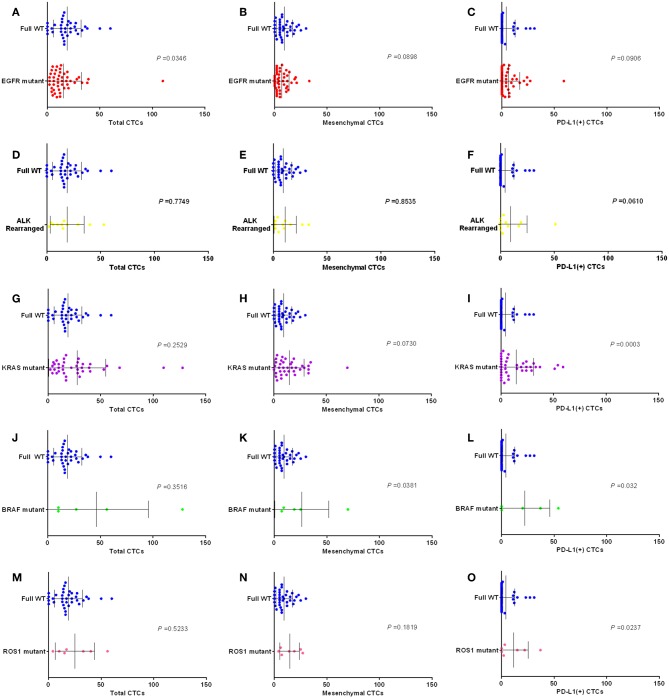
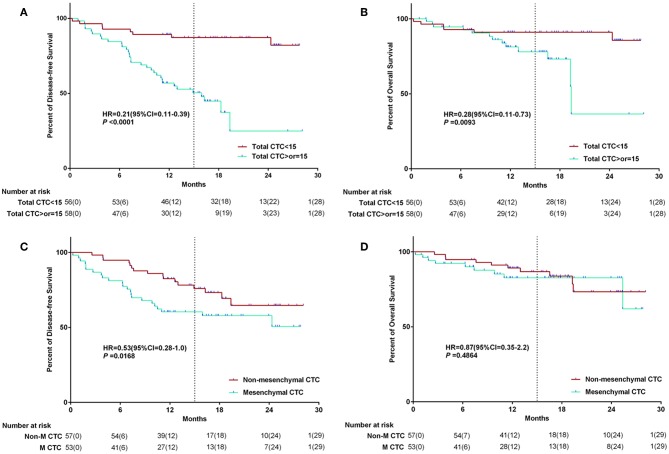
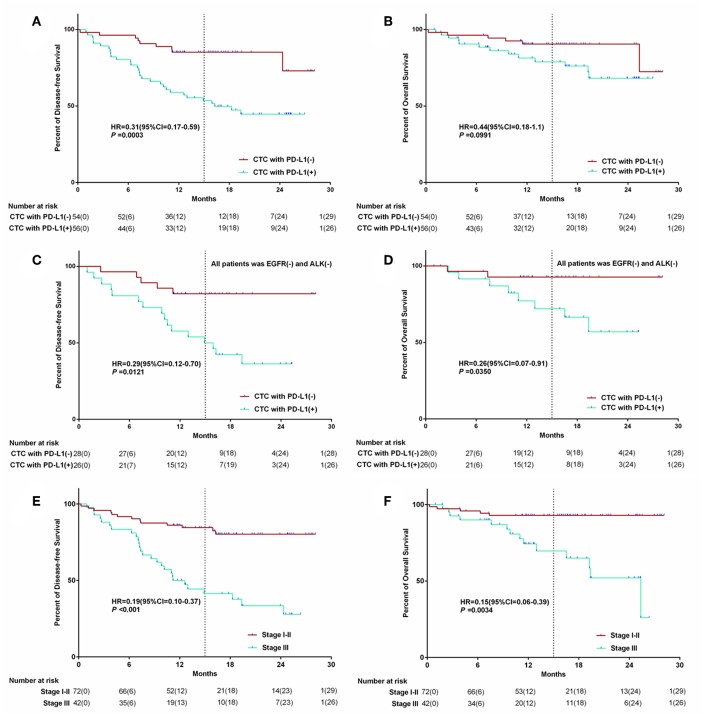
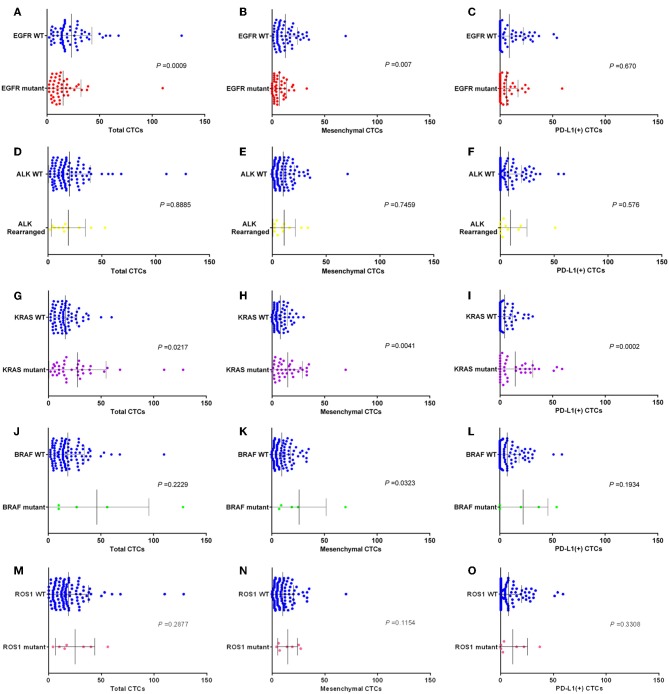
There was rare studies on prognosis of pulmonary venous CTC and early or advanced NSCLC patients. We want to investigate whether CTCs and the subtype of it can predict the prognosis of NSCLC patients. One hundred and fourteen patients with stage I-III NSCLC were included CanPatrol™ CTC analysis. PD-L1 expression level were detected in CTC of pulmonary vein. PD-L1, number of CTC in pulmonary, CTC's subtype, clinical characteristics, prognosis of patients were analyzed. 110/114 (96.5%) patients could be found CTCs in pulmonary vein, 58/114 (50.9%) patients had CTC≥15/ml in pulmonary vein, 53/110 patients (48.2%) were defined as having MCTC subtype and 56/110 patient were found have PD-L1 (+) CTC in pulmonary vein. Multivariate analyses showed that PVCTC, MCTC, and stage were independent factors of DFS ( < 0.05). No OS difference was found between number of CTC ( = 0.33) and other CTC factors ( > 0.05), only stage was independent factor of OS ( = 0.019). There were decreases of CTC number and MCTC number in EGFR mutant subgroup ( = 0.0009 and = 0.007). There were increases of CTC ( = 0.0217), MCTC ( = 0.0041), and PD-L1 (+) CTC ( = 0.0002) number in KRAS mutant subgroup. There was increase of MCTC ( =0.0323) number in BRAF mutant. There were fewer CTCs in pulmonary vein for patients with EGFR mutant than in patients with full wild-type gene ( = 0.0346). There were more PD-L1 positive CTCs in pulmonary vein for patients with ALK rearrangement, KRAS mutant, BRAF mutant, or ROS1 mutant than in patients with full wild-type gene ( = 0.0610, = 0.0003, = 0.032, and = 0.0237). There were more mesenchymal CTCs in pulmonary vein for patients with KRAS mutant and BRAF mutant than in patients with full wild-type gene ( = 0.073 and = 0.0381). There were fewer mesenchymal CTCs in pulmonary vein for patients with EGFR mutant than in patients with full wild-type gene ( = 0.0898). The patients with high number of CTCs, MCTCs, or PD-L1 (+) CTCs in pulmonary vein experienced poor prognosis of DFS. There are obvious correlations between the CTC subtype of NSCLC and the gene subgroups of tumor tissue.
关于肺静脉循环肿瘤细胞(CTC)与早期或晚期非小细胞肺癌(NSCLC)患者预后的研究较少。我们想要探究CTC及其亚型是否能够预测NSCLC患者的预后。纳入114例I-III期NSCLC患者进行CanPatrol™ CTC分析。检测肺静脉CTC中的程序性死亡受体配体1(PD-L1)表达水平。分析PD-L1、肺内CTC数量、CTC亚型、临床特征及患者预后。114例患者中有110例(96.5%)可在肺静脉中检测到CTC,58例(50.9%)患者肺静脉中CTC≥15/ml,110例患者中有53例(48.2%)被定义为具有微转移CTC(MCTC)亚型,110例患者中有56例在肺静脉中检测到PD-L1(+)CTC。多因素分析显示,肺静脉CTC(PVCTC)、MCTC和分期是无病生存期(DFS)的独立影响因素(P<0.05)。CTC数量(P = 0.33)及其他CTC因素之间未发现总生存期(OS)差异(P>0.05),仅分期是OS的独立影响因素(P = 0.019)。表皮生长因子受体(EGFR)突变亚组中CTC数量和MCTC数量减少(P = 0.0009和P = 0.007)。KRAS突变亚组中CTC(P = 0.0217)、MCTC(P = 0.0041)和PD-L1(+)CTC(P = 0.0002)数量增加。BRAF突变中MCTC数量增加(P = 0.0323)。EGFR突变患者肺静脉中的CTC数量少于全野生型基因患者(P = 0.0346)。间变性淋巴瘤激酶(ALK)重排、KRAS突变、BRAF突变或ROS1突变患者肺静脉中的PD-L1阳性CTC多于全野生型基因患者(P = 0.0610、P = 0.0003、P = 0.032和P = 0.0237)。KRAS突变和BRAF突变患者肺静脉中的间充质CTC多于全野生型基因患者(P = 0.073和P = 0.0381)。EGFR突变患者肺静脉中的间充质CTC少于全野生型基因患者(P = 0.0898)。肺静脉中CTC、MCTC或PD-L1(+)CTC数量较多的患者DFS预后较差。NSCLC的CTC亚型与肿瘤组织的基因亚组之间存在明显相关性。