Fettes Peter, Schulze Laura, Downar Jonathan
Institute of Medical Science, University of TorontoToronto, ON, Canada.
Krembil Research Institute, University Health NetworkToronto, ON, Canada.
Front Syst Neurosci. 2017 Apr 27;11:25. doi: 10.3389/fnsys.2017.00025. eCollection 2017.
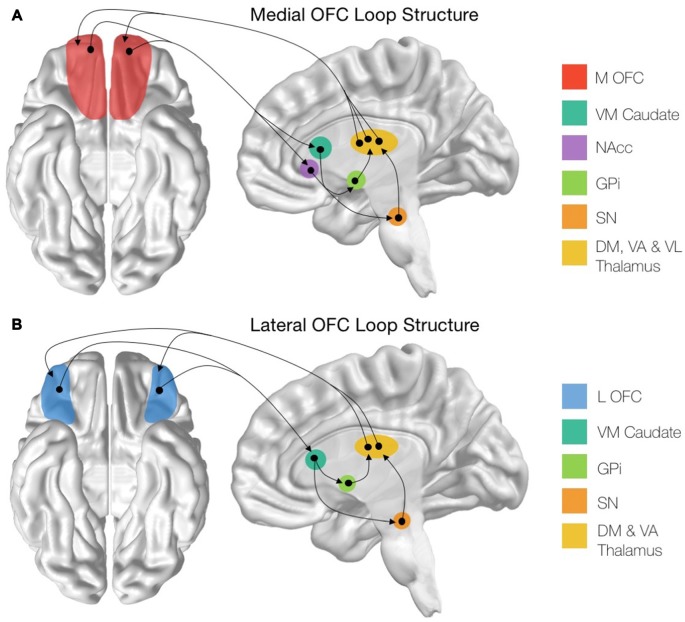
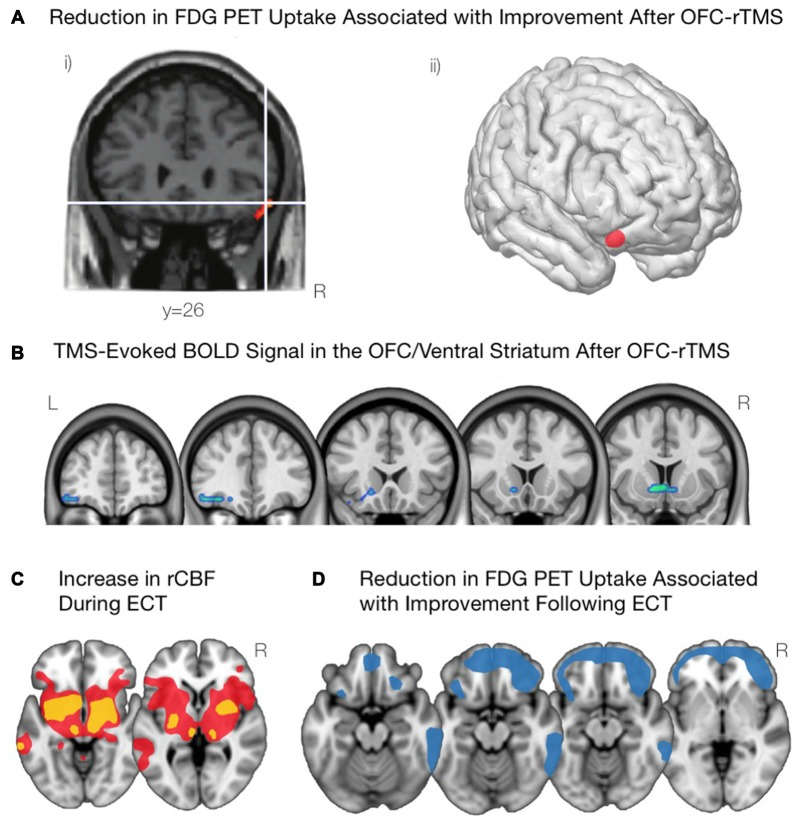
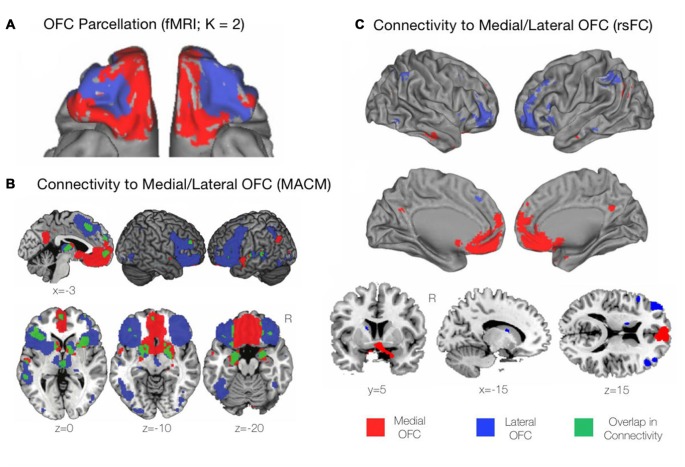
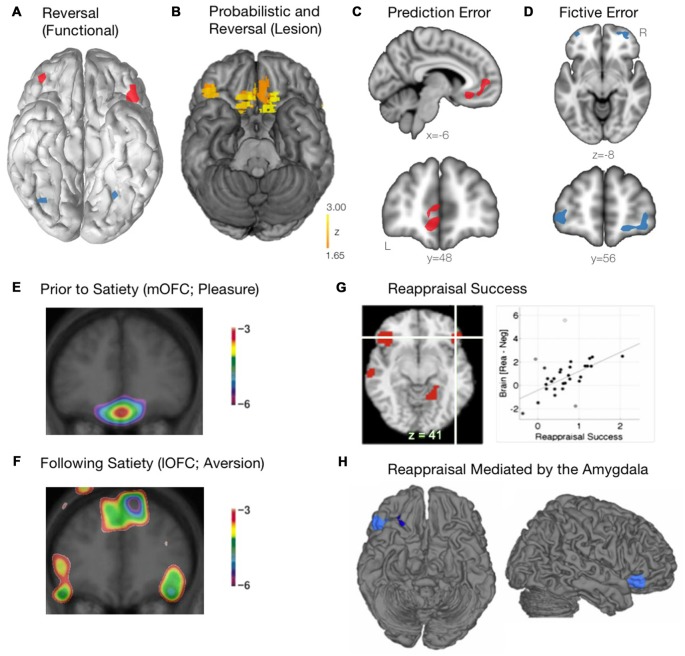
Corticostriatal circuits through the orbitofrontal cortex (OFC) play key roles in complex human behaviors such as evaluation, affect regulation and reward-based decision-making. Importantly, the medial and lateral OFC (mOFC and lOFC) circuits have functionally and anatomically distinct connectivity profiles which differentially contribute to the various aspects of goal-directed behavior. OFC corticostriatal circuits have been consistently implicated across a wide range of psychiatric disorders, including major depressive disorder (MDD), obsessive compulsive disorder (OCD), and substance use disorders (SUDs). Furthermore, psychiatric disorders related to OFC corticostriatal dysfunction can be addressed via conventional and novel neurostimulatory techniques, including deep brain stimulation (DBS), electroconvulsive therapy (ECT), repetitive transcranial magnetic stimulation (rTMS), and transcranial direct current stimulation (tDCS). Such techniques elicit changes in OFC corticostriatal activity, resulting in changes in clinical symptomatology. Here we review the available literature regarding how disturbances in mOFC and lOFC corticostriatal functioning may lead to psychiatric symptomatology in the aforementioned disorders, and how psychiatric treatments may exert their therapeutic effect by rectifying abnormal OFC corticostriatal activity. First, we review the role of OFC corticostriatal circuits in reward-guided learning, decision-making, affect regulation and reappraisal. Second, we discuss the role of OFC corticostriatal circuit dysfunction across a wide range of psychiatric disorders. Third, we review available evidence that the therapeutic mechanisms of various neuromodulation techniques may directly involve rectifying abnormal activity in mOFC and lOFC corticostriatal circuits. Finally, we examine the potential of future applications of therapeutic brain stimulation targeted at OFC circuitry; specifically, the role of OFC brain stimulation in the growing field of individually-tailored therapies and personalized medicine in psychiatry.
通过眶额皮质(OFC)的皮质纹状体回路在复杂的人类行为中起着关键作用,如评估、情绪调节和基于奖励的决策。重要的是,内侧和外侧眶额皮质(mOFC和lOFC)回路在功能和解剖学上具有不同的连接模式,它们对目标导向行为的各个方面有不同的贡献。OFC皮质纹状体回路一直与广泛的精神疾病有关,包括重度抑郁症(MDD)、强迫症(OCD)和物质使用障碍(SUDs)。此外,与OFC皮质纹状体功能障碍相关的精神疾病可以通过传统和新型神经刺激技术来解决,包括深部脑刺激(DBS)、电休克疗法(ECT)、重复经颅磁刺激(rTMS)和经颅直流电刺激(tDCS)。这些技术引起OFC皮质纹状体活动的变化,从而导致临床症状的改变。在这里,我们回顾了现有的文献,探讨mOFC和lOFC皮质纹状体功能障碍如何导致上述疾病中的精神症状,以及精神治疗如何通过纠正异常的OFC皮质纹状体活动发挥其治疗作用。首先,我们回顾OFC皮质纹状体回路在奖励引导学习、决策、情绪调节和重新评估中的作用。其次,我们讨论OFC皮质纹状体回路功能障碍在广泛的精神疾病中的作用。第三,我们回顾现有的证据,表明各种神经调节技术的治疗机制可能直接涉及纠正mOFC和lOFC皮质纹状体回路中的异常活动。最后,我们研究针对OFC回路的治疗性脑刺激未来应用的潜力;具体来说,OFC脑刺激在精神病学中日益发展的个体化治疗和个性化医学领域中的作用。