Department of Neurosciences, University of New Mexico Health and Sciences Center, Albuquerque, NM, USA.
Department of Medicine, Perelman School of Medicine, University of Pennsylvania, Philadelphia, PA, USA.
Transl Psychiatry. 2024 Nov 28;14(1):480. doi: 10.1038/s41398-024-03188-0.
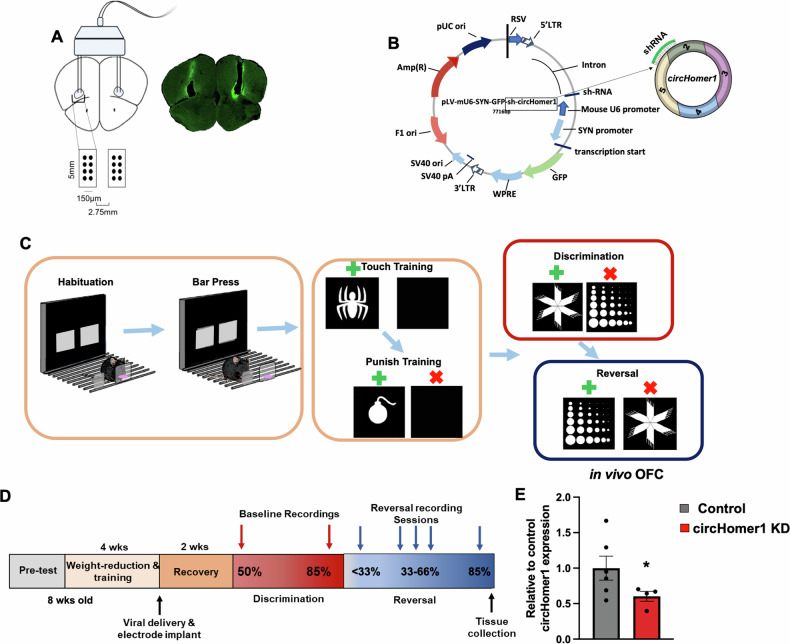
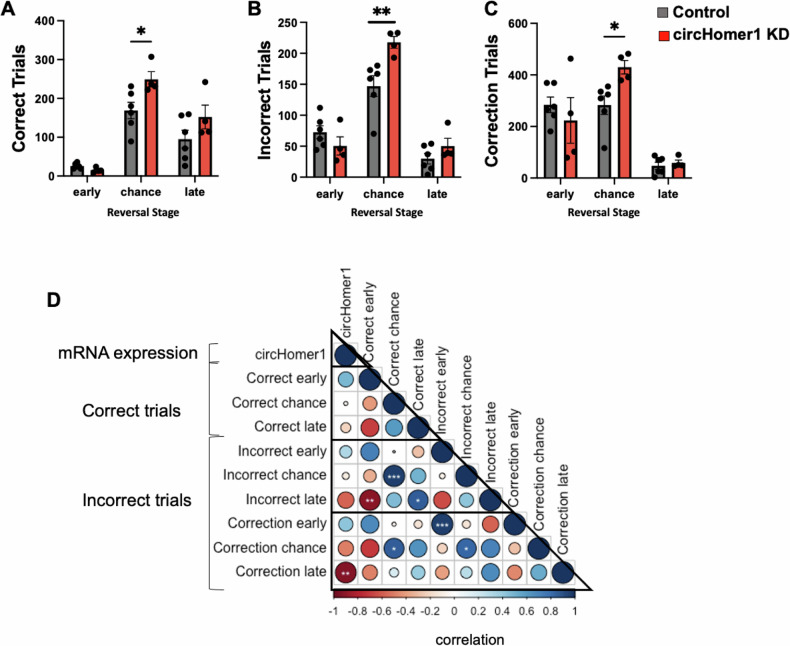
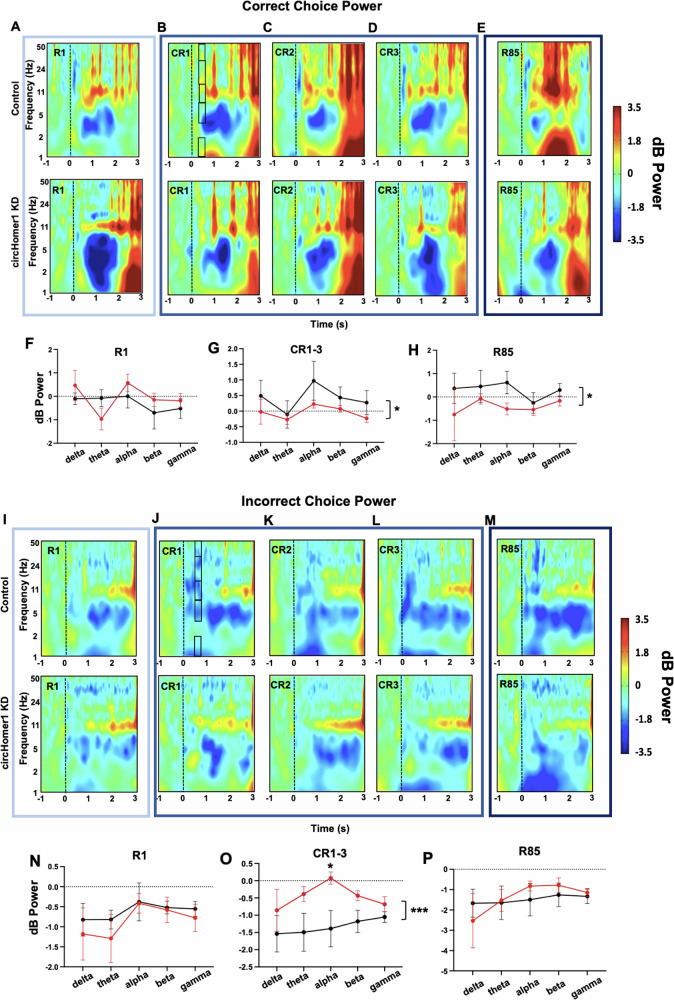
CircHomer1 is an activity-dependent circular RNA (circRNA) isoform produced from back-splicing of the Homer1 transcript. Homer1 isoforms are well-known regulators of homeostatic synaptic plasticity through post-synaptic density scaffold regulation. Homer1 polymorphisms have been associated with psychiatric diseases including schizophrenia (SCZ) and bipolar disorder (BD). Postmortem tissue from patients with SCZ and BD displayed reduced circHomer1 levels within the orbitofrontal cortex (OFC), a region that tracks event saliency important for modulating behavioral flexibility. While dysregulation of circHomer1 expression has recently been identified across multiple psychiatric and neurodegenerative disorders and is associated with impaired behavioral flexibility in mice, it is unknown whether circHomer1 can induce electrophysiological signatures relevant to cognitive dysfunction in these disorders. To examine the role of circHomer1 in neuronal signaling, we bilaterally knocked down circHomer1 in the OFC of C57BL/6 J male mice and recorded neural activity from the OFC during a touchscreen reversal learning task then measured molecular changes of synaptic regulators following knockdown. Knockdown of circHomer1 within the OFC induced choice-dependent changes in multiunit firing rate and local field potential coordination and power to salient stimuli during reversal learning. Further, these electrophysiological changes were associated with transcriptional downregulation of glutamatergic signaling effectors and behavioral alterations leading to impaired cognitive flexibility. CircHomer1 is a stable biomolecule, whose knockdown in rodent OFC produces lasting electrophysiological and transcriptional changes important for efficient reversal learning. This is, to our knowledge, the first demonstration of a psychiatric-associated circRNA contributing to electrophysiological, transcriptional, and behavioral alterations relevant to psychiatric phenotypes.
CircHomer1 是一种活性依赖性的环状 RNA(circRNA)异构体,由 Homer1 转录物的反向剪接产生。 Homer1 异构体是通过突触后密度支架调节来调节稳态突触可塑性的已知调节剂。 Homer1 多态性与包括精神分裂症(SCZ)和双相情感障碍(BD)在内的精神疾病有关。 SCZ 和 BD 患者的死后组织显示眶额皮层(OFC)内 circHomer1 水平降低,该区域跟踪对调节行为灵活性很重要的事件显着性。尽管 circHomer1 的表达失调最近已在多种精神和神经退行性疾病中得到鉴定,并与小鼠行为灵活性受损有关,但尚不清楚 circHomer1 是否可以诱导这些疾病认知功能障碍相关的电生理特征。为了研究 circHomer1 在神经元信号传导中的作用,我们在 C57BL/6 J 雄性小鼠的 OFC 中双侧敲低 circHomer1,并在触摸屏反转学习任务期间记录 OFC 中的神经活动,然后测量敲低后突触调节剂的分子变化。 OFC 中的 circHomer1 敲低会诱导选择依赖性的多单位放电率和局部场电位协调以及对反转学习中显着刺激的功率变化。此外,这些电生理变化与谷氨酸能信号效应物的转录下调以及导致认知灵活性受损的行为改变有关。 CircHomer1 是一种稳定的生物分子,其在啮齿动物 OFC 中的敲低会产生对有效反转学习很重要的持久电生理和转录变化。据我们所知,这是首次证明与精神疾病表型相关的 circRNA 有助于与电生理、转录和行为改变相关的精神疾病相关的电生理、转录和行为改变。