Kim Seonghoon, Lee Jumin, Jo Sunhwan, Brooks Charles L, Lee Hui Sun, Im Wonpil
Department of Biological Sciences and Bioengineering Program, Lehigh University, Bethlehem, Pennsylvania.
Leadership Computing Facility, Argonne National Laboratory, 9700 Cass Ave, Argonne, Illinois.
J Comput Chem. 2017 Jun 5;38(21):1879-1886. doi: 10.1002/jcc.24829. Epub 2017 May 11.
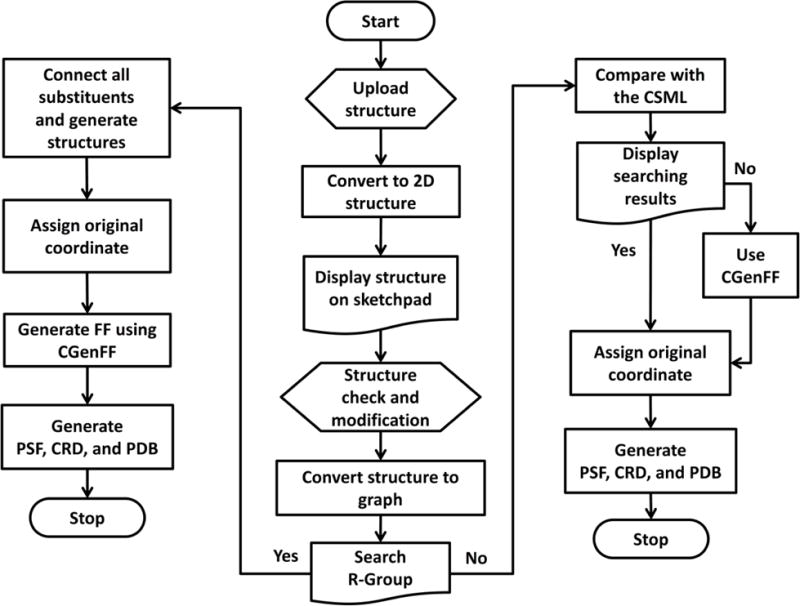
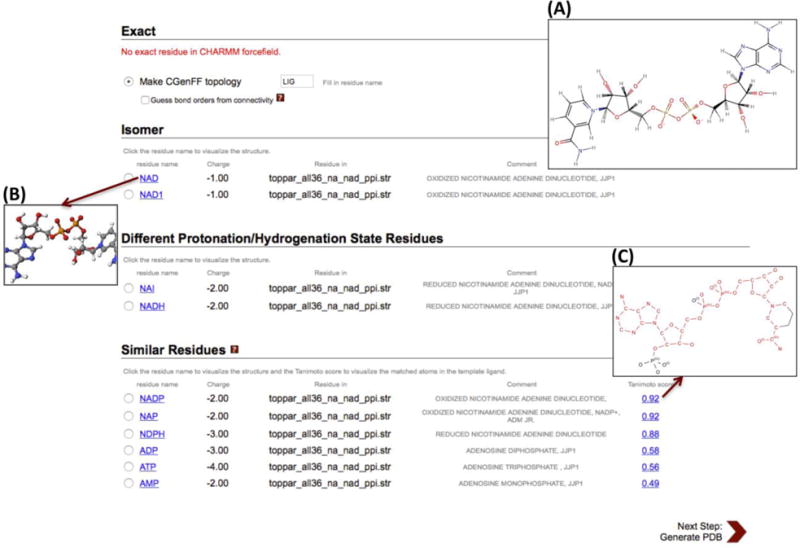
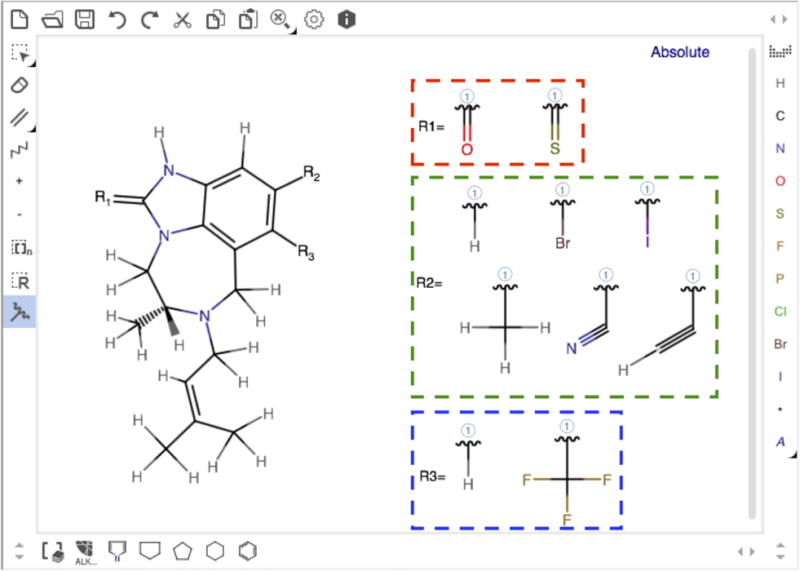
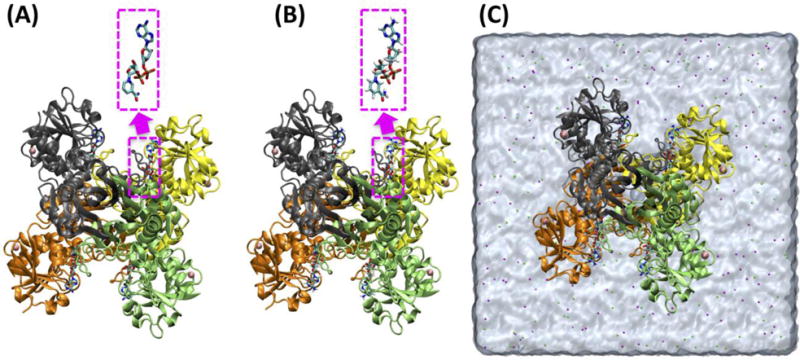
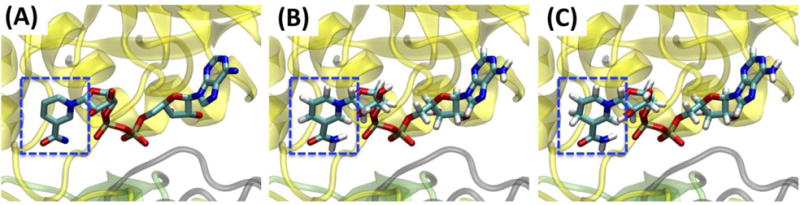
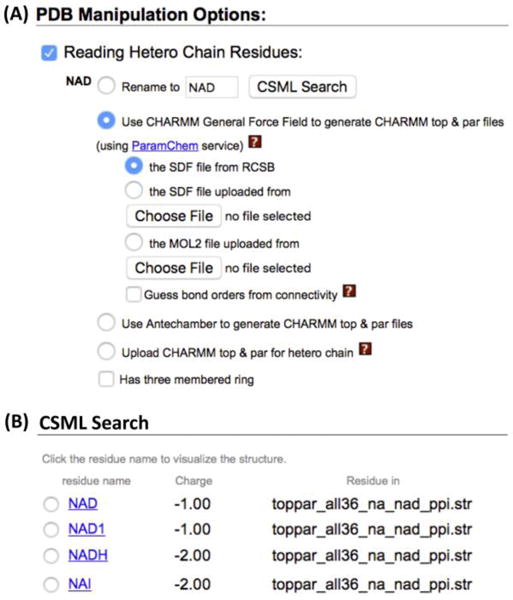
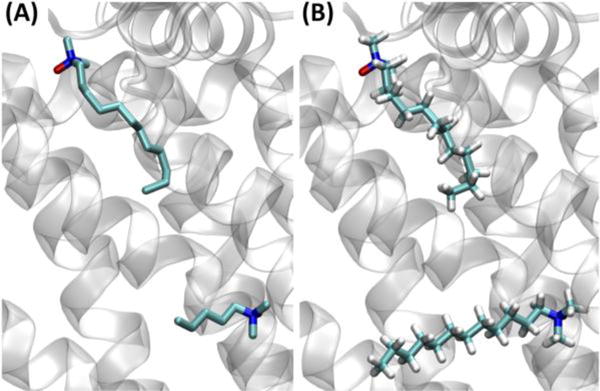
Reading ligand structures into any simulation program is often nontrivial and time consuming, especially when the force field parameters and/or structure files of the corresponding molecules are not available. To address this problem, we have developed Ligand Reader & Modeler in CHARMM-GUI. Users can upload ligand structure information in various forms (using PDB ID, ligand ID, SMILES, MOL/MOL2/SDF file, or PDB/mmCIF file), and the uploaded structure is displayed on a sketchpad for verification and further modification. Based on the displayed structure, Ligand Reader & Modeler generates the ligand force field parameters and necessary structure files by searching for the ligand in the CHARMM force field library or using the CHARMM general force field (CGenFF). In addition, users can define chemical substitution sites and draw substituents in each site on the sketchpad to generate a set of combinatorial structure files and corresponding force field parameters for throughput or alchemical free energy simulations. Finally, the output from Ligand Reader & Modeler can be used in other CHARMM-GUI modules to build a protein-ligand simulation system for all supported simulation programs, such as CHARMM, NAMD, GROMACS, AMBER, GENESIS, LAMMPS, Desmond, OpenMM, and CHARMM/OpenMM. Ligand Reader & Modeler is available as a functional module of CHARMM-GUI at http://www.charmm-gui.org/input/ligandrm. © 2017 Wiley Periodicals, Inc.
将配体结构读入任何模拟程序通常都并非易事且耗时,尤其是在相应分子的力场参数和/或结构文件不可用时。为了解决这个问题,我们在CHARMM - GUI中开发了配体读取器与建模器。用户可以以各种形式上传配体结构信息(使用PDB ID、配体ID、SMILES、MOL/MOL2/SDF文件或PDB/mmCIF文件),上传的结构会显示在画板上以供验证和进一步修改。基于显示的结构,配体读取器与建模器通过在CHARMM力场库中搜索配体或使用CHARMM通用力场(CGenFF)来生成配体力场参数和必要的结构文件。此外,用户可以定义化学取代位点并在画板上的每个位点绘制取代基,以生成一组用于通量或炼金术自由能模拟的组合结构文件和相应的力场参数。最后,配体读取器与建模器的输出可用于其他CHARMM - GUI模块,为所有支持的模拟程序构建蛋白质 - 配体模拟系统,如CHARMM、NAMD、GROMACS、AMBER、GENESIS、LAMMPS、Desmond、OpenMM和CHARMM/OpenMM。配体读取器与建模器可作为CHARMM - GUI的功能模块在http://www.charmm - gui.org/input/ligandrm获取。© 2017威利期刊公司。