Rezaee-Zavareh Mohammad Saeid, Salamati Payman, Ramezani-Binabaj Mahdi, Saeidnejad Mina, Rousta Mansoureh, Shokraneh Farhad, Rahimi-Movaghar Vafa
Students' Research Committee, Baqiyatallah University of Medical Science, Tehran, Iran.
Sina Trauma and Surgery Research Center, Tehran University of Medical Sciences, Tehran, Iran.
Chin J Traumatol. 2017 Jun;20(3):166-172. doi: 10.1016/j.cjtee.2017.04.002. Epub 2017 Apr 14.
Alcohol consumption can lead to risky driving and increase the frequency of traffic accidents, injuries and mortalities. The main purpose of our study was to compare simulated driving performance between two groups of drivers, one consumed alcohol and the other not consumed, using a systematic review.
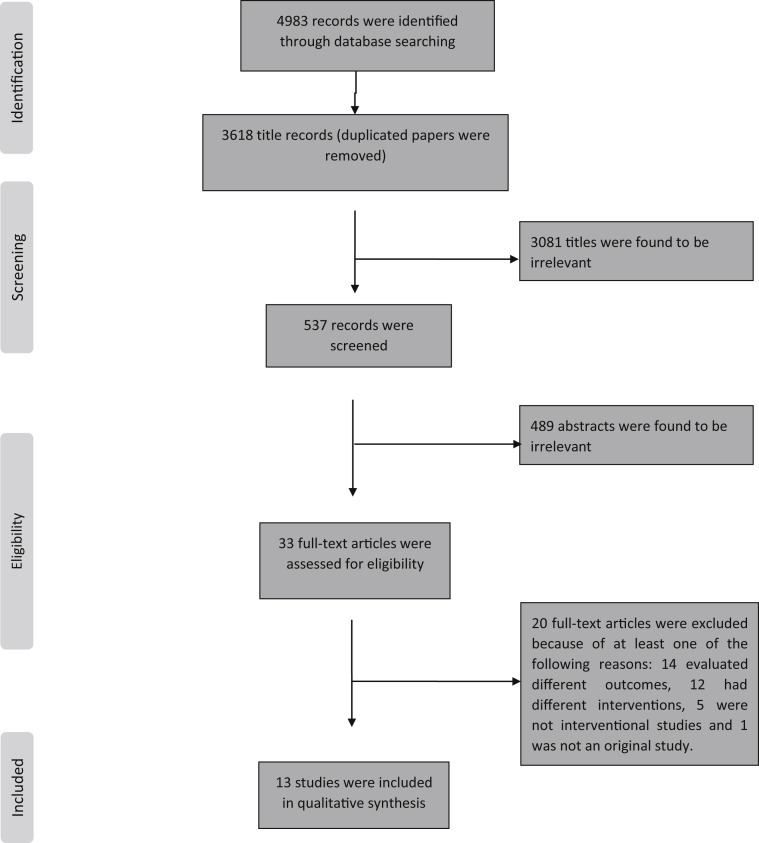
In this systematic review, electronic resources and databases including Medline via Ovid SP, EMBASE via Ovid SP, PsycINFO via Ovid SP, PubMed, Scopus, Cumulative Index to Nursing and Allied Health Literature (CINHAL) via EBSCOhost were comprehensively and systematically searched. The randomized controlled clinical trials that compared simulated driving performance between two groups of drivers, one consumed alcohol and the other not consumed, were included. Lane position standard deviation (LPSD), mean of lane position deviation (MLPD), speed, mean of speed deviation (MSD), standard deviation of speed deviation (SDSD), number of accidents (NA) and line crossing (LC) were considered as the main parameters evaluating outcomes. After title and abstract screening, the articles were enrolled for data extraction and they were evaluated for risk of biases.
Thirteen papers were included in our qualitative synthesis. All included papers were classified as high risk of biases. Alcohol consumption mostly deteriorated the following performance outcomes in descending order: SDSD, LPSD, speed, MLPD, LC and NA. Our systematic review had troublesome heterogeneity.
Alcohol consumption may decrease simulated driving performance in alcohol consumed people compared with non-alcohol consumed people via changes in SDSD, LPSD, speed, MLPD, LC and NA. More well-designed randomized controlled clinical trials are recommended.
饮酒会导致危险驾驶,并增加交通事故、受伤和死亡的发生率。我们研究的主要目的是通过系统评价,比较两组驾驶员(一组饮酒,另一组不饮酒)的模拟驾驶表现。
在这项系统评价中,全面系统地检索了电子资源和数据库,包括通过Ovid SP检索的Medline、通过Ovid SP检索的EMBASE、通过Ovid SP检索的PsycINFO、PubMed、Scopus、通过EBSCOhost检索的护理及相关健康文献累积索引(CINHAL)。纳入比较两组驾驶员(一组饮酒,另一组不饮酒)模拟驾驶表现的随机对照临床试验。车道位置标准差(LPSD)、车道位置偏差均值(MLPD)、速度、速度偏差均值(MSD)、速度偏差标准差(SDSD)、事故数量(NA)和越线(LC)被视为评估结果的主要参数。经过标题和摘要筛选后,纳入文章进行数据提取,并对其偏倚风险进行评估。
13篇论文纳入我们的定性综合分析。所有纳入的论文均被归类为高偏倚风险。饮酒大多会按降序使以下表现结果恶化:SDSD、LPSD、速度、MLPD、LC和NA。我们的系统评价存在令人困扰的异质性。
与未饮酒者相比,饮酒可能会通过改变SDSD、LPSD、速度、MLPD、LC和NA,降低饮酒者的模拟驾驶表现。建议开展更多设计良好的随机对照临床试验。