Laboratory of Obesity and Aging Research, Genetics and Development Biology Center, National Heart Lung and Blood Institute, National Institutes of Health, Bethesda, Maryland 20892, USA.
Department of Cell Biology and Molecular Medicine, Cardiovascular Research Institute, Rutgers University, New Jersey Medical School, Newark, New Jersey 07101, USA.
Nat Commun. 2017 May 15;8:15560. doi: 10.1038/ncomms15560.
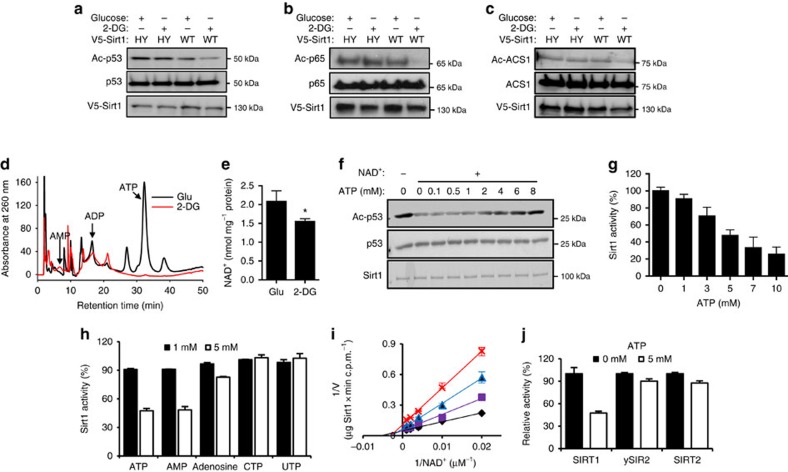
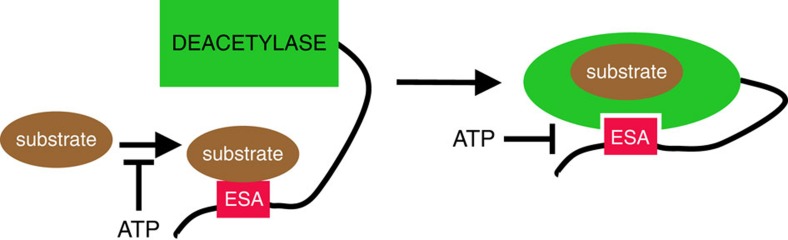
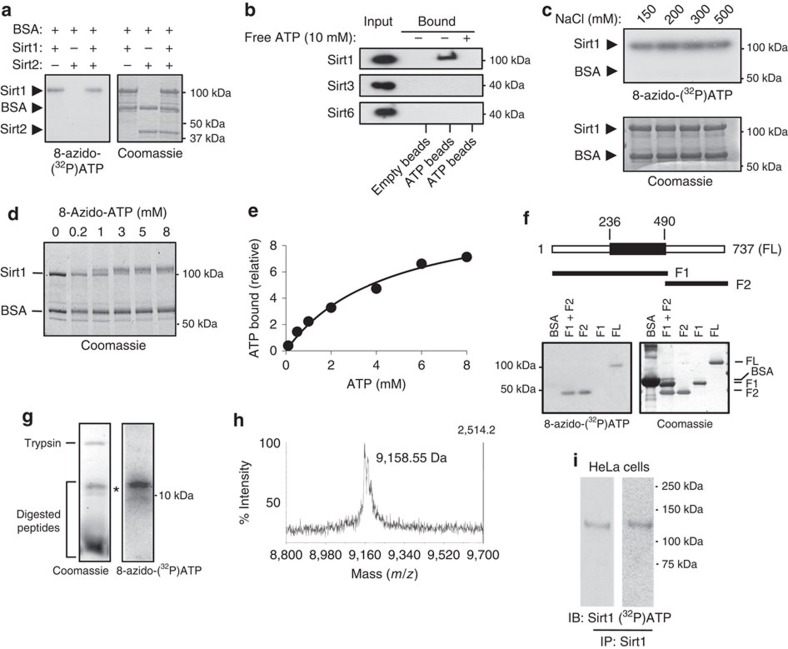
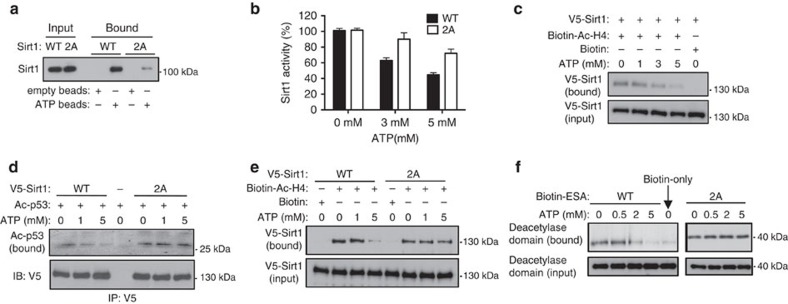
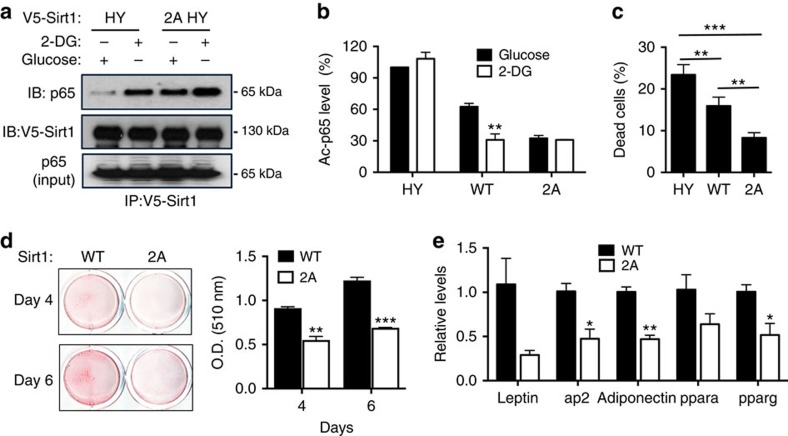
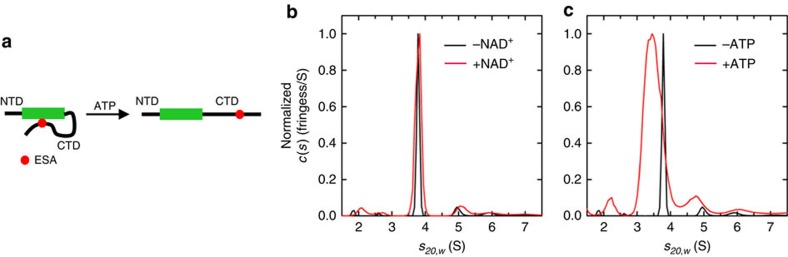
Sirt1 is an NAD-dependent protein deacetylase that regulates many physiological functions, including stress resistance, adipogenesis, cell senescence and energy production. Sirt1 can be activated by energy deprivation, but the mechanism is poorly understood. Here, we report that Sirt1 is negatively regulated by ATP, which binds to the C-terminal domain (CTD) of Sirt1. ATP suppresses Sirt1 activity by impairing the CTD's ability to bind to the deacetylase domain as well as its ability to function as the substrate recruitment site. ATP, but not NAD, causes a conformational shift to a less compact structure. Mutations that prevent ATP binding increase Sirt1's ability to promote stress resistance and inhibit adipogenesis under high-ATP conditions. Interestingly, the CTD can be attached to other proteins, thereby converting them into energy-regulated proteins. These discoveries provide insight into how extreme energy deprivation can impact Sirt1 activity and underscore the complex nature of Sirt1 structure and regulation.
Sirt1 是一种依赖 NAD 的蛋白去乙酰化酶,可调节多种生理功能,包括应激抵抗、脂肪生成、细胞衰老和能量产生。Sirt1 可被能量剥夺激活,但具体机制尚不清楚。在此,我们报告 Sirt1 受到 ATP 的负调控,ATP 结合 Sirt1 的 C 端结构域(CTD)。ATP 通过损害 CTD 与去乙酰化酶结构域结合的能力及其作为底物募集位点的功能来抑制 Sirt1 活性。ATP 而非 NAD 引起构象转变为更不紧凑的结构。防止 ATP 结合的突变会增加 Sirt1 在高 ATP 条件下促进应激抵抗和抑制脂肪生成的能力。有趣的是,CTD 可与其他蛋白结合,从而将它们转化为受能量调节的蛋白。这些发现提供了关于极端能量剥夺如何影响 Sirt1 活性的见解,并强调了 Sirt1 结构和调节的复杂性。