Amin Johansen B, Salussolia Catherine L, Chan Kelvin, Regan Michael C, Dai Jian, Zhou Huan-Xiang, Furukawa Hiro, Bowen Mark E, Wollmuth Lonnie P
Graduate Program in Cellular and Molecular Pharmacology, Stony Brook University, Stony Brook, NY 11794.
Medical Scientist Training Program (MSTP), Stony Brook University, Stony Brook, NY 11794.
J Gen Physiol. 2017 Jun 5;149(6):661-680. doi: 10.1085/jgp.201711762. Epub 2017 May 15.
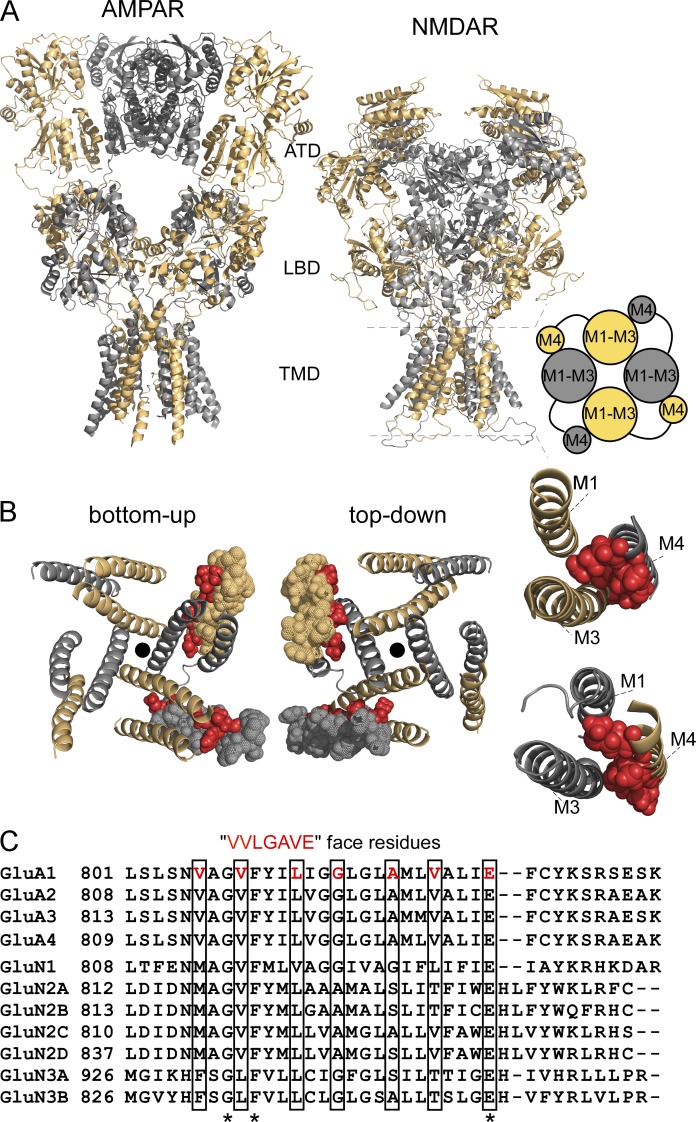
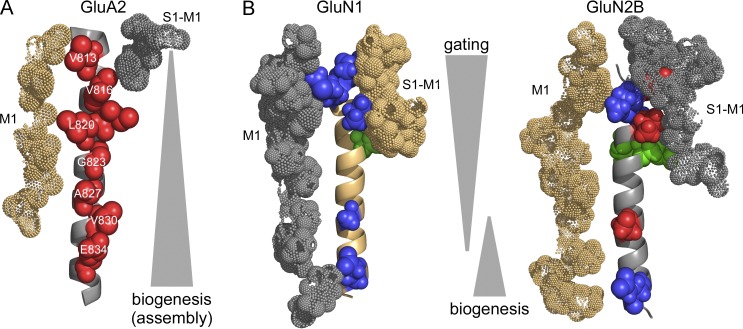
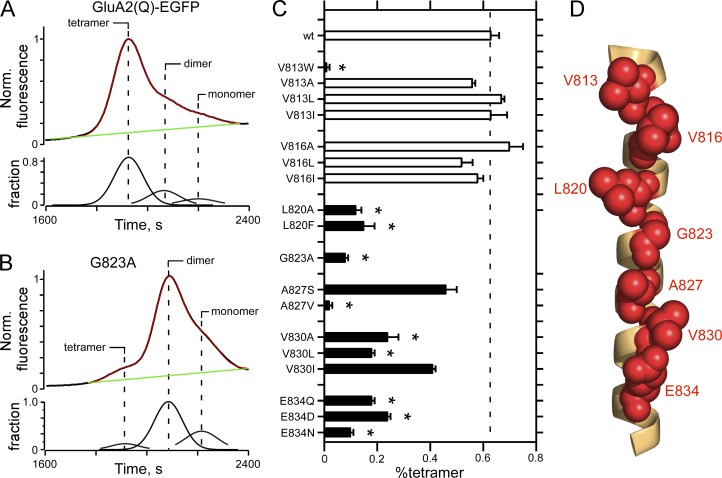
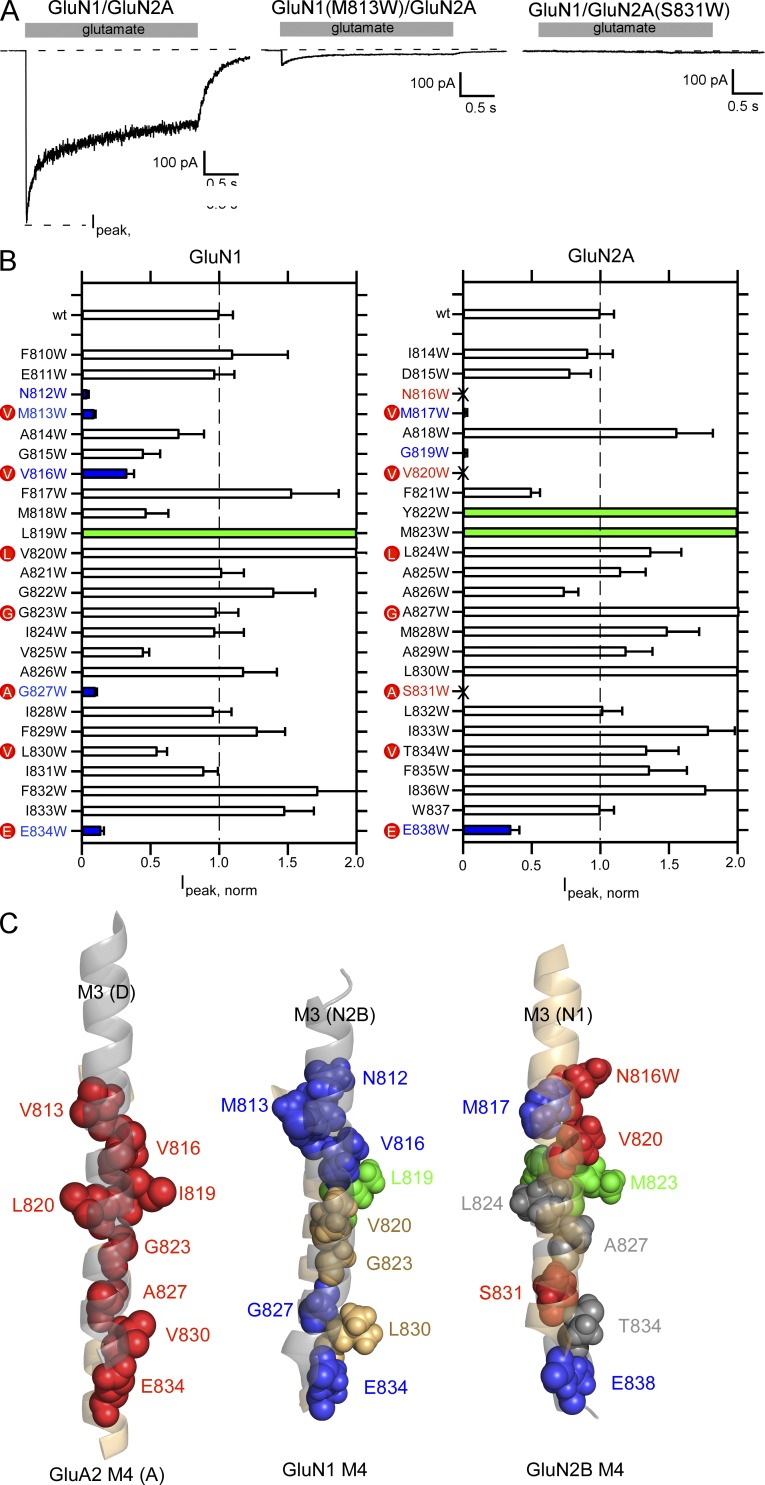
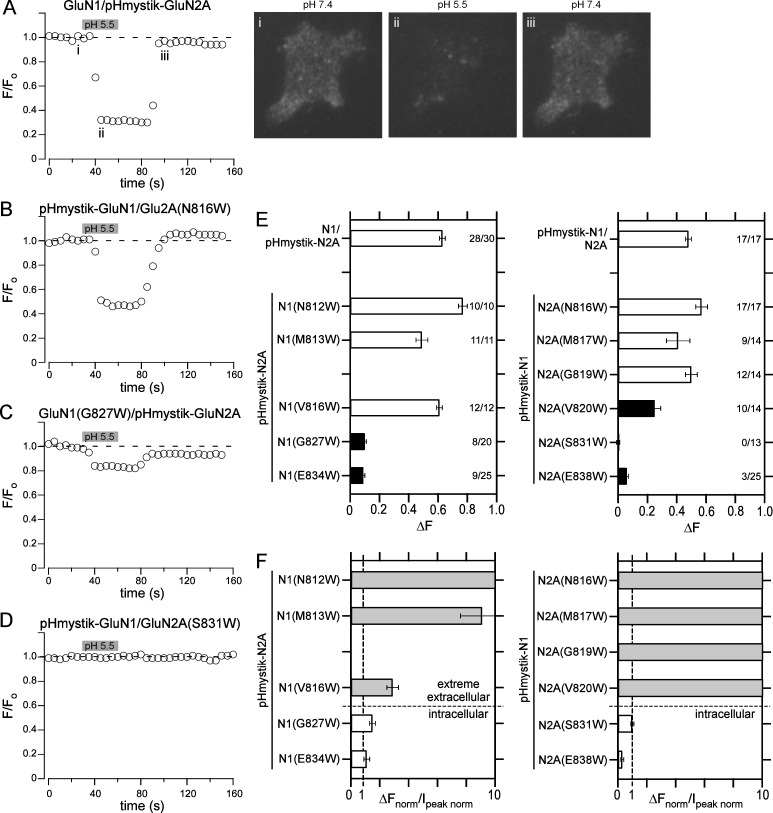
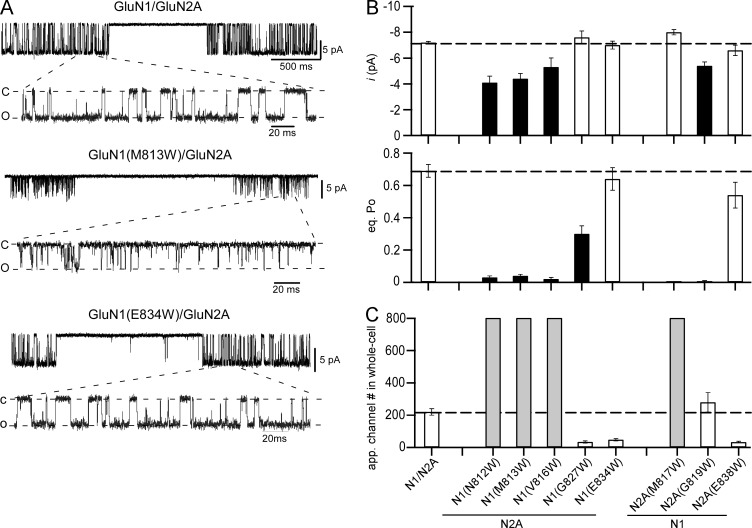
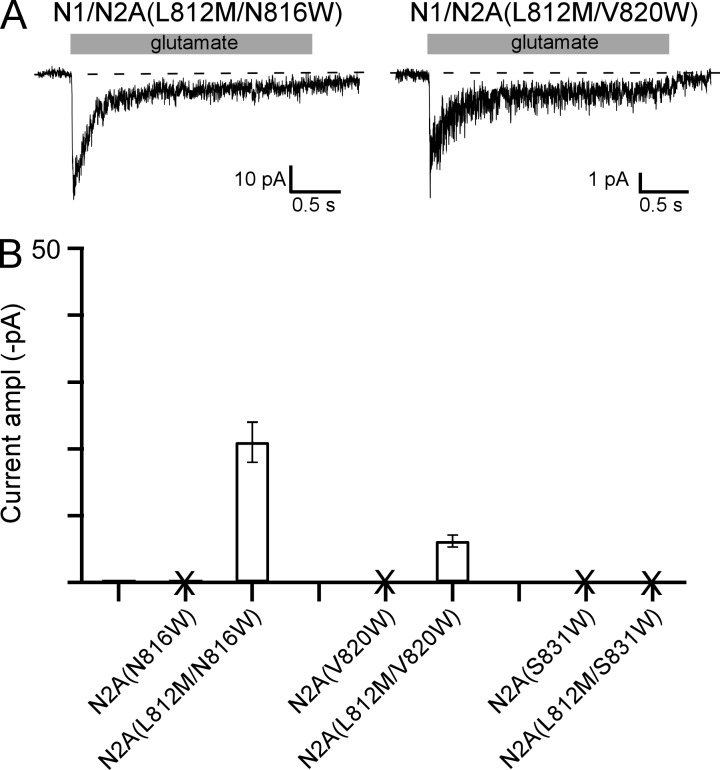
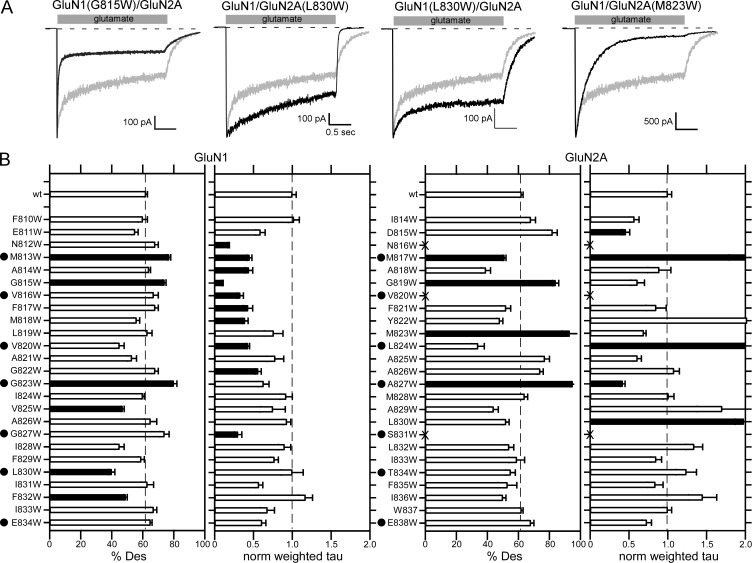
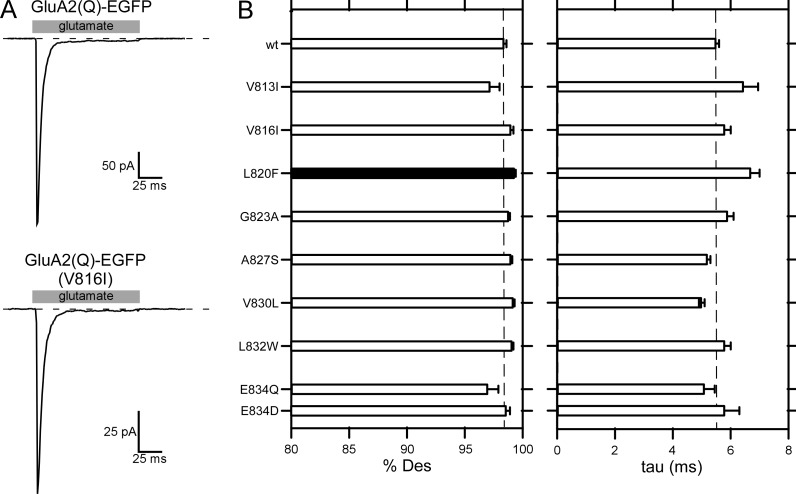
Ionotropic glutamate receptors (iGluRs), including AMPA receptor (AMPAR) and NMDA receptor (NMDAR) subtypes, are ligand-gated ion channels that mediate signaling at the majority of excitatory synapses in the nervous system. The iGluR pore domain is structurally and evolutionarily related to an inverted two-transmembrane K channel. Peripheral to the pore domain in eukaryotic iGluRs is an additional transmembrane helix, the M4 segment, which interacts with the pore domain of a neighboring subunit. In AMPARs, the integrity of the alignment of a specific face of M4 with the adjacent pore domain is essential for receptor oligomerization. In contrast to AMPARs, NMDARs are obligate heterotetramers composed of two GluN1 and typically two GluN2 subunits. Here, to address the function of the M4 segments in NMDARs, we carry out a tryptophan scan of M4 in GluN1 and GluN2A subunits. Unlike AMPARs, the M4 segments in NMDAR subunits makes only a limited contribution to their biogenesis. However, the M4 segments in both NMDAR subunits are critical for receptor activation, with mutations at some positions, most notably at the extreme extracellular end, completely halting the gating process. Furthermore, although the AMPAR M4 makes a minimal contribution to receptor desensitization, the NMDAR M4 segments have robust and subunit-specific effects on desensitization. These findings reveal that the functional roles of the M4 segments in AMPARs and NMDARs have diverged in the course of their evolution and that the M4 segments in NMDARs may act as a transduction pathway for receptor modulation at synapses.
离子型谷氨酸受体(iGluRs),包括AMPA受体(AMPAR)和NMDA受体(NMDAR)亚型,是配体门控离子通道,介导神经系统中大多数兴奋性突触的信号传递。iGluR孔道结构域在结构和进化上与一种反向的双跨膜钾通道相关。在真核生物iGluRs中,孔道结构域周围还有一个跨膜螺旋,即M4片段,它与相邻亚基的孔道结构域相互作用。在AMPAR中,M4特定面与相邻孔道结构域的对齐完整性对于受体寡聚化至关重要。与AMPAR不同,NMDAR是由两个GluN1和通常两个GluN2亚基组成的 obligate异四聚体。在这里,为了研究NMDAR中M4片段的功能,我们对GluN1和GluN2A亚基中的M4进行了色氨酸扫描。与AMPAR不同,NMDAR亚基中的M4片段对其生物合成的贡献有限。然而,NMDAR两个亚基中的M4片段对于受体激活至关重要,某些位置的突变,最显著的是在细胞外极端末端,会完全阻止门控过程。此外,虽然AMPAR的M4对受体脱敏的贡献最小,但NMDAR的M4片段对脱敏有强大且亚基特异性的影响。这些发现揭示了M4片段在AMPAR和NMDAR中的功能作用在进化过程中已经分化,并且NMDAR中的M4片段可能作为突触处受体调节的转导途径。