Kasper Stefan, Reis Henning, Ziegler Sophie, Nothdurft Silke, Mueller Andre, Goetz Moritz, Wiesweg Marcel, Phasue Jeannette, Ting Saskia, Wieczorek Sarah, Even Anna, Worm Karl, Pogorzelski Michael, Breitenbuecher Sandra, Meiler Johannes, Paul Andreas, Trarbach Tanja, Schmid Kurt Werner, Breitenbuecher Frank, Schuler Martin
Department of Medical Oncology, West German Cancer Center, University Hospital Essen, University Duisburg-Essen, 45122 Essen, Germany.
Institute of Pathology, West German Cancer Center, University Hospital Essen, University Duisburg-Essen, 45122 Essen, Germany.
Oncotarget. 2017 Jul 11;8(28):45898-45917. doi: 10.18632/oncotarget.17438.
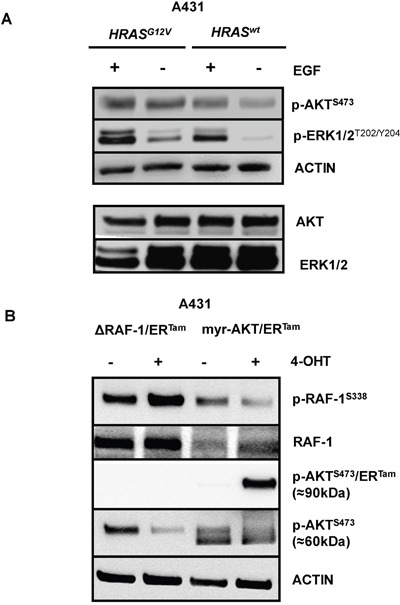
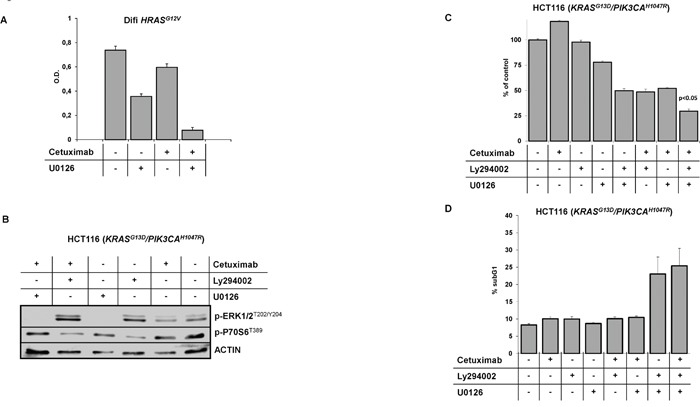
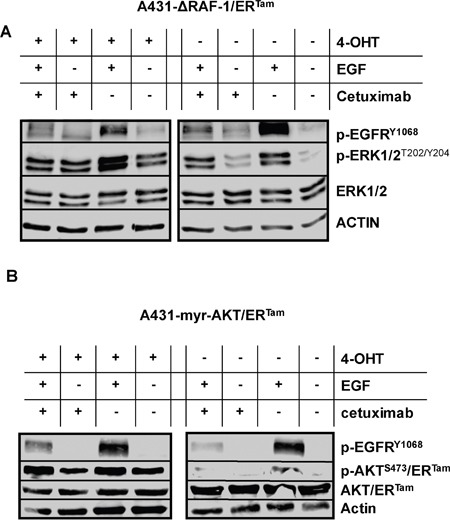
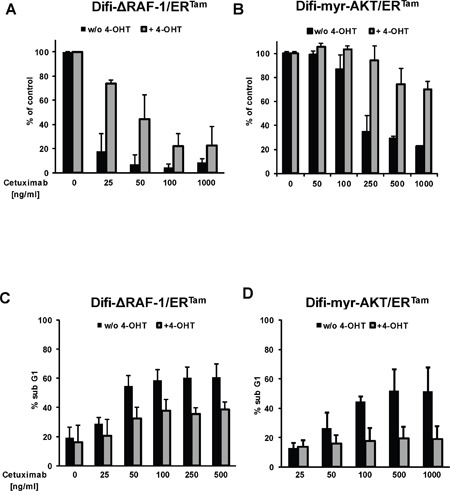
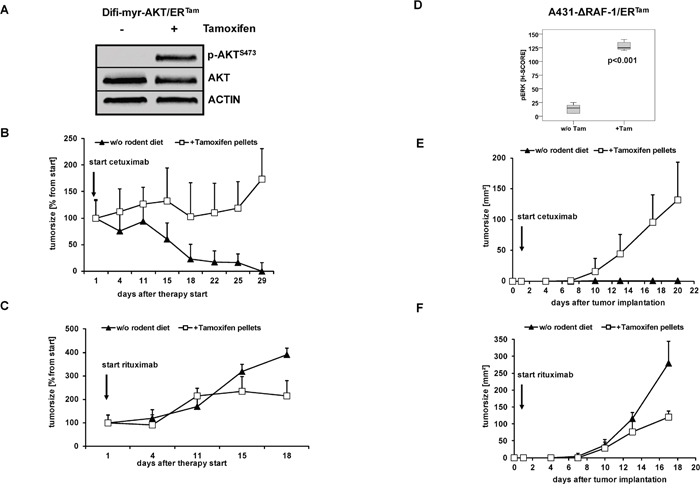
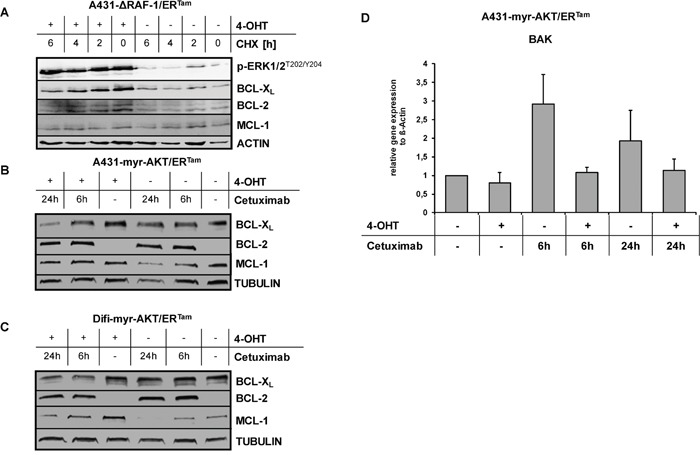
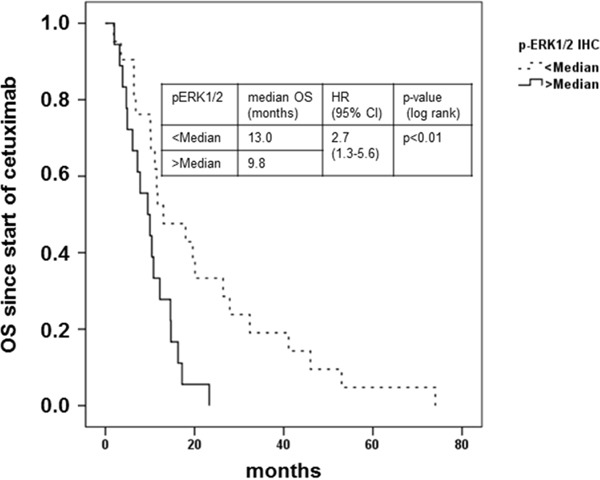
Monoclonal antibodies targeting the epidermal growth factor receptor (EGFR), cetuximab and panitumumab, are a mainstay of metastatic colorectal cancer (mCRC) treatment. However, a significant number of patients suffer from primary or acquired resistance. RAS mutations are negative predictors of clinical efficacy of anti-EGFR antibodies in patients with mCRC. Oncogenic RAS activates the MAPK and PI3K/AKT pathways, which are considered the main effectors of resistance. However, the relative impact of these pathways in RAS-mutant CRC is less defined. A better mechanistic understanding of RAS-mediated resistance may guide development of rational intervention strategies. To this end we developed cancer models for functional dissection of resistance to anti-EGFR therapy in vitro and in vivo. To selectively activate MAPK- or AKT-signaling we expressed conditionally activatable RAF-1 and AKT in cancer cells. We found that either pathway independently protected sensitive cancer models against anti-EGFR antibody treatment in vitro and in vivo. RAF-1- and AKT-mediated resistance was associated with increased expression of anti-apoptotic BCL-2 proteins. Biomarkers of MAPK and PI3K/AKT pathway activation correlated with inferior outcome in a cohort of mCRC patients receiving cetuximab-based therapy. Dual pharmacologic inhibition of PI3K and MEK successfully sensitized primary resistant CRC models to anti-EGFR therapy. In conclusion, combined targeting of MAPK and PI3K/AKT signaling, but not single pathways, may be required to enhance the efficacy of anti-EGFR antibody therapy in patients with RAS-mutated CRC as well as in RAS wild type tumors with clinical resistance.
靶向表皮生长因子受体(EGFR)的单克隆抗体西妥昔单抗和帕尼单抗是转移性结直肠癌(mCRC)治疗的主要手段。然而,相当数量的患者会出现原发性或获得性耐药。RAS突变是mCRC患者中抗EGFR抗体临床疗效的阴性预测指标。致癌性RAS激活MAPK和PI3K/AKT信号通路,这两条通路被认为是耐药的主要效应器。然而,这些通路在RAS突变型结直肠癌中的相对影响尚不清楚。对RAS介导的耐药性有更深入的机制理解可能会指导合理干预策略的开发。为此,我们建立了癌症模型,用于在体外和体内对抗EGFR治疗的耐药性进行功能剖析。为了选择性激活MAPK或AKT信号,我们在癌细胞中表达了条件可激活的RAF-1和AKT。我们发现,在体外和体内,这两条通路均可独立保护敏感癌症模型免受抗EGFR抗体治疗。RAF-1和AKT介导的耐药性与抗凋亡BCL-2蛋白表达增加有关。在接受基于西妥昔单抗治疗的mCRC患者队列中,MAPK和PI3K/AKT信号通路激活的生物标志物与较差的预后相关。PI3K和MEK的双重药理抑制成功使原发性耐药CRC模型对抗EGFR治疗敏感。总之,联合靶向MAPK和PI3K/AKT信号通路,而非单一通路,可能是增强抗EGFR抗体治疗对RAS突变型CRC患者以及具有临床耐药性的RAS野生型肿瘤疗效所必需的。