Augustine Swinburne A J, Simmons Kaneatra J, Eason Tarsha N, Curioso Clarissa L, Griffin Shannon M, Wade Timothy J, Dufour Alfred, Fout G Shay, Grimm Ann C, Oshima Kevin H, Sams Elizabeth A, See Mary Jean, Wymer Larry J
National Exposure Research Laboratory, United States Environmental Protection Agency, Cincinnati, OH, USA.
Oconee Fall Line Technical College, Dublin, GA, USA.
Front Public Health. 2017 May 1;5:84. doi: 10.3389/fpubh.2017.00084. eCollection 2017.
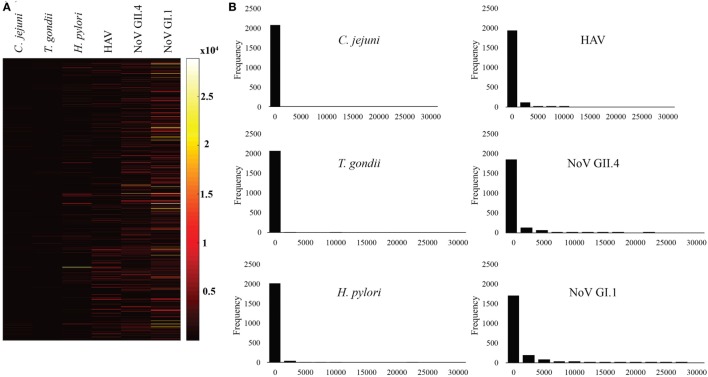
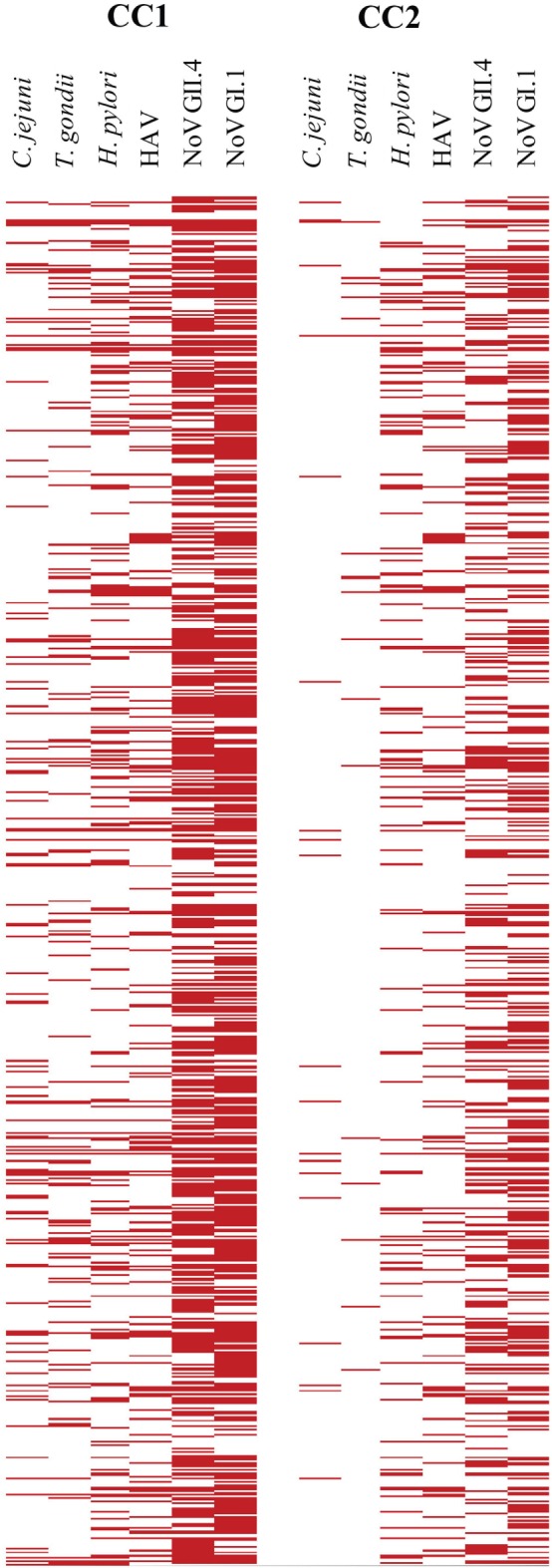
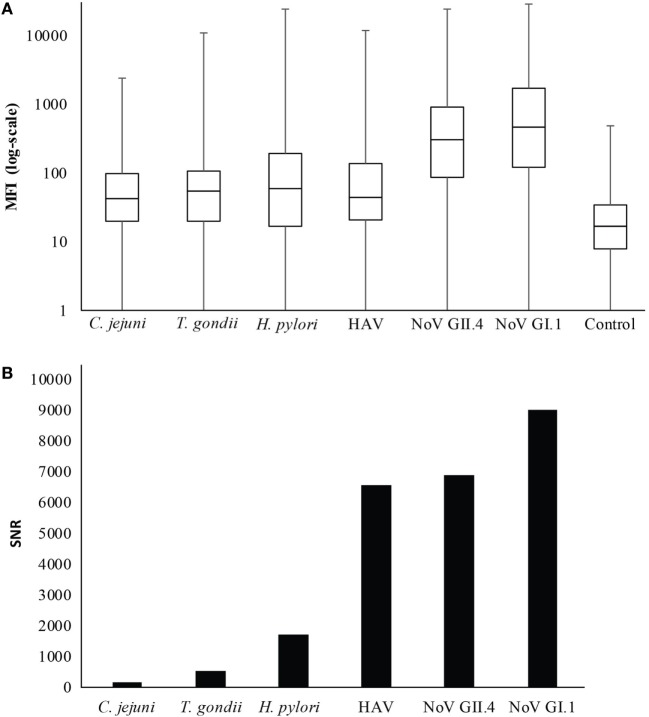
Waterborne infectious diseases are a major public health concern worldwide. Few methods have been established that are capable of measuring human exposure to multiple waterborne pathogens simultaneously using non-invasive samples such as saliva. Most current methods measure exposure to only one pathogen at a time, require large volumes of individual samples collected using invasive procedures, and are very labor intensive. In this article, we applied a multiplex bead-based immunoassay capable of measuring IgG antibody responses to six waterborne pathogens simultaneously in human saliva to estimate immunoprevalence in beachgoers at Boquerón Beach, Puerto Rico. Further, we present approaches for determining cutoff points to assess immunoprevalence to the pathogens in the assay. For the six pathogens studied, our results show that IgG antibodies against antigens from noroviruses GI.I and GII.4 were more prevalent (60 and 51.6%, respectively) than (21.4%), hepatitis A virus (20.2%), (8.7%), and (8%) in the saliva of the study participants. The salivary antibody multiplex immunoassay can be used to examine immunoprevalence of specific pathogens in human populations.
水源性传染病是全球主要的公共卫生问题。目前几乎没有能够使用唾液等非侵入性样本同时测量人类对多种水源性病原体暴露情况的方法。当前大多数方法一次只能测量对一种病原体的暴露情况,需要通过侵入性程序收集大量个体样本,且劳动强度极大。在本文中,我们应用了一种基于微珠的多重免疫测定法,该方法能够同时测量人类唾液中对六种水源性病原体的IgG抗体反应,以估计波多黎各博克龙海滩游泳者的免疫流行率。此外,我们还提出了确定临界值的方法,以评估该测定法中病原体的免疫流行率。对于所研究的六种病原体,我们的结果表明,在研究参与者的唾液中,针对诺如病毒GI.I和GII.4抗原的IgG抗体比轮状病毒(21.4%)、甲型肝炎病毒(20.2%)、星状病毒(8.7%)和腺病毒(8%)更为普遍(分别为60%和51.6%)。唾液抗体多重免疫测定法可用于检测人群中特定病原体的免疫流行率。