Bent-Ennakhil Nawal, Coste Florence, Xie Lin, Aigbogun Myrlene Sanon, Wang Yuexi, Kariburyo Furaha, Hartry Ann, Baser Onur, Neumann Peter, Fillit Howard
Real World Evidence and Epidemiology, Lundbeck SAS, Issy-Les-Moulineaux, France.
STATinMED Research, Ann Arbor, MI, USA.
Neurol Ther. 2017 Jun;6(1):131-144. doi: 10.1007/s40120-017-0067-7. Epub 2017 May 15.
Alzheimer's disease (AD) is the most common neurodegenerative form of dementia. Pharmacological therapies for symptomatic treatment, such as acetylcholinesterase inhibitors (AChEIs) and memantine, have been available in the USA since 2000. Over the past decade, few studies have analyzed real-world anti-dementia treatment patterns in the USA. This study evaluated monotherapy AChEIs and memantine treatment patterns among newly diagnosed AD patients.
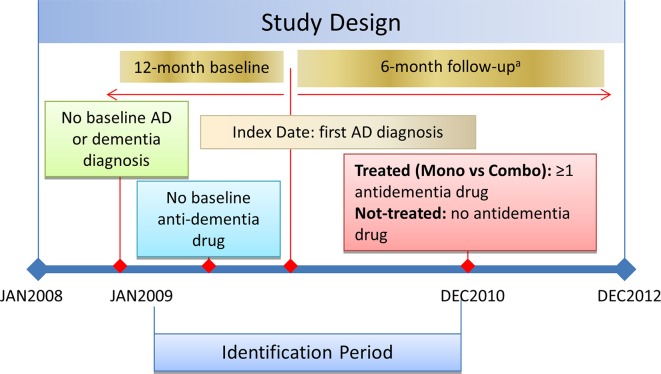
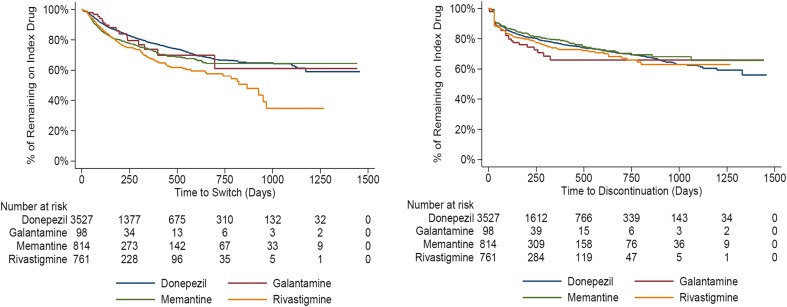
A retrospective cohort study was conducted using Medicare data and the Minimum Data Set from 2008 to 2012. Patients aged 65-100 years with newly diagnosed AD (ICD-9 code: 331.0) and monotherapy AChEI or memantine treatment initiated after diagnosis were included. Descriptive treatment pattern analyses, including discontinuation and switch, were undertaken. Kaplan-Meier curves were developed to examine the treatment duration.
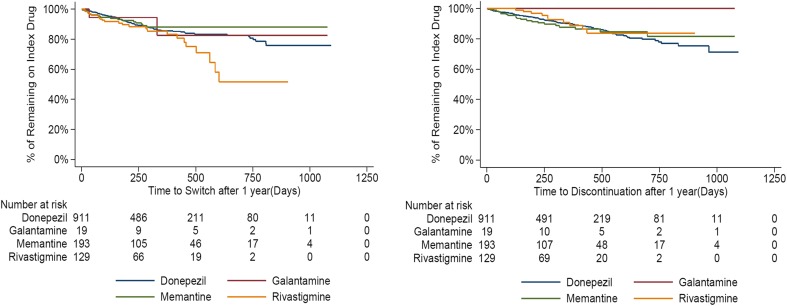
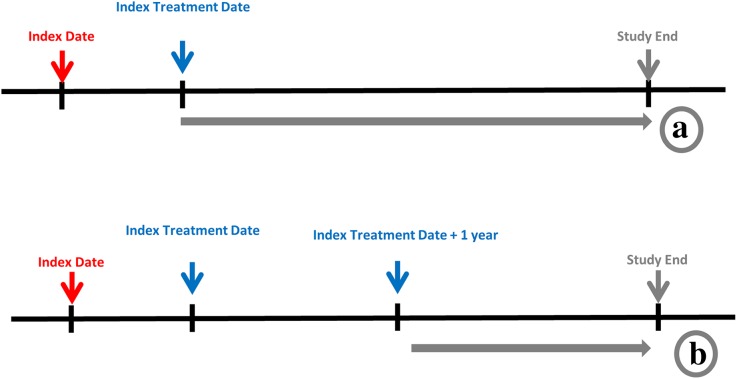
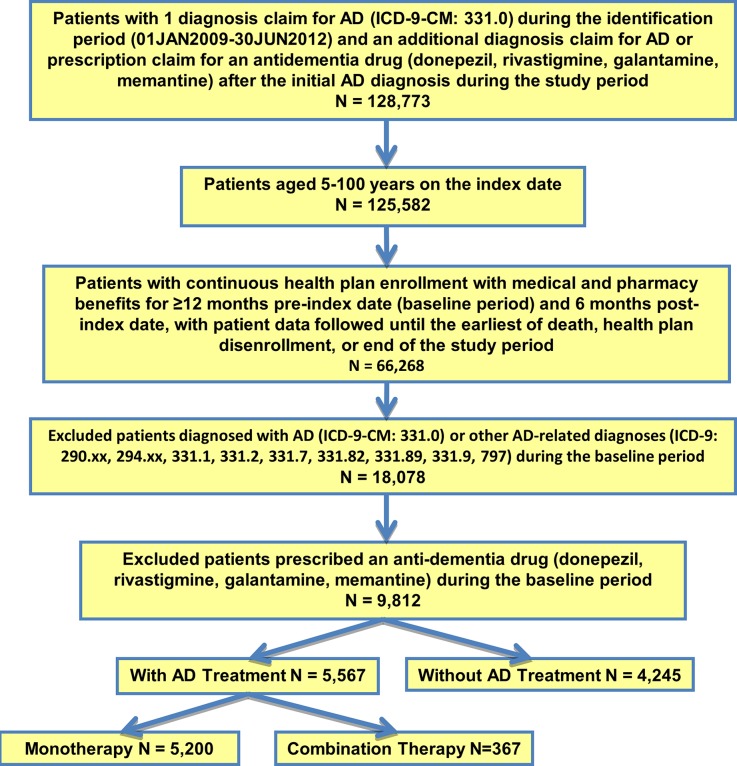
A total of 9812 newly diagnosed AD patients were identified, with 56.7% (n = 5567) first receiving anti-dementia treatment after the initial AD diagnosis. Among patients initiating monotherapy AChEIs or memantine after AD diagnosis (N = 5200), 51.6% continued index treatment during the entire follow-up period (mean follow-up: 659.7 days) and 21.7% discontinued treatment. Of those who initiated monotherapy treatment with an AChEI, 11.1% received adjunct therapy with memantine. Among patients with ≥1 year of continuous treatment (mean follow-up: 834 days), 75.6% remained on the index drug, 10.2% discontinued during the remaining follow-up period, and 9.5% of the AD patients initiating AChEIs received adjunct memantine therapy during the remaining follow-up period.
In the USA Medicare population, about 50% of the patients who initiated treatment with AChEI or memantine after diagnosis continued the index treatment, and more than 20% discontinued and were untreated afterwards over the observation period. AD patients initiating AChEIs or memantine were more likely to remain on their treatment if they were persistently treated for the first year.
阿尔茨海默病(AD)是最常见的神经退行性痴呆形式。自2000年以来,美国已有用于对症治疗的药物疗法,如乙酰胆碱酯酶抑制剂(AChEIs)和美金刚。在过去十年中,很少有研究分析美国实际的抗痴呆治疗模式。本研究评估了新诊断的AD患者中AChEIs单药治疗和美金刚的治疗模式。
利用2008年至2012年的医疗保险数据和最小数据集进行了一项回顾性队列研究。纳入年龄在65 - 100岁、新诊断为AD(国际疾病分类第九版代码:331.0)且在诊断后开始AChEIs单药治疗或美金刚治疗的患者。进行了描述性治疗模式分析,包括停药和换药情况。绘制了Kaplan - Meier曲线以检查治疗持续时间。
共确定了9812例新诊断的AD患者,其中56.7%(n = 5567)在首次AD诊断后首次接受抗痴呆治疗。在AD诊断后开始AChEIs单药治疗或美金刚治疗的患者(N = 5200)中,51.6%在整个随访期间(平均随访:659.7天)继续初始治疗,21.7%停药。在开始AChEIs单药治疗的患者中,11.1%接受了美金刚辅助治疗。在持续治疗≥1年的患者(平均随访:834天)中,75.6%仍使用初始药物,10.2%在剩余随访期间停药,在剩余随访期间,开始AChEIs治疗 的AD患者中有9.5%接受了美金刚辅助治疗。
在美国医疗保险人群中,约50%在诊断后开始使用AChEIs或美金刚治疗的患者继续初始治疗,在观察期内超过20%停药且之后未接受治疗。开始使用AChEIs或美金刚治疗的AD患者如果在第一年持续接受治疗,则更有可能继续治疗。