Song Weihua, Wang Xiaomeng
Division of Metabolic Medicine, Lee Kong Chian School of Medicine, Nanyang Technological University, Research Techno Plaza, X-Frontiers Block, Level 4, 50 Nan yang Drive, Singapore, 637553, Singapore.
Division of Cell Biology in Health and Disease, Institute of Molecular and Cell Biology, Singapore Agency for Science, Technology and Research, 61 Biopolis Drive, Proteos, Singapore, 138673, Singapore.
Biophys Rev. 2015 Mar;7(1):91-104. doi: 10.1007/s12551-014-0158-y. Epub 2015 Jan 15.
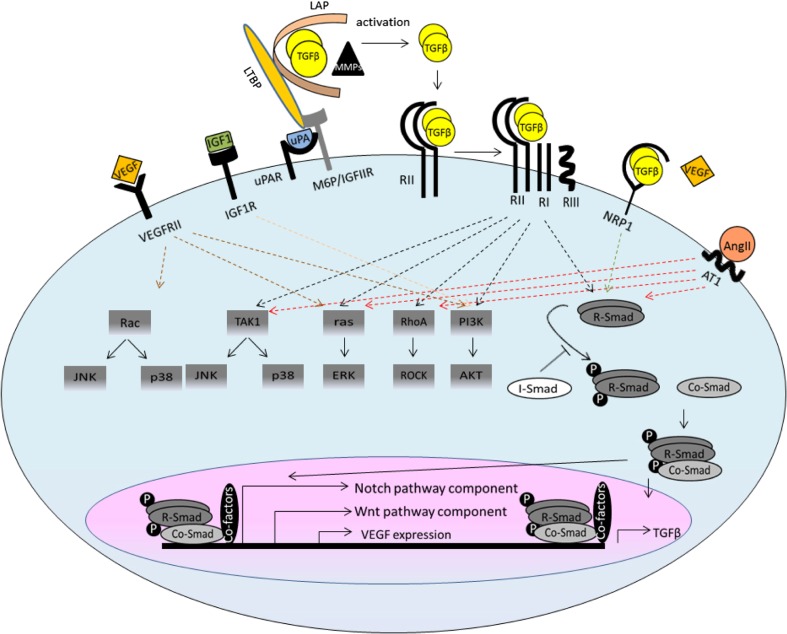
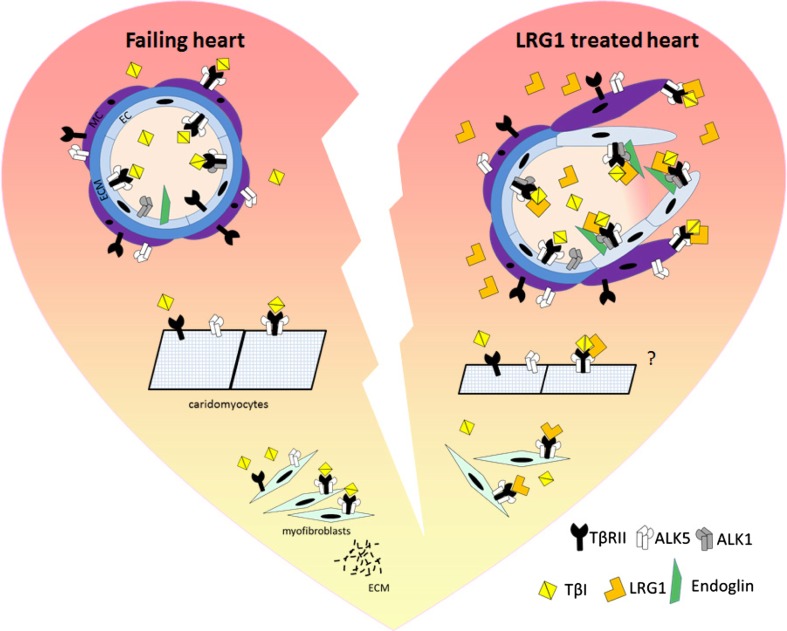
Heart failure is a life-threatening condition that carries a considerable emotional and socio-economic burden. As a result of the global increase in the ageing population, sedentary life-style, increased prevalence of risk factors, and improved survival from cardiovascular events, the incidence of heart failure will continue to rise. Despite the advances in current cardiovascular therapies, many patients are not suitable for or may not benefit from conventional treatments. Thus, more effective therapies are required. Transforming growth factor (TGF) β family of cytokines is involved in heart development and dys-regulated TGFβ signalling is commonly associated with fibrosis, aberrant angiogenesis and accelerated progression into heart failure. Therefore, a potential therapeutic pathway is to modulate TGFβ signalling; however, broad blockage of TGFβ signalling may cause unwanted side effects due to its pivotal role in tissue homeostasis. We found that leucine-rich α-2 glycoprotein 1 (LRG1) promotes blood vessel formation via regulating the context-dependent endothelial TGFβ signalling. This review will focus on the interaction between LRG1 and TGFβ signalling, their involvement in the pathogenesis of heart failure, and the potential for LRG1 to function as a novel therapeutic target.
心力衰竭是一种危及生命的疾病,会带来相当大的情感和社会经济负担。由于全球老年人口增加、久坐的生活方式、危险因素患病率上升以及心血管事件存活率提高,心力衰竭的发病率将持续上升。尽管目前心血管治疗取得了进展,但许多患者不适合或可能无法从传统治疗中获益。因此,需要更有效的治疗方法。转化生长因子(TGF)β细胞因子家族参与心脏发育,TGFβ信号失调通常与纤维化、异常血管生成以及心力衰竭加速进展有关。因此,一个潜在的治疗途径是调节TGFβ信号;然而,由于TGFβ信号在组织稳态中起关键作用,广泛阻断TGFβ信号可能会导致不良副作用。我们发现富含亮氨酸的α-2糖蛋白1(LRG1)通过调节依赖于环境的内皮TGFβ信号促进血管形成。本综述将重点关注LRG1与TGFβ信号之间的相互作用、它们在心力衰竭发病机制中的作用以及LRG1作为新型治疗靶点的潜力。