Stevens Ronald H, Galloway Trysha L
Brain Research Institute, UCLA School of MedicineCulver City, CA., USA.
The Learning Chameleon, Inc.Culver City, CA, USA.
Front Psychol. 2017 May 2;8:644. doi: 10.3389/fpsyg.2017.00644. eCollection 2017.
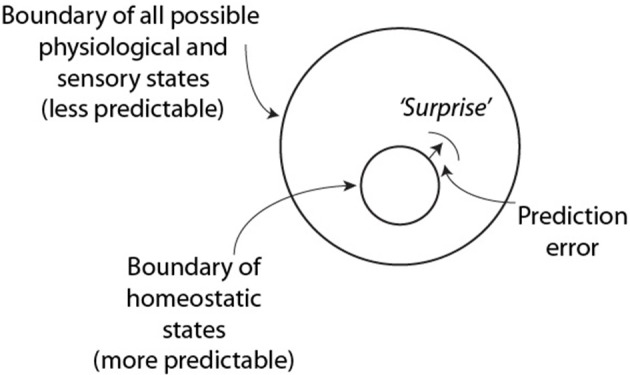
When performing a task it is important for teams to optimize their strategies and actions to maximize value and avoid the cost of surprise. The decisions teams make sometimes have unintended consequences and they must then reorganize their thinking, roles and/or configuration into corrective structures more appropriate for the situation. In this study we ask: What are the neurodynamic properties of these reorganizations and how do they relate to the moment-by-moment, and longer, performance-outcomes of teams?. We describe an information-organization approach for detecting and quantitating the fluctuating neurodynamic organizations in teams. Neurodynamic organization is the propensity of team members to enter into prolonged (minutes) metastable neurodynamic relationships as they encounter and resolve disturbances to their normal rhythms. Team neurodynamic organizations were detected and modeled by transforming the physical units of each team member's EEG power levels into Shannon entropy-derived information units about the team's organization and synchronization. Entropy is a measure of the variability or uncertainty of information in a data stream. This physical unit to information unit transformation bridges micro level social coordination events with macro level expert observations of team behavior allowing multimodal comparisons across the neural, cognitive and behavioral time scales of teamwork. The measures included the entropy of each team member's data stream, the overall team entropy and the mutual information between dyad pairs of the team. Mutual information can be thought of as periods related to team member synchrony. Comparisons between individual entropy and mutual information levels for the dyad combinations of three-person teams provided quantitative estimates of the proportion of a person's neurodynamic organizations that represented periods of synchrony with other team members, which in aggregate provided measures of the overall degree of neurodynamic interactions of the team. We propose that increased neurodynamic organization occurs when a team's operating rhythm can no longer support the complexity of the task and the team needs to expend energy to re-organize into structures that better minimize the "surprise" in the environment. Consistent with this hypothesis, the frequency and magnitude of neurodynamic organizations were less in experienced military and healthcare teams than they were in more junior teams. Similar dynamical properties of neurodynamic organization were observed in models of the EEG data streams of military, healthcare and high school science teams suggesting that neurodynamic organization may be a common property of teamwork. The innovation of this study is the potential it raises for developing globally applicable quantitative models of team dynamics that will allow comparisons to be made across teams, tasks and training protocols.
在执行任务时,团队优化其策略和行动以实现价值最大化并避免意外成本非常重要。团队做出的决策有时会产生意想不到的后果,然后他们必须将自己的思维、角色和/或配置重新组织成更适合该情况的纠正性结构。在本研究中,我们提出问题:这些重组的神经动力学特性是什么,它们与团队的即时和长期绩效结果有何关系?我们描述了一种信息组织方法,用于检测和量化团队中波动的神经动力学组织。神经动力学组织是团队成员在遇到并解决其正常节奏的干扰时,进入长时间(数分钟)亚稳态神经动力学关系的倾向。通过将每个团队成员脑电图功率水平的物理单位转换为关于团队组织和同步性的香农熵衍生信息单位,来检测和建模团队神经动力学组织。熵是数据流中信息变异性或不确定性的度量。这种从物理单位到信息单位的转换将微观层面的社会协调事件与宏观层面的团队行为专家观察联系起来,允许在团队合作的神经、认知和行为时间尺度上进行多模态比较。测量包括每个团队成员数据流的熵、团队整体熵以及团队二元组之间的互信息。互信息可以被认为是与团队成员同步相关的时期。对三人团队二元组合的个体熵和互信息水平进行比较,提供了一个人神经动力学组织中与其他团队成员同步时期所占比例的定量估计,总体上提供了团队神经动力学相互作用总体程度的度量。我们提出,当团队的运作节奏不再能够支持任务的复杂性,并且团队需要耗费精力重新组织成能更好地最小化环境中“意外”的结构时,神经动力学组织会增加。与该假设一致,经验丰富的军事和医疗团队中神经动力学组织的频率和幅度低于较初级的团队。在军事、医疗和高中科学团队的脑电图数据流模型中观察到类似的神经动力学组织动态特性,这表明神经动力学组织可能是团队合作的一个共同特性。本研究的创新之处在于它为开发全球适用的团队动态定量模型带来了潜力,这些模型将允许在不同团队、任务和训练协议之间进行比较。
