Ersing Ina, Nobre Luis, Wang Liang Wei, Soday Lior, Ma Yijie, Paulo Joao A, Narita Yohei, Ashbaugh Camille W, Jiang Chang, Grayson Nicholas E, Kieff Elliott, Gygi Steven P, Weekes Michael P, Gewurz Benjamin E
Division of Infectious Disease, Department of Medicine, Brigham & Women's Hospital, Harvard Medical School, 181 Longwood Avenue, Boston, MA 02115, USA; Institut für Klinische und Molekulare Virologie, Friedrich-Alexander-Universität Erlangen-Nürnberg, 91054 Erlangen, Germany.
Cambridge Institute for Medical Research, University of Cambridge, Hills Road, Cambridge CB2 0XY, UK.
Cell Rep. 2017 May 16;19(7):1479-1493. doi: 10.1016/j.celrep.2017.04.062.
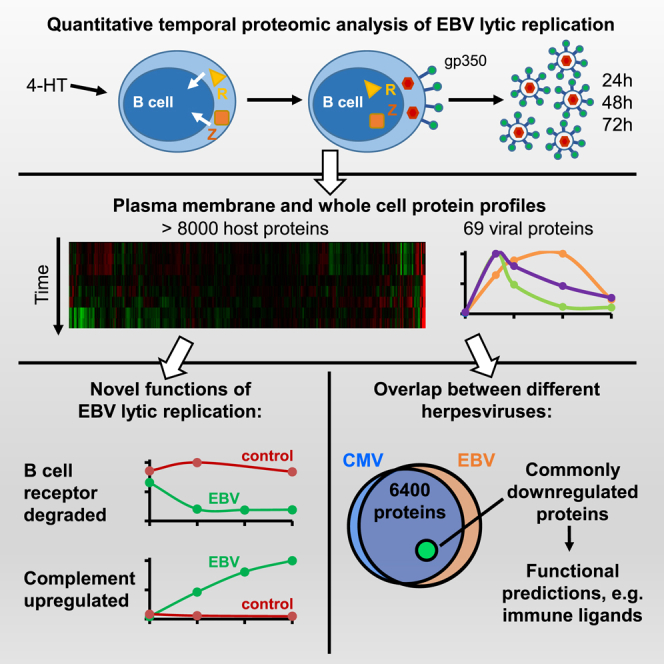
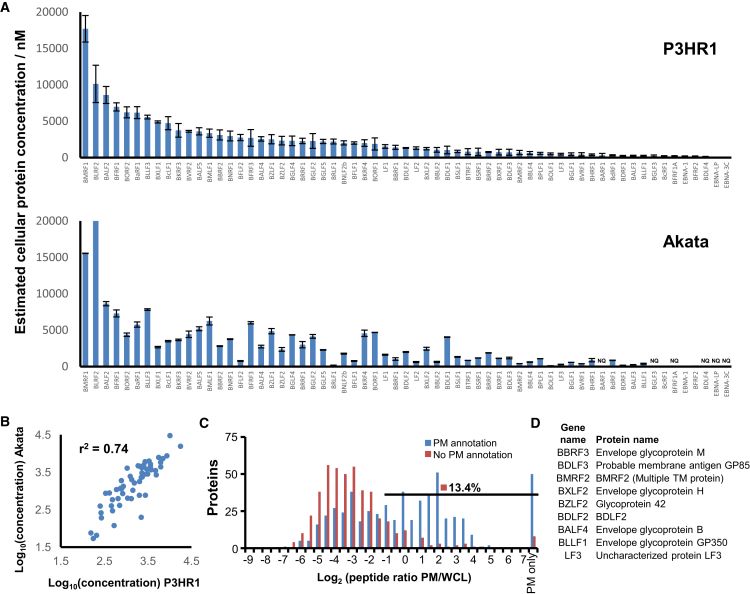
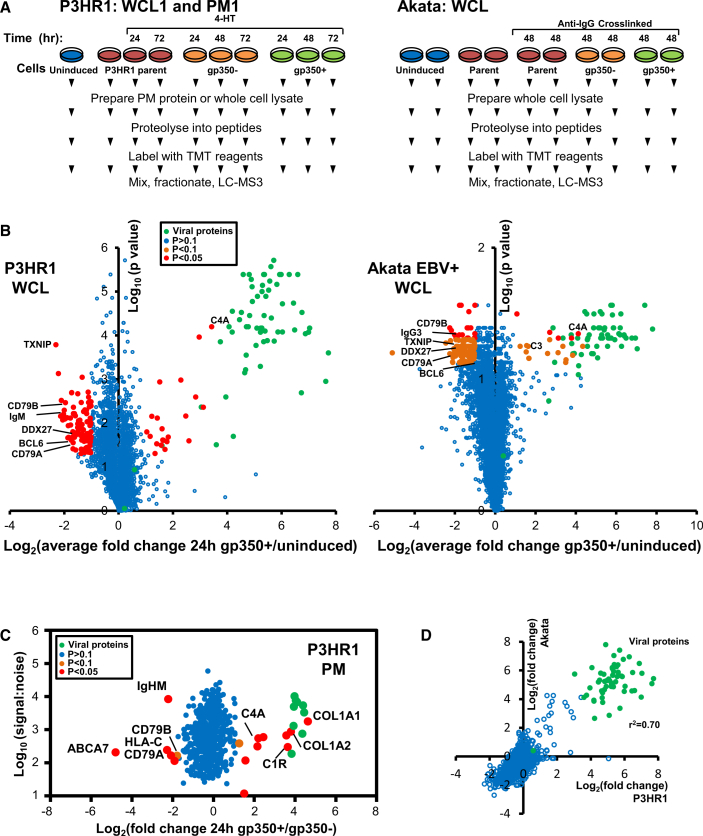
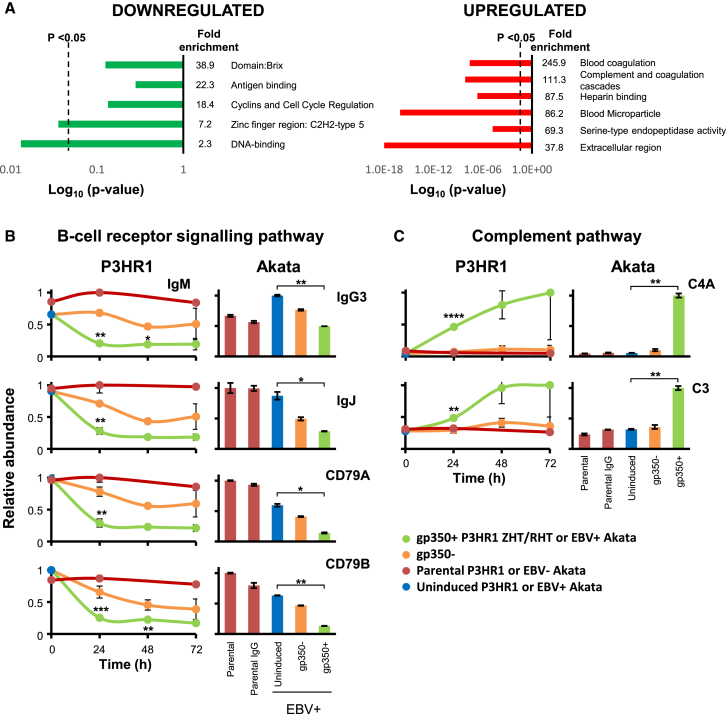
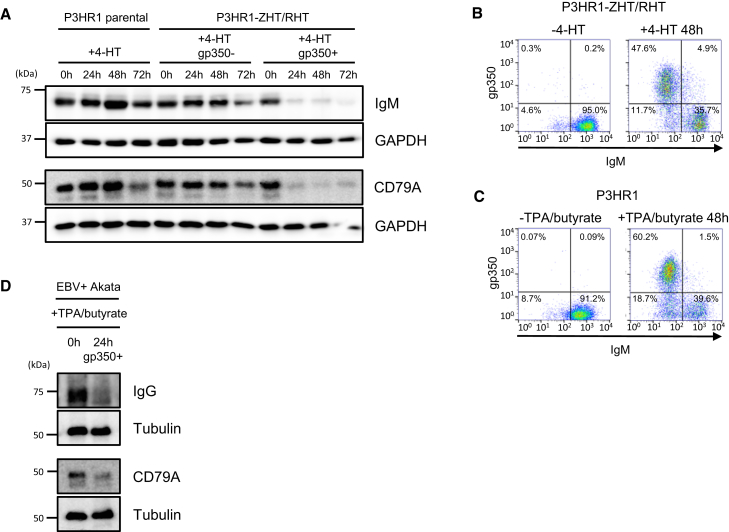
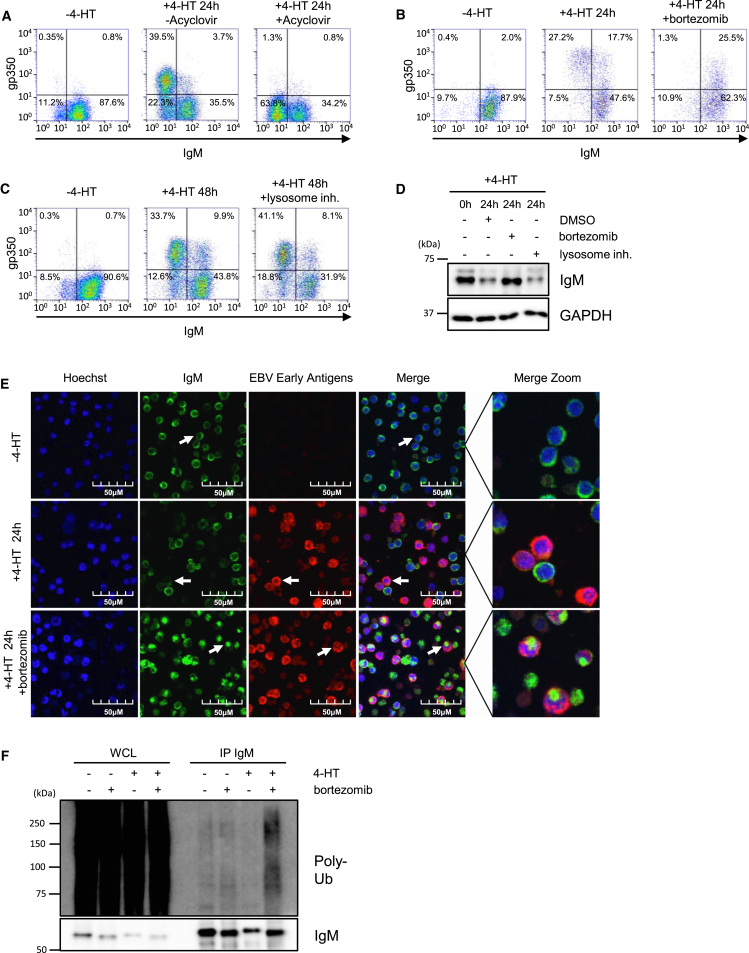
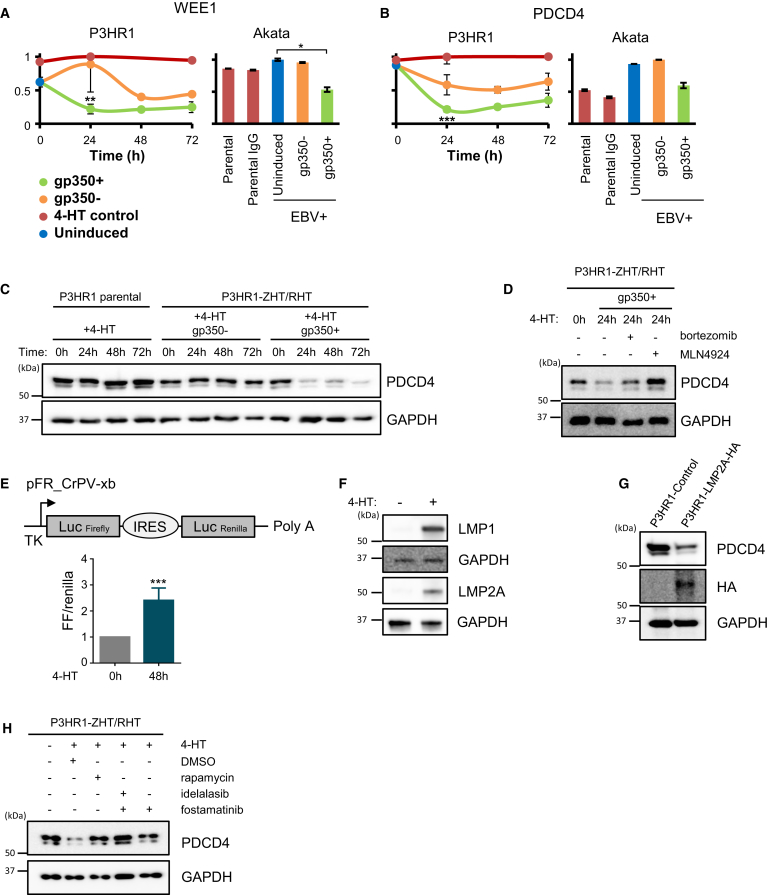
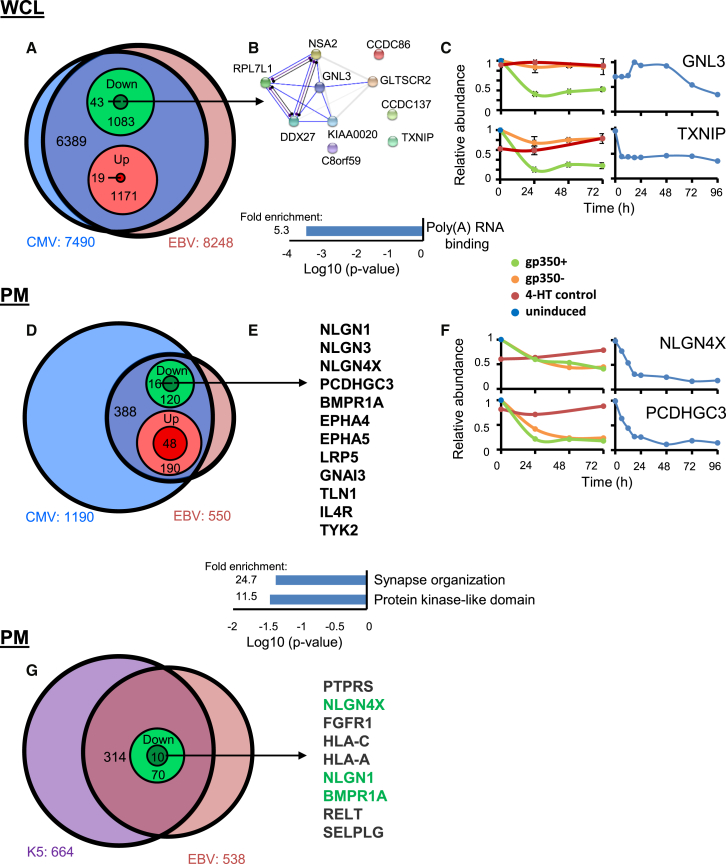
Epstein-Barr virus (EBV) replication contributes to multiple human diseases, including infectious mononucleosis, nasopharyngeal carcinoma, B cell lymphomas, and oral hairy leukoplakia. We performed systematic quantitative analyses of temporal changes in host and EBV proteins during lytic replication to gain insights into virus-host interactions, using conditional Burkitt lymphoma models of type I and II EBV infection. We quantified profiles of >8,000 cellular and 69 EBV proteins, including >500 plasma membrane proteins, providing temporal views of the lytic B cell proteome and EBV virome. Our approach revealed EBV-induced remodeling of cell cycle, innate and adaptive immune pathways, including upregulation of the complement cascade and proteasomal degradation of the B cell receptor complex, conserved between EBV types I and II. Cross-comparison with proteomic analyses of human cytomegalovirus infection and of a Kaposi-sarcoma-associated herpesvirus immunoevasin identified host factors targeted by multiple herpesviruses. Our results provide an important resource for studies of EBV replication.
爱泼斯坦-巴尔病毒(EBV)复制与多种人类疾病相关,包括传染性单核细胞增多症、鼻咽癌、B细胞淋巴瘤和口腔毛状白斑。我们使用I型和II型EBV感染的条件性伯基特淋巴瘤模型,对裂解复制过程中宿主和EBV蛋白的时间变化进行了系统的定量分析,以深入了解病毒-宿主相互作用。我们对8000多种细胞蛋白和69种EBV蛋白进行了定量分析,其中包括500多种质膜蛋白,提供了裂解B细胞蛋白质组和EBV病毒组的时间视图。我们的方法揭示了EBV诱导的细胞周期、先天性和适应性免疫途径的重塑,包括补体级联反应的上调和B细胞受体复合物的蛋白酶体降解,这在I型和II型EBV之间是保守的。与人巨细胞病毒感染和卡波西肉瘤相关疱疹病毒免疫逃逸蛋白的蛋白质组分析进行交叉比较,确定了多种疱疹病毒靶向的宿主因子。我们的结果为EBV复制研究提供了重要资源。