Vehlow Anne, Klapproth Erik, Storch Katja, Dickreuter Ellen, Seifert Michael, Dietrich Antje, Bütof Rebecca, Temme Achim, Cordes Nils
OncoRay, National Center for Radiation Research in Oncology, Faculty of Medicine and University Hospital Carl Gustav Carus, Technische Universität Dresden, Helmholtz-Zentrum Dresden, Rossendorf, PF 41, 01307, Dresden, Germany.
Helmholtz-Zentrum Dresden, Rossendorf, Institute of Radiopharmaceutical Cancer Research, 01328, Dresden, Germany.
Oncotarget. 2017 Jul 25;8(30):49224-49237. doi: 10.18632/oncotarget.17480.
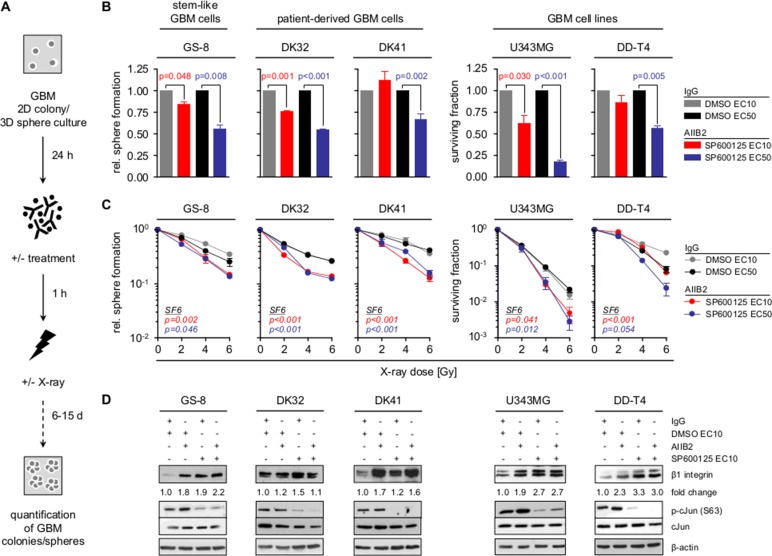
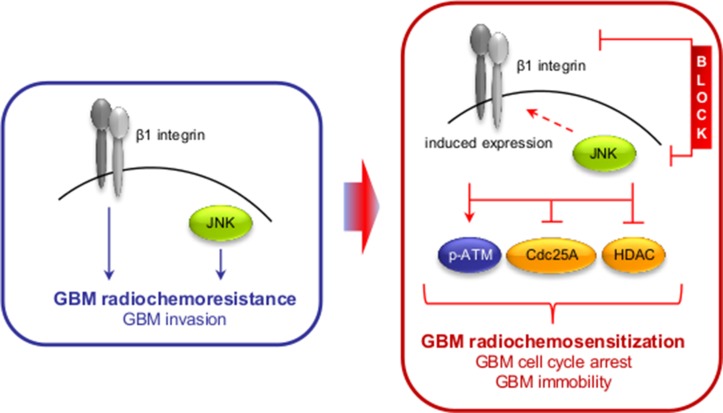
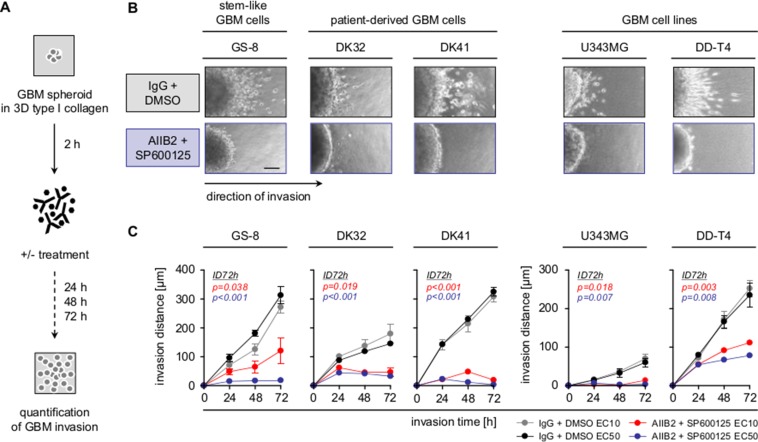
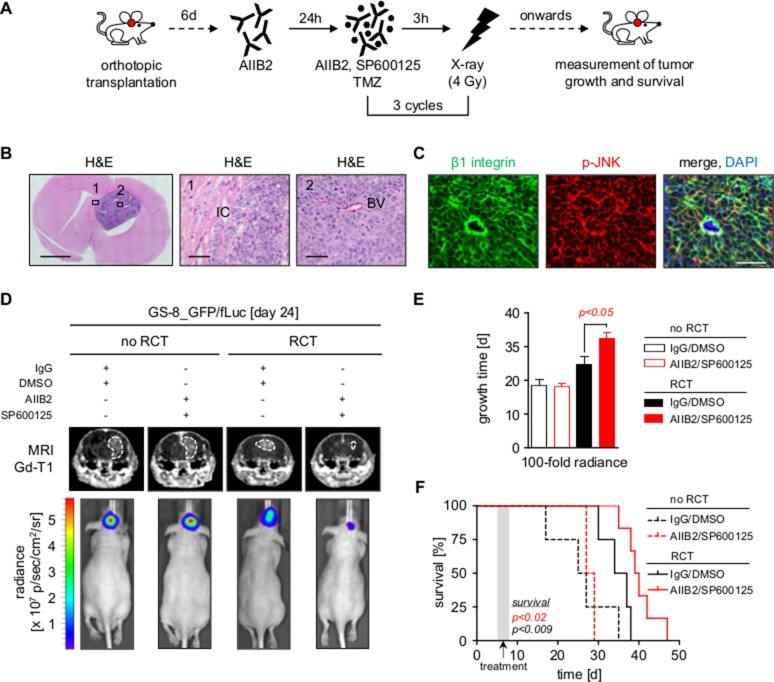
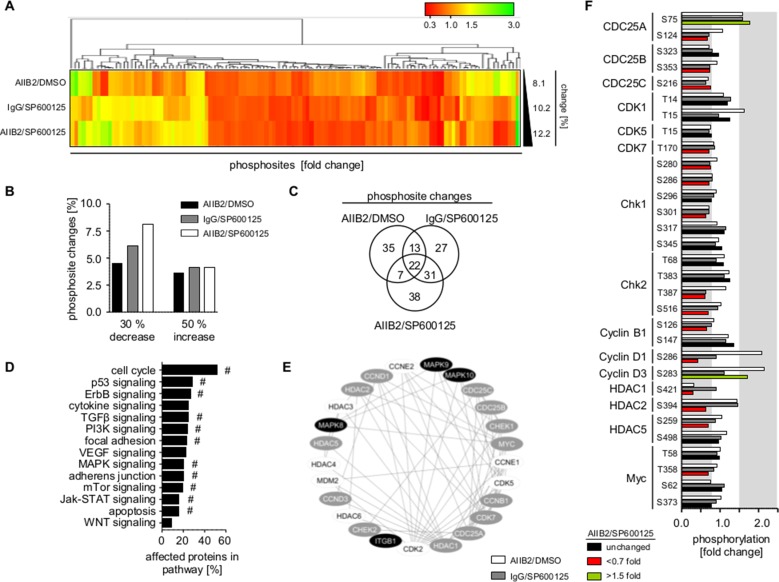
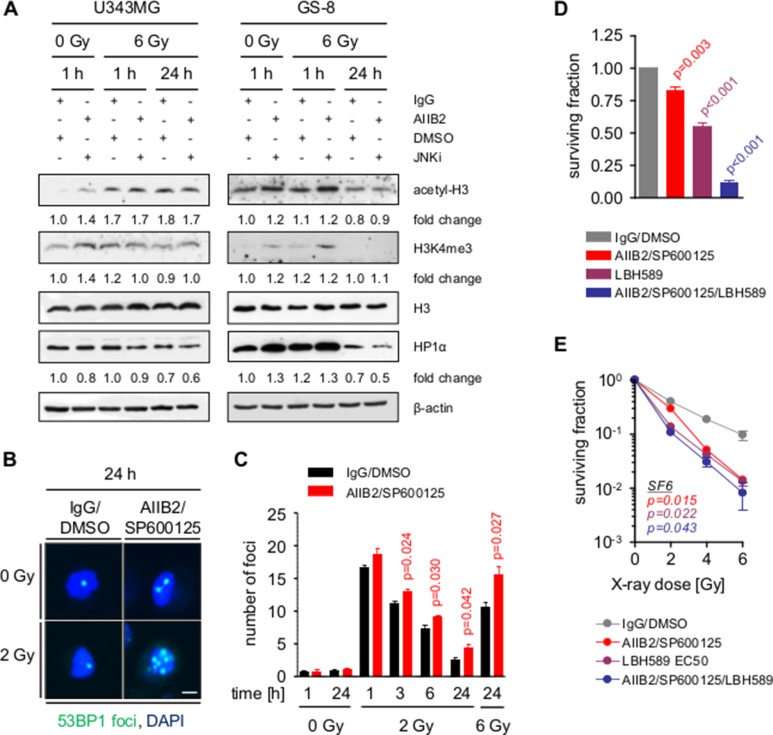
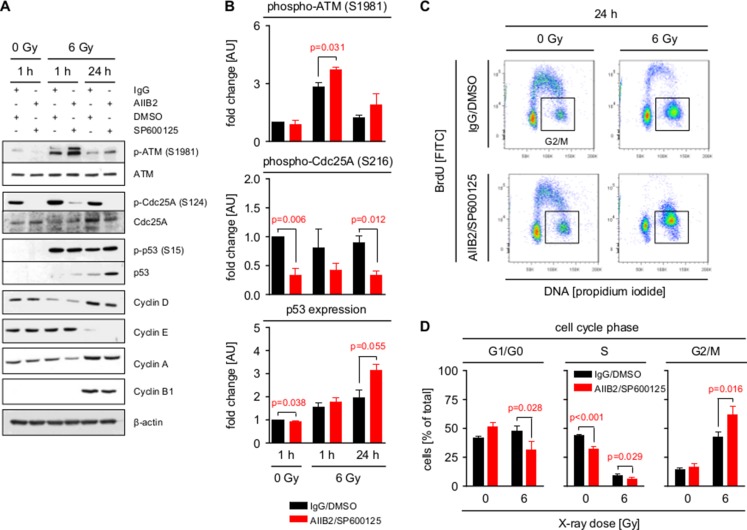
Resistance of cancer stem-like and cancer tumor bulk cells to radiochemotherapy and destructive infiltration of the brain fundamentally influence the treatment efficiency to cure of patients suffering from Glioblastoma (GBM). The interplay of adhesion and stress-related signaling and activation of bypass cascades that counteract therapeutic approaches remain to be identified in GBM cells. We here show that combined inhibition of the adhesion receptor β1 integrin and the stress-mediator c-Jun N-terminal kinase (JNK) induces radiosensitization and blocks invasion in stem-like and patient-derived GBM cultures as well as in GBM cell lines. In vivo, this treatment approach not only significantly delays tumor growth but also increases median survival of orthotopic, radiochemotherapy-treated GBM mice. Both, in vitro and in vivo, effects seen with β1 integrin/JNK co-inhibition are superior to the monotherapy. Mechanistically, the in vitro radiosensitization provoked by β1 integrin/JNK targeting is caused by defective DNA repair associated with chromatin changes, enhanced ATM phosphorylation and prolonged G2/M cell cycle arrest. Our findings identify a β1 integrin/JNK co-dependent bypass signaling for GBM therapy resistance, which might be therapeutically exploitable.
癌症干细胞样细胞和癌症肿瘤主体细胞对放化疗的抗性以及对脑的破坏性浸润从根本上影响了胶质母细胞瘤(GBM)患者的治疗效果。在GBM细胞中,粘附和应激相关信号的相互作用以及抵消治疗方法的旁路级联反应的激活仍有待确定。我们在此表明,联合抑制粘附受体β1整合素和应激介质c-Jun氨基末端激酶(JNK)可诱导放射增敏,并阻断干细胞样和患者来源的GBM培养物以及GBM细胞系中的侵袭。在体内,这种治疗方法不仅显著延迟肿瘤生长,还提高了原位接受放化疗的GBM小鼠的中位生存期。在体外和体内,β1整合素/JNK联合抑制所产生的效果均优于单一疗法。从机制上讲,β1整合素/JNK靶向所引发的体外放射增敏是由与染色质变化相关的DNA修复缺陷、增强的ATM磷酸化以及延长的G2/M细胞周期阻滞引起的。我们的研究结果确定了一种GBM治疗抗性的β1整合素/JNK共同依赖的旁路信号,这可能具有治疗开发价值。