Institute of Animal Sciences, Chinese Academy of Agricultural Sciences, Beijing, 100193, China.
State Key Laboratory of Animal Nutrition, Beijing, 100193, China.
Sci Rep. 2017 May 17;7(1):2053. doi: 10.1038/s41598-017-01560-3.
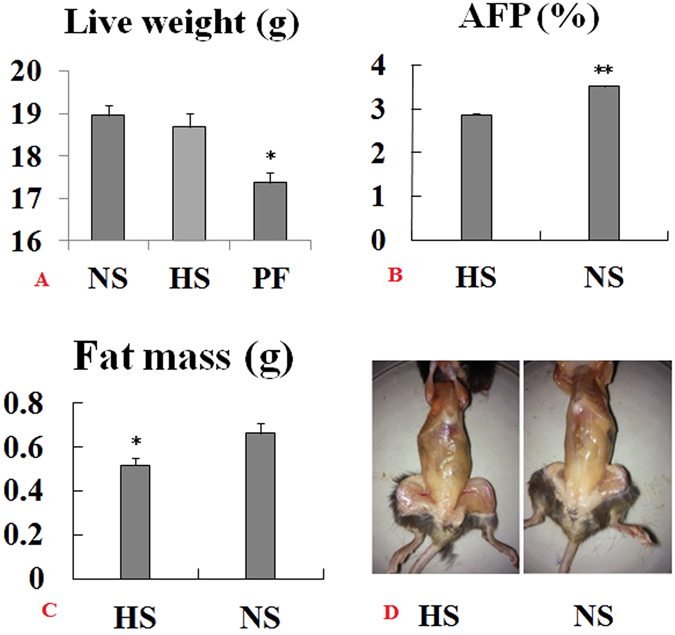
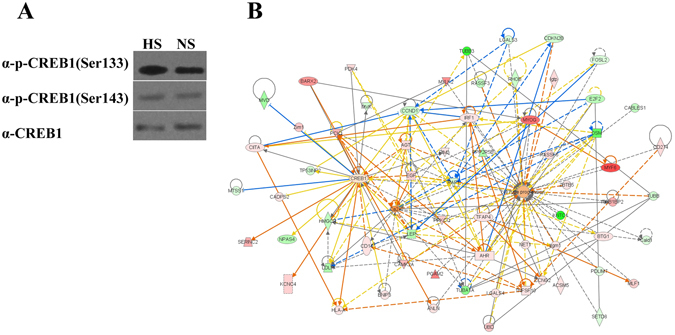
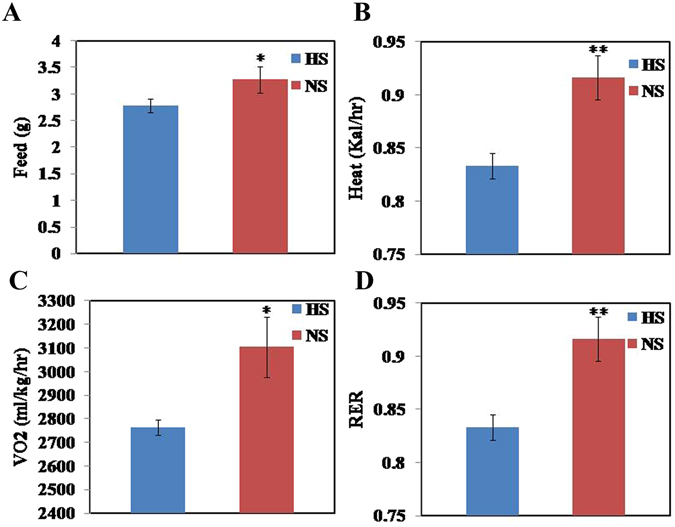
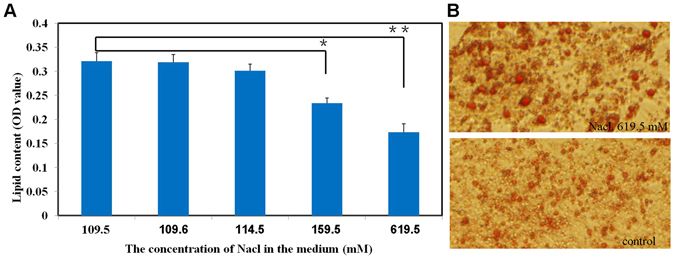
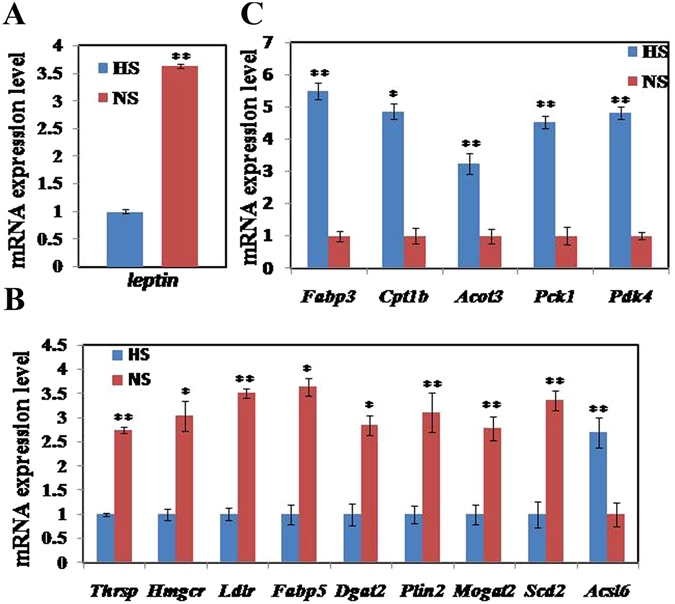
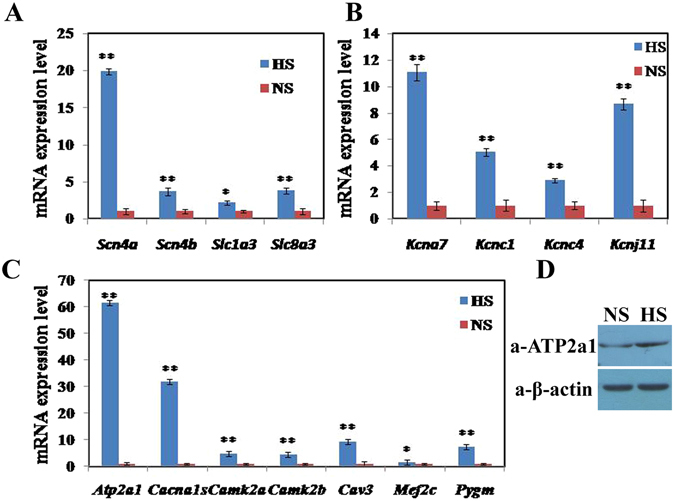
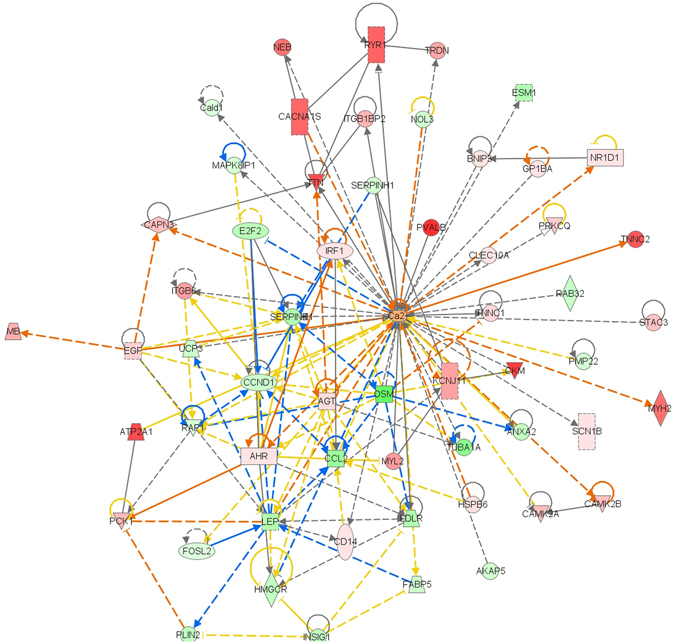
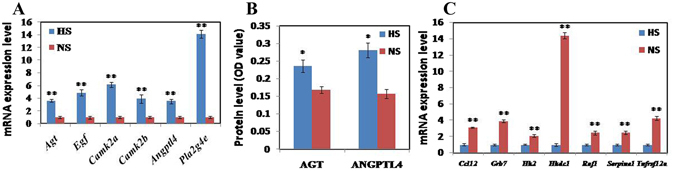
High-salt (HS) intake contributes to hypertension and cardiopathy, but the effect of HS on fat deposition is controversial. Feed intake, fat mass, the percentage of abdominal fat, heat production, rate of oxygen consumption and the respiratory exchange ratio of mice on a HS diet were significantly decreased (P < 0.01 or 0.05) compared with mice on a normal-salt (NS) diet. An in vitro experiment with differentiating pre-adipocytes showed reduced fat deposition in the presence of high concentrations of NaCl (>0.05 M). Abdominal fat mRNA profiles and protein measurements showed that 5 known genes involved in lipolysis were up-regulated significantly and 9 genes related to lipogenesis were down-regulated in HS mice. Abundant genes and some proteins (ATP2a1, AGT, and ANGPTL4) related to calcium ion metabolism or the renin-angiotensin system (RAS) were differentially expressed between HS and NS mice. Of special interest, CREB1 phosphorylation (S133 and S142), a key factor involved in calcium signaling and other pathways, was up-regulated in HS mice. By IPA analysis, a network mediated by calcium was established providing the molecular mechanisms underlying the negative effect of HS on fat deposition.
高盐(HS)摄入可导致高血压和心脏病,但 HS 对脂肪沉积的影响仍存在争议。与正常盐(NS)饮食组相比,HS 饮食组的小鼠采食量、脂肪量、腹部脂肪百分比、产热量、耗氧量和呼吸交换率均显著降低(P<0.01 或 0.05)。体外分化前脂肪细胞实验表明,在高浓度 NaCl(>0.05 M)存在的情况下,脂肪沉积减少。腹部脂肪 mRNA 谱和蛋白测量显示,5 个已知与脂肪分解有关的基因在 HS 小鼠中显著上调,9 个与脂肪生成有关的基因下调。HS 和 NS 小鼠之间丰富的基因和一些蛋白(ATP2a1、AGT 和 ANGPTL4)与钙离子代谢或肾素-血管紧张素系统(RAS)有关,表达水平不同。特别值得注意的是,HS 小鼠中参与钙离子信号转导和其他途径的关键因子 CREB1 的磷酸化(S133 和 S142)上调。通过 IPA 分析,建立了一个由钙离子介导的网络,为 HS 对脂肪沉积的负面影响提供了分子机制。