Molecular Oncology Research Institute, Tufts Medical Center, Boston MA USA.
Cummings School of Veterinary Medicine. Tufts University, North Grafton, MA USA.
Signal Transduct Target Ther. 2017;2:16045-. doi: 10.1038/sigtrans.2016.45. Epub 2017 Mar 17.
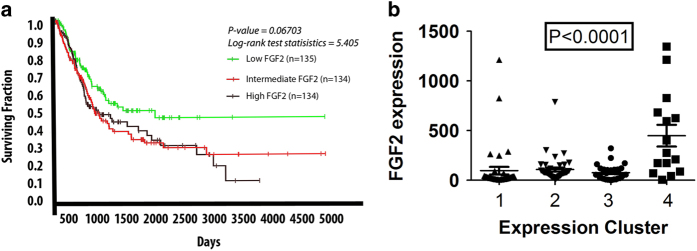
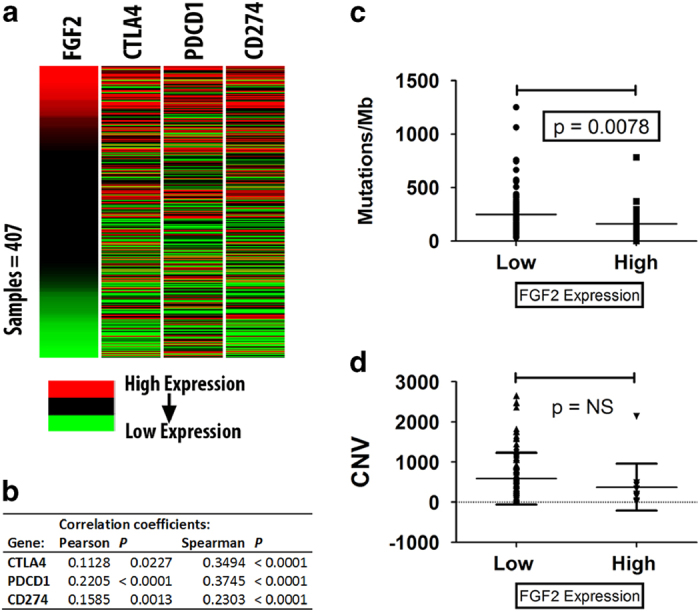
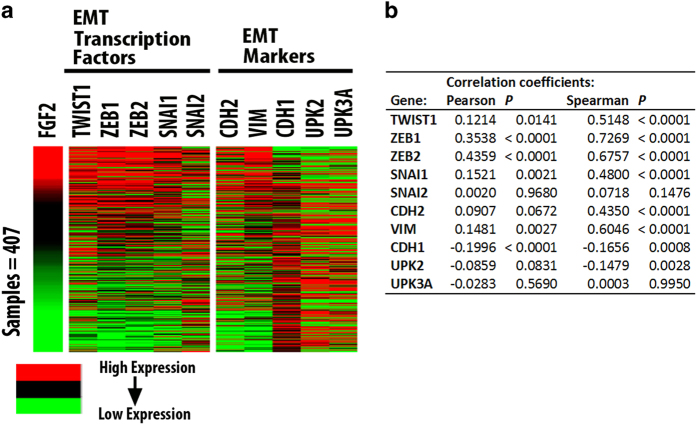
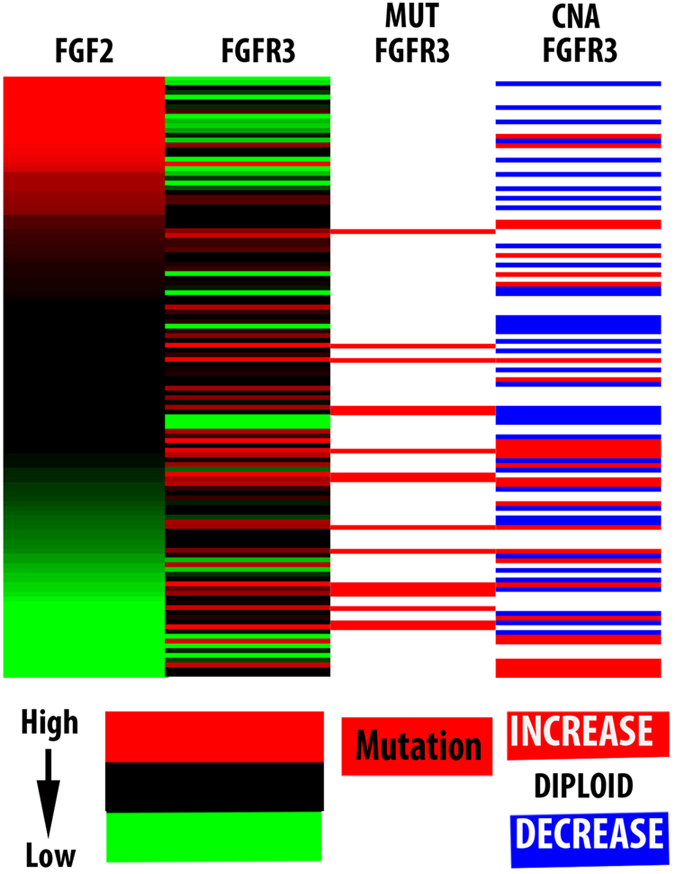
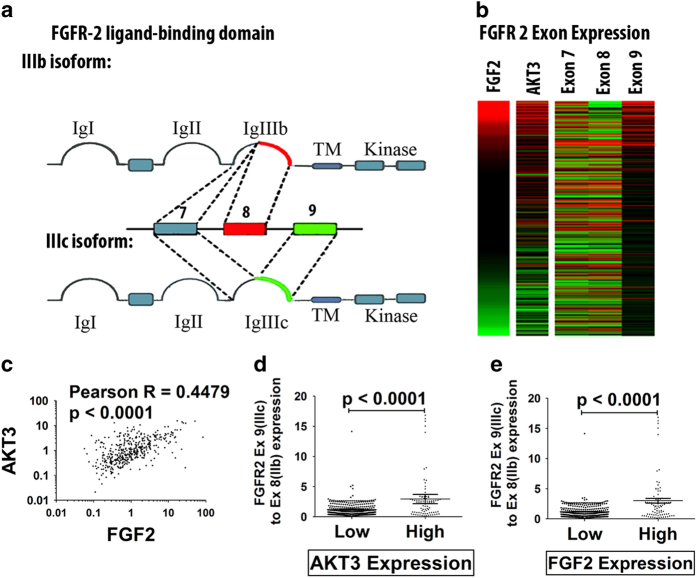
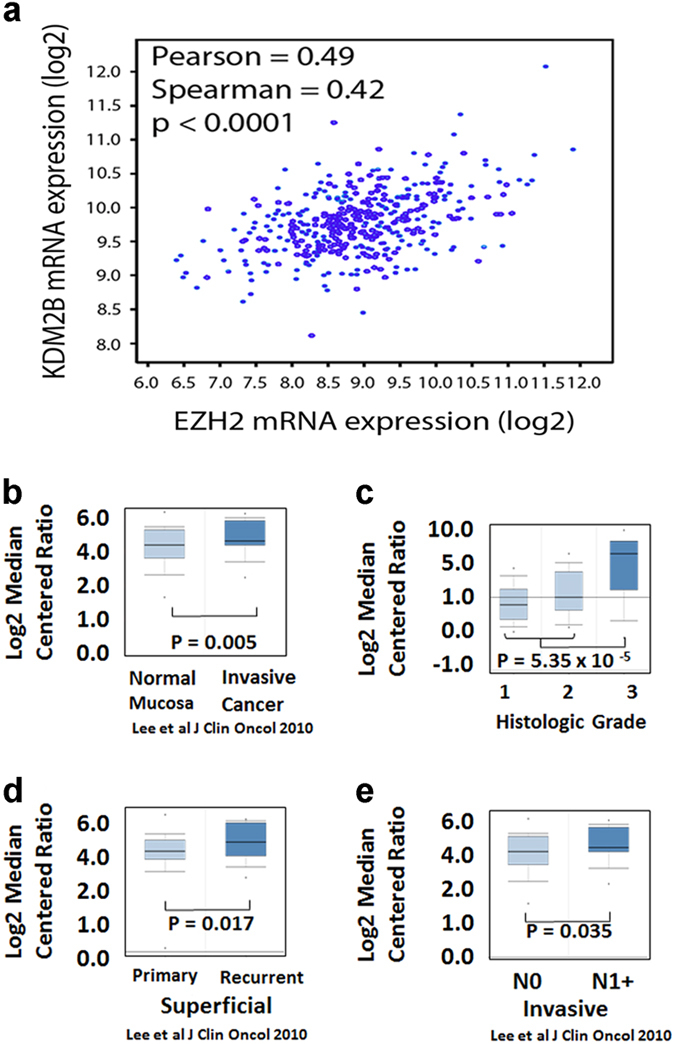
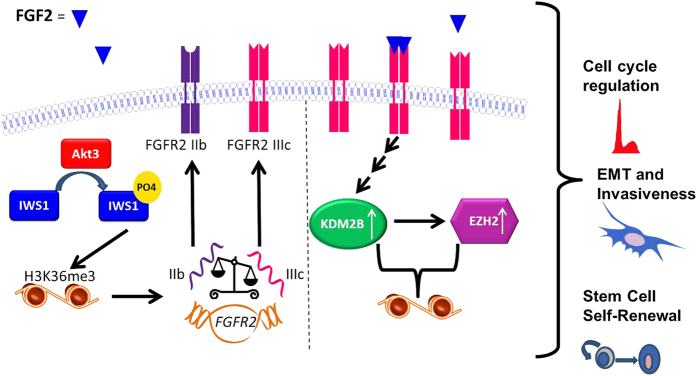
FGF-2 is overexpressed in a subset of invasive bladder carcinomas and its overexpression correlates with poor prognosis. Analyses of publicly available databases addressing the molecular mechanisms that may be responsible for the poor prognosis of these tumors, revealed that FGF-2 expression correlates positively with the expression of EMT-promoting transcription factors and with changes in gene expression that are characteristic of EMT. The same analyses also revealed that FGF-2 correlates negatively with the expression, mutation and copy number variations of FGFR-3, all of which are associated with non-invasive bladder carcinomas. Finally, they showed that FGF-2 expression correlates with the expression of FGFR-1, the expression of the IIIc variant of FGFR-2 and with the expression of Akt3. The latter observation is significant because our earlier studies had shown that Akt3 regulates FGFR-2 alternative splicing, shifting the balance toward the IIIc relative to the IIIb FGFR-2 splice variant. Since the IIIc variant is recognized by FGF-2, while the IIIb variant is not, we conclude that Akt3 may facilitate the FGF-2 response. FGF-2 is known to promote the expression of KDM2B, which functions in concert with EZH2 to repress the EZH2-targeting microRNA miR-101, activating a switch, which stably upregulates EZH2. TCGA data showing a correlation between KDM2B and EZH2 expression and Oncomine data, showing a correlation between KDM2B and tumor progression, strongly support the role of the FGF-2/KDM2B/miR-101/EZH2 pathway in bladder cancer. These observations combined, suggest a model according to which FGF-2 induces EMT, cell proliferation and cancer stem cell self-renewal by coupling the Akt3 and KDM2B-controlled pathways outlined above, in bladder carcinomas. Further analyses of publicly-available databases, revealed that FGF-2-expressing bladder carcinomas carry fewer genetic alterations and they tend to express high levels of CTLA-4, PD-1 and PD-L1, which suggests immune blockade by checkpoint activation. EMT, enhanced proliferation and immune checkpoint activation combined, may be responsible for the poor prognosis of FGF-2-expressing bladder carcinomas.
成纤维细胞生长因子 2(FGF-2)在一部分浸润性膀胱癌中过度表达,其过度表达与预后不良相关。分析公开数据库中可能导致这些肿瘤预后不良的分子机制的结果表明,FGF-2 的表达与 EMT 促进转录因子的表达以及 EMT 特征的基因表达变化呈正相关。同样的分析还表明,FGF-2 与 FGFR-3 的表达、突变和拷贝数变异呈负相关,所有这些都与非浸润性膀胱癌有关。最后,他们表明,FGF-2 的表达与 FGFR-1 的表达、FGFR-2 的 IIIc 变体的表达以及 Akt3 的表达相关。后一个观察结果很重要,因为我们之前的研究表明,Akt3 调节 FGFR-2 的选择性剪接,使 IIIc 相对于 FGFR-2 的 IIIb 剪接变体偏向于 IIIc。由于 IIIc 变体被 FGF-2 识别,而 IIIb 变体不被识别,我们得出结论,Akt3 可能促进 FGF-2 的反应。已知 FGF-2 促进 KDM2B 的表达,KDM2B 与 EZH2 协同作用,抑制 EZH2 靶向的 microRNA miR-101,激活一个开关,稳定地上调 EZH2。TCGA 数据显示 KDM2B 与 EZH2 表达之间存在相关性,Oncomine 数据显示 KDM2B 与肿瘤进展之间存在相关性,强烈支持 FGF-2/KDM2B/miR-101/EZH2 通路在膀胱癌中的作用。这些观察结果结合起来表明,在膀胱癌中,FGF-2 通过结合上述 Akt3 和 KDM2B 控制的途径,诱导 EMT、细胞增殖和癌症干细胞自我更新,从而导致模型的建立。进一步分析公开数据库显示,表达 FGF-2 的膀胱癌携带的遗传改变较少,并且它们往往表达高水平的 CTLA-4、PD-1 和 PD-L1,这表明通过检查点激活进行免疫阻断。EMT、增强的增殖和免疫检查点激活的结合可能是导致 FGF-2 表达的膀胱癌预后不良的原因。