State Key Laboratory of Molecular Vaccinology and Molecular Diagnostics &Center for Molecular Imaging and Translational Medicine, School of Public Health, Xiamen University, Xiamen 361102, China.
Laboratory of Molecular Imaging and Nanomedicine, National Institute of Biomedical Imaging and Bioengineering, National Institutes of Health, Bethesda, Maryland 20892, USA.
Nat Commun. 2017 May 18;8:15468. doi: 10.1038/ncomms15468.
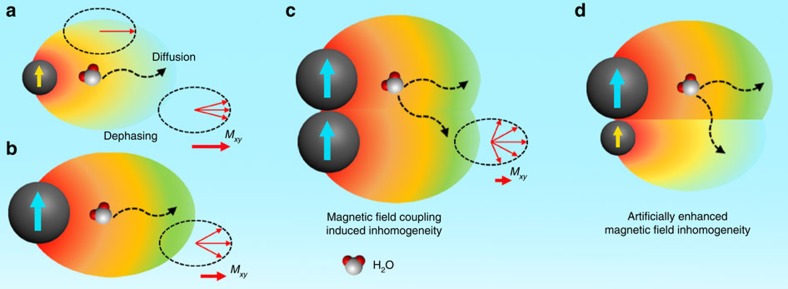
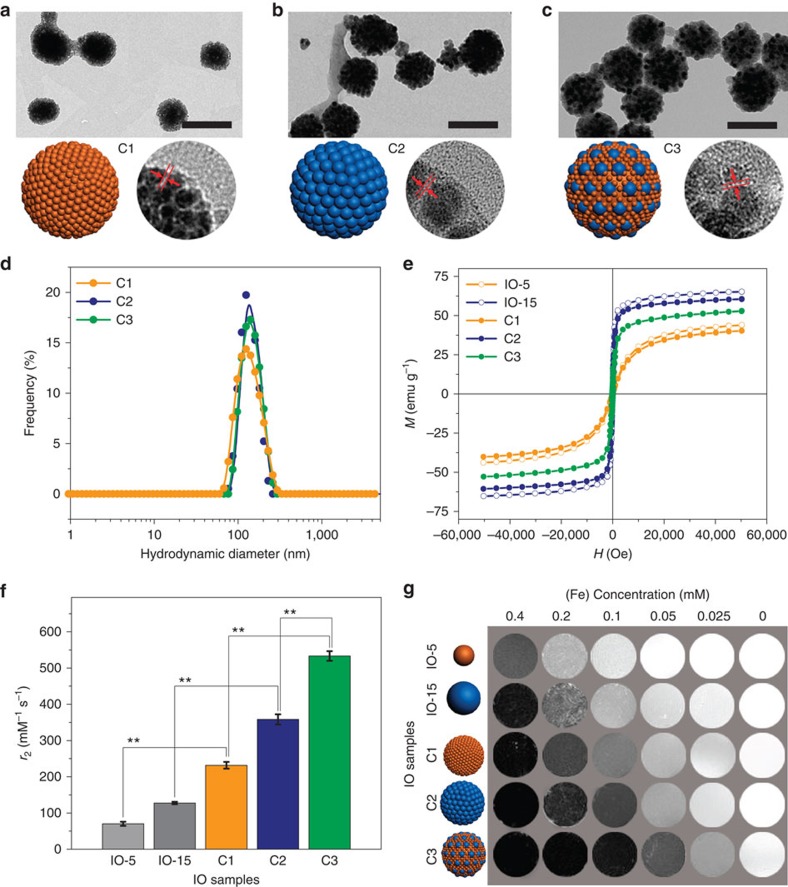
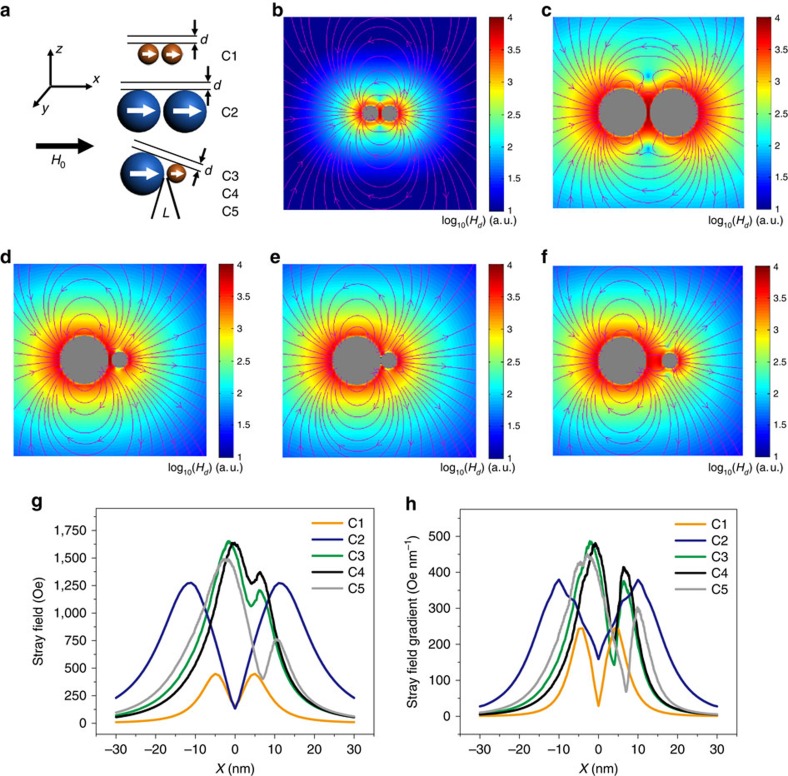
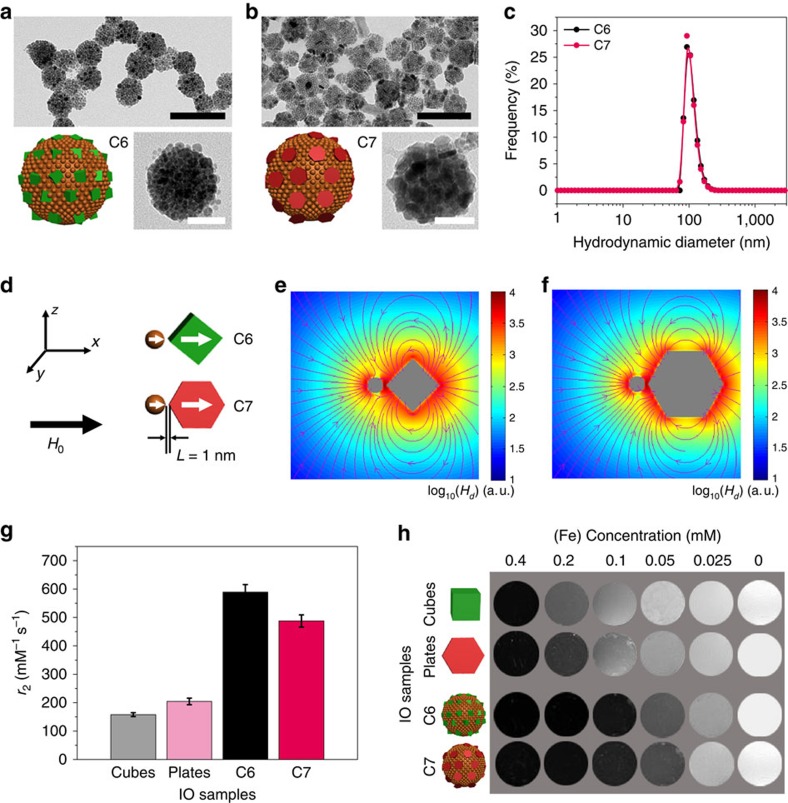
Clustering of magnetic nanoparticles (MNPs) is perhaps the most effective, yet intriguing strategy to enhance T relaxivity in magnetic resonance imaging (MRI). However, the underlying mechanism is still not fully understood and the attempts to generalize the classic outersphere theory from single particles to clusters have been found to be inadequate. Here we show that clustering of MNPs enhances local field inhomogeneity due to reduced field symmetry, which can be further elevated by artificially involving iron oxide NPs with heterogeneous geometries in terms of size and shape. The r values of iron oxide clusters and Landau-Lifshitz-Gilbert simulations confirmed our hypothesis, indicating that solving magnetic field inhomogeneity may become a powerful way to build correlation between magnetization and T relaxivity of MNPs, especially magnetic clusters. This study provides a simple yet distinct mechanism to interpret T relaxivity of MNPs, which is crucial to the design of high-performance MRI contrast agents.
磁性纳米粒子 (MNP) 的团聚可能是增强磁共振成像 (MRI) 中 T1 弛豫率最有效的策略,但其中的作用机制仍不完全清楚,将经典的外球理论从单个粒子推广到团聚体的尝试也被证明是不够的。在这里,我们证明了 MNP 的团聚由于磁场对称性的降低而增强了局部磁场的各向异性,并且通过人为地将具有不同尺寸和形状的异质几何形状的氧化铁纳米粒子纳入其中,可以进一步提高这种各向异性。氧化铁团簇的 r 值和 Landau-Lifshitz-Gilbert 模拟证实了我们的假设,表明解决磁场不均匀性可能成为建立 MNP 磁化强度与 T1 弛豫率之间相关性的有力方法,特别是对于磁性团簇而言。本研究提供了一种简单而独特的机制来解释 MNP 的 T1 弛豫率,这对于高性能 MRI 造影剂的设计至关重要。