National Engineering Research Center for Biomaterials, Sichuan University, Chengdu, 610064, P. R. China.
College of Biomedical Engineering, Sichuan University, Chengdu, 610065, P. R. China.
Theranostics. 2023 Feb 27;13(4):1454-1469. doi: 10.7150/thno.80821. eCollection 2023.
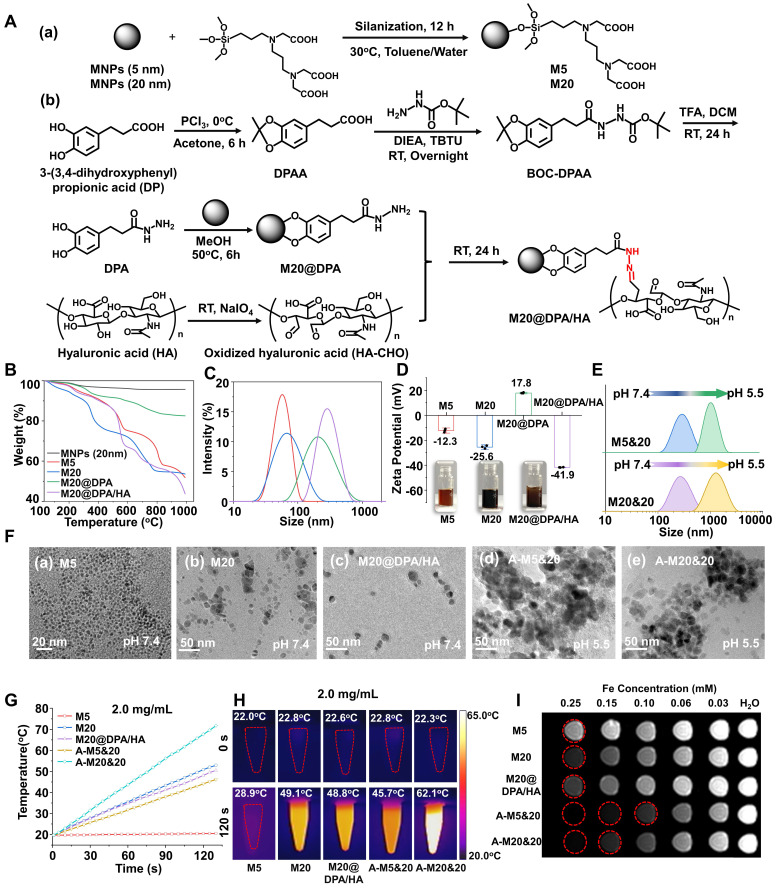
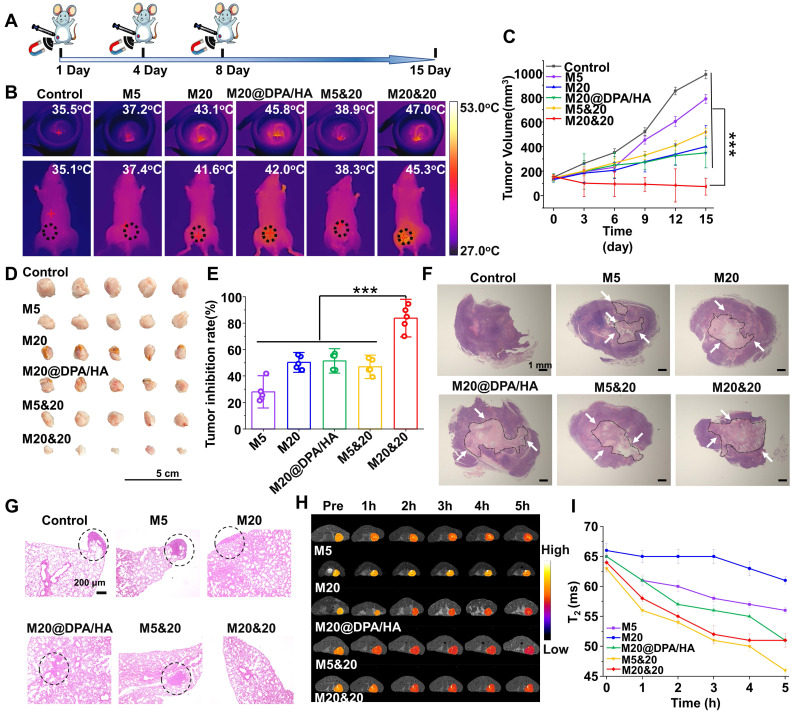
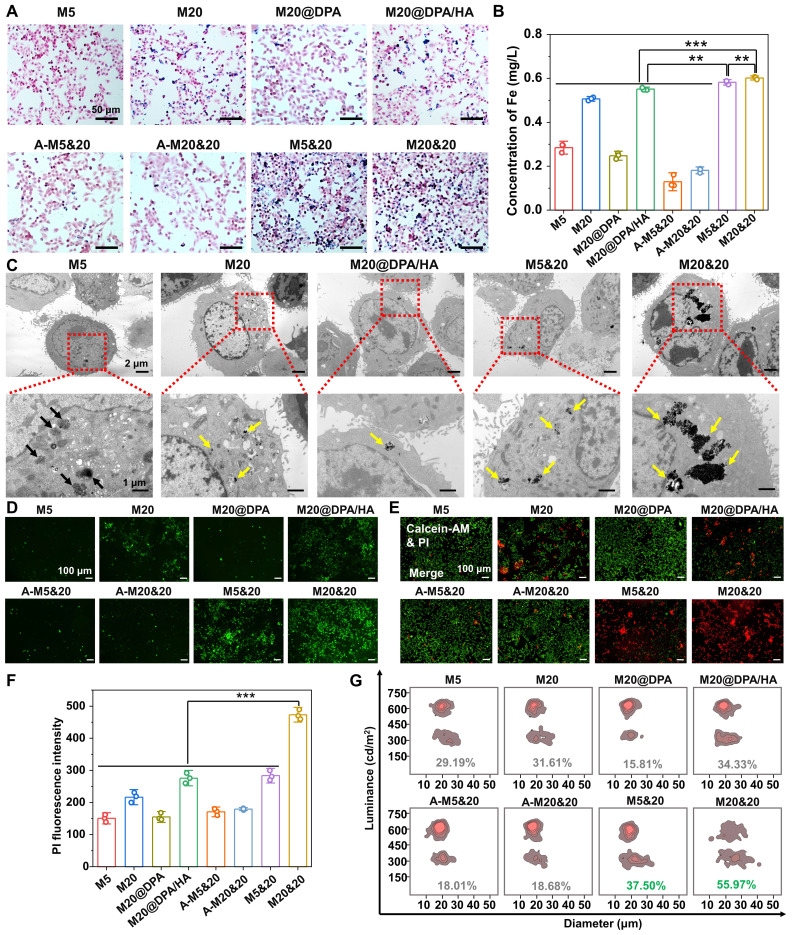
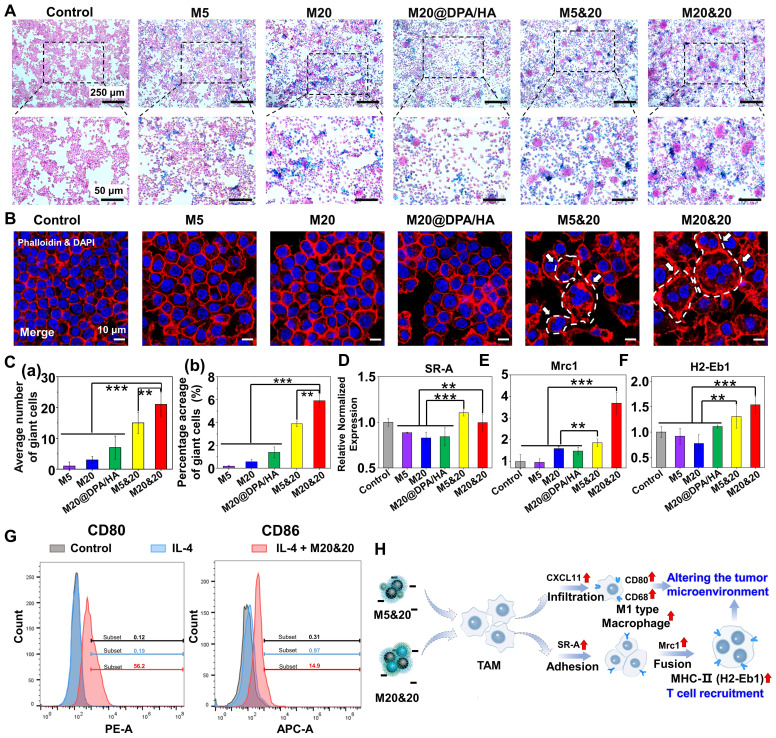
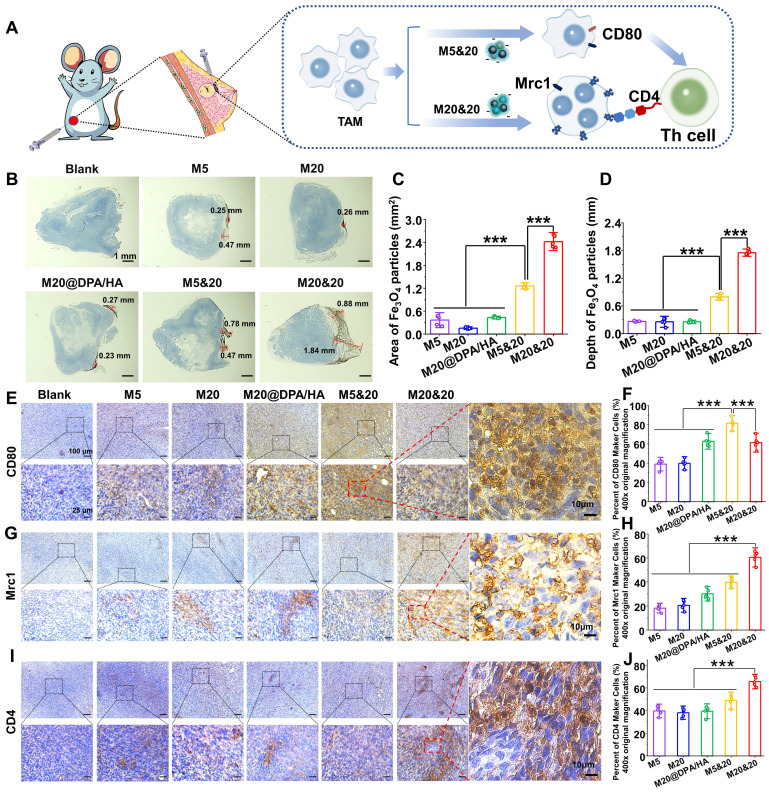
: Magnetic nanoparticles (MNPs) are the most used inorganic nanoparticles in clinics with therapeutic and imaging functions, but the inefficient magneto-thermal conversion efficiency, fast leakage, and uneven distribution impair their imaging sensitivity and therapeutic efficacy in tumors. : Herein, we rationally designed a system containing pH-controllable charge-reversible MNPs (M20@DPA/HA) and negatively charged MMPs with different sizes (M5 and M20), which could induce intracellular aggregation. The dynamic hydrazone bonds with pH controllability were formed by the surface hydrazides on MNPs and aldehydes of hyaluronic acid (HA). Under the acidic pH, intracellular aggregation of the complex composed by M20@DPA/HA and M5 (M5&20), or M20@DPA/HA and M20 (M20&20) were investigated. In addition, the magnetic hyperthermia therapy (MHT) efficiency of tumor cells, tumor-associated macrophages polarization, giant cells formation and immune activation of tumor microenvironment were explored via a series of cell and animal model experiments. : Through physical and chemical characterization, the aggregation system (M20&20) exhibited a remarkable 20-fold increase in magnetothermal conversion efficiency compared to individual MNPs, together with enhanced penetration and retention inside the tumor tissues. In addition, it could promote immune activation, including repolarization of tumor-associated macrophages, as well as the formation of giant cells for T cell recruitment. As a result, the M20&20 aggregation system achieved a high degree of inhibition in 4T1 mouse mammary tumor model, with little tumor growth and metastasis after magnetic hyperthermia therapy. : A controlled intracellular aggregation system was herein developed, which displayed an aggregation behavior under the acidic tumor microenvironment. The system significantly enhanced MHT effect on tumor cells as well as induced M1 polarization and multinucleated giant cells (MGC) formation of TAM for immune activation. This controlled aggregation system achieved barely tumor growth and metastasis, showing a promising strategy to improve MNPs based MHT on deteriorate cancers.
磁性纳米粒子(MNPs)是临床中应用最广泛的具有治疗和成像功能的无机纳米粒子,但磁热转换效率低、快速泄漏和分布不均匀,降低了其在肿瘤中的成像灵敏度和治疗效果。
在这里,我们合理设计了一个系统,该系统包含具有 pH 可控电荷可逆性的 MNPs(M20@DPA/HA)和具有不同尺寸的带负电荷的 MMPs(M5 和 M20),可以诱导细胞内聚集。MNPs 表面的腙基与透明质酸(HA)的醛基之间形成具有 pH 可控性的动态腙键。在酸性 pH 下,研究了由 M20@DPA/HA 和 M5(M5&20)或 M20@DPA/HA 和 M20(M20&20)组成的复合物的细胞内聚集情况。此外,还通过一系列细胞和动物模型实验研究了肿瘤细胞的磁热疗(MHT)效率、肿瘤相关巨噬细胞极化、巨细胞形成和肿瘤微环境的免疫激活。
通过物理化学特性分析,与单个 MNPs 相比,聚集系统(M20&20)的磁热转换效率显著提高了 20 倍,同时增强了在肿瘤组织内的渗透和滞留。此外,它可以促进免疫激活,包括肿瘤相关巨噬细胞的重新极化以及 T 细胞募集的巨细胞形成。结果,M20&20 聚集系统在 4T1 小鼠乳腺肿瘤模型中实现了高度抑制,在磁热疗后几乎没有肿瘤生长和转移。
本研究开发了一种可控的细胞内聚集系统,该系统在酸性肿瘤微环境下表现出聚集行为。该系统显著增强了磁热疗对肿瘤细胞的作用,并诱导肿瘤相关巨噬细胞的 M1 极化和多核巨细胞(MGC)形成,从而激活免疫。这种可控的聚集系统几乎没有肿瘤生长和转移,为改善基于 MNPs 的磁热疗对恶化癌症的效果提供了一种很有前景的策略。