Durrer Katherine E, Allen Michael S, Hunt von Herbing Ione
Department of Biological Sciences, University of North Texas, Denton, Texas, United States of America.
Institute of Molecular Medicine, Center for Medical Genetics, University of North Texas Health Science Center, Fort Worth, Texas, United States of America.
PLoS One. 2017 May 17;12(5):e0176286. doi: 10.1371/journal.pone.0176286. eCollection 2017.
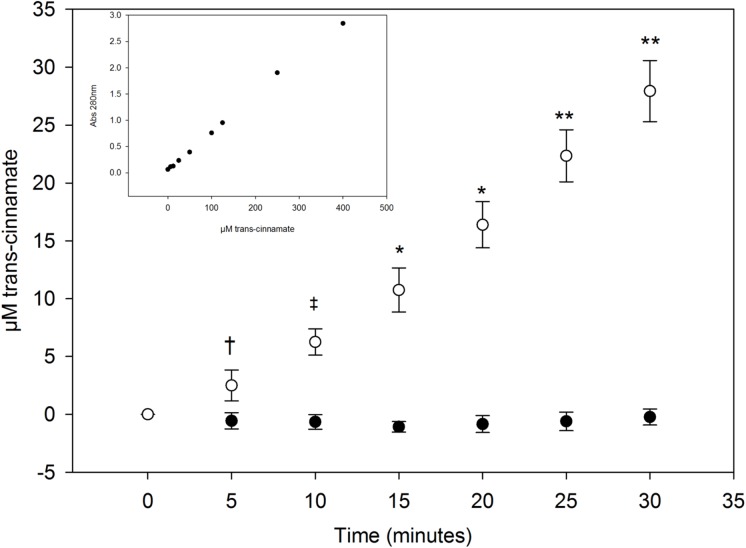
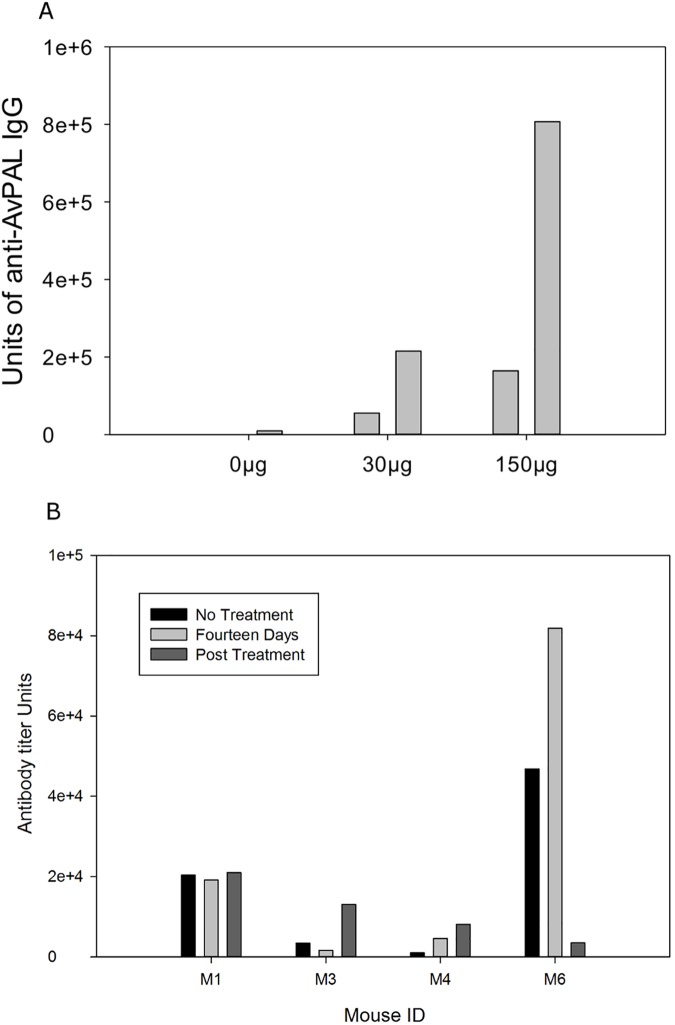
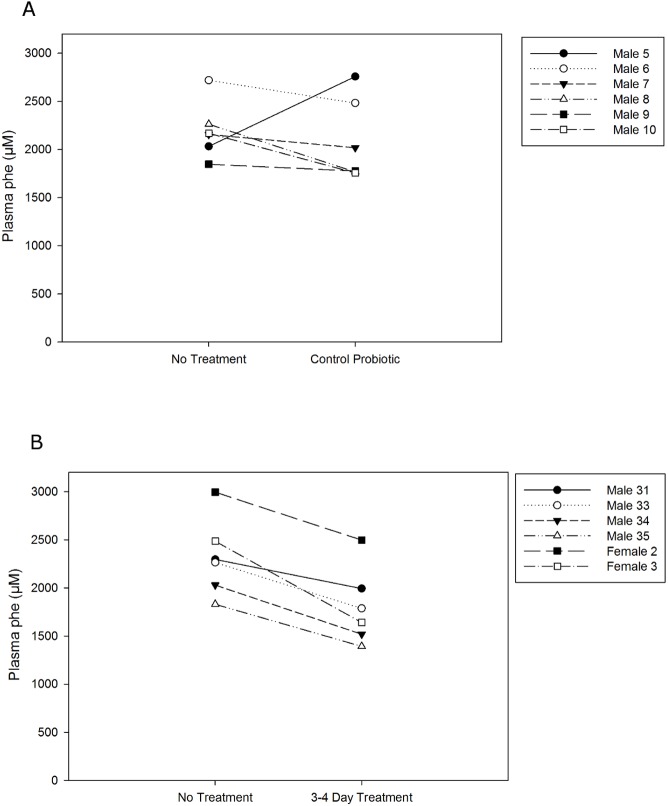
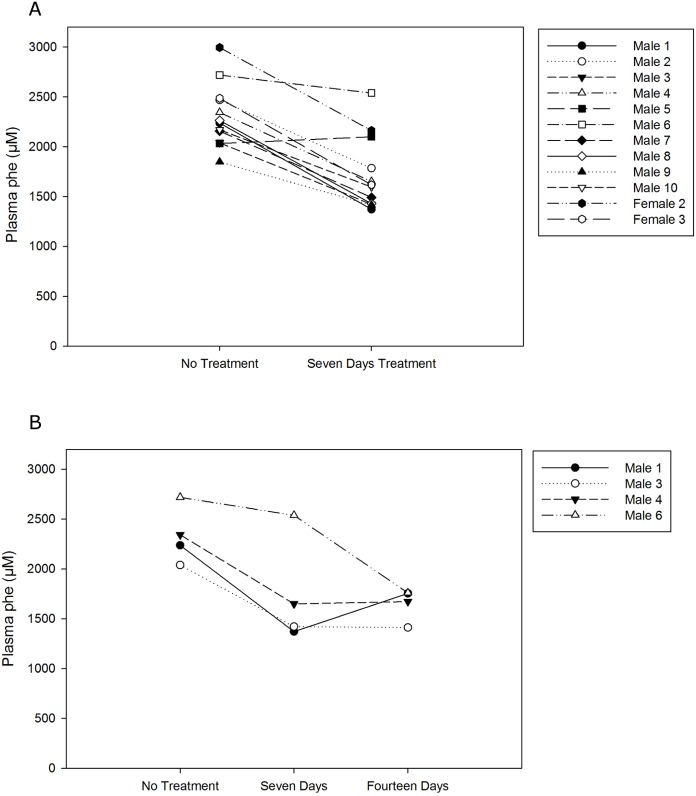
Phenylketonuria (PKU) is a genetic disease characterized by the inability to convert dietary phenylalanine to tyrosine by phenylalanine hydroxylase. Given the importance of gut microbes in digestion, a genetically engineered microbe could potentially degrade some ingested phenylalanine from the diet prior to absorption. To test this, a phenylalanine lyase gene from Anabaena variabilis (AvPAL) was codon-optimized and cloned into a shuttle vector for expression in Lactobacillus reuteri 100-23C (pHENOMMenal). Functional expression of AvPAL was determined in vitro, and subsequently tested in vivo in homozygous PAHenu2 (PKU model) mice. Initial trials of two PAHenu2 homozygous (PKU) mice defined conditions for freeze-drying and delivery of bacteria. Animals showed reduced blood phe within three to four days of treatment with pHENOMMenal probiotic, and blood phe concentrations remained significantly reduced (P < 0.0005) compared to untreated controls during the course of experiments. Although pHENOMMenal probiotic could be cultured from fecal samples at four months post treatment, it could no longer be cultivated from feces at eight months post treatment, indicating eventual loss of the microbe from the gut. Preliminary screens during experimentation found no immune response to AvPAL. Collectively these studies provide data for the use of a genetically engineered probiotic as a potential treatment for PKU.
苯丙酮尿症(PKU)是一种遗传性疾病,其特征在于无法通过苯丙氨酸羟化酶将膳食中的苯丙氨酸转化为酪氨酸。鉴于肠道微生物在消化中的重要性,一种基因工程微生物有可能在吸收之前降解饮食中摄入的一些苯丙氨酸。为了验证这一点,将来自多变鱼腥藻(Anabaena variabilis)的苯丙氨酸裂解酶基因(AvPAL)进行密码子优化,并克隆到穿梭载体中以便在罗伊氏乳杆菌100 - 23C(pHENOMMenal)中表达。在体外确定了AvPAL的功能性表达,随后在纯合PAHenu2(PKU模型)小鼠体内进行了测试。对两只PAHenu2纯合(PKU)小鼠的初步试验确定了细菌冻干和递送的条件。在用pHENOMMenal益生菌治疗三到四天内,动物的血液苯丙氨酸水平降低,并且在实验过程中,与未治疗的对照组相比,血液苯丙氨酸浓度仍显著降低(P < 0.0005)。虽然在治疗后四个月的粪便样本中可以培养出pHENOMMenal益生菌,但在治疗后八个月的粪便中已无法再培养出该菌,这表明该微生物最终从肠道中消失。实验期间的初步筛查未发现对AvPAL的免疫反应。这些研究共同为使用基因工程益生菌作为PKU的潜在治疗方法提供了数据。