Iovita Radu, Tuvi-Arad Inbal, Moncel Marie-Hélène, Despriée Jackie, Voinchet Pierre, Bahain Jean-Jacques
MONREPOS Archaeological Research Centre and Museum for Human Behavioural Evolution, Römisch-Germanisches Zentralmuseum, Leibniz-Forschungsinstitut für Archäologie, Neuwied, Germany.
Center for the Study of Human Origins, Department of Anthropology, New York University, New York, United States of America.
PLoS One. 2017 May 17;12(5):e0177063. doi: 10.1371/journal.pone.0177063. eCollection 2017.
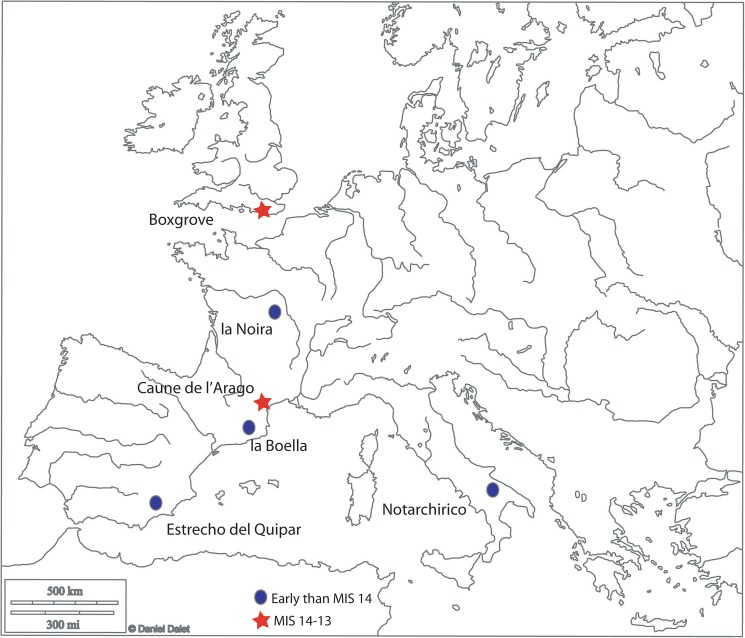
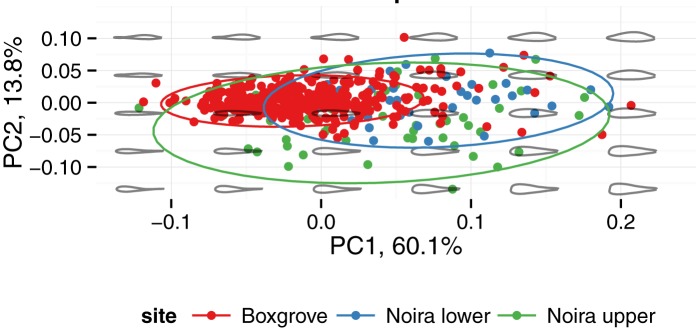
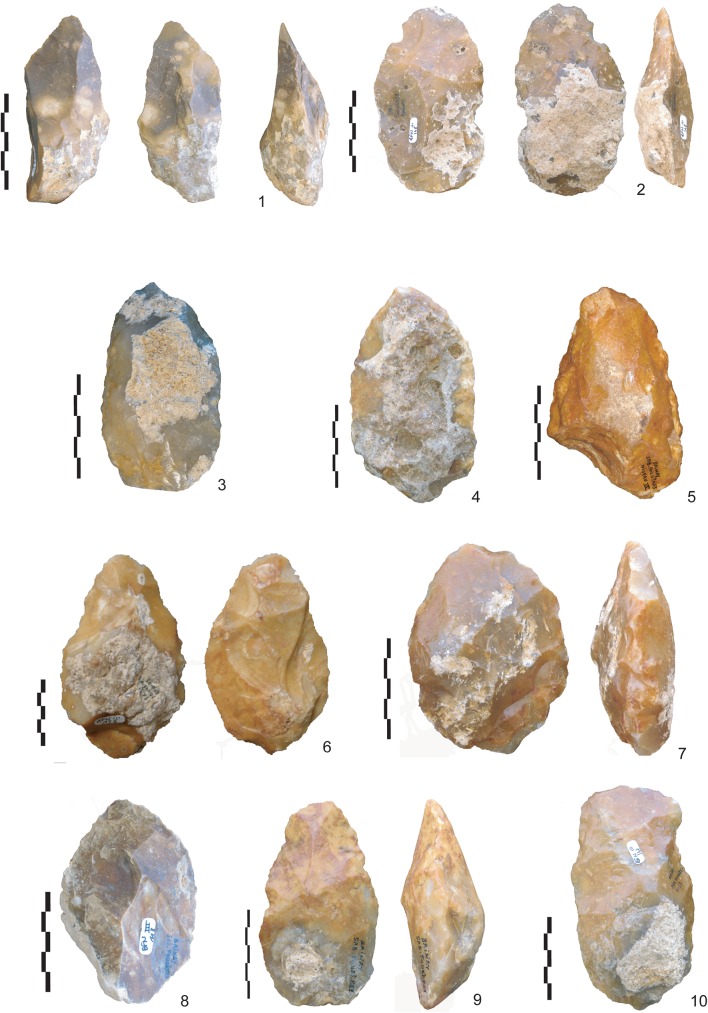
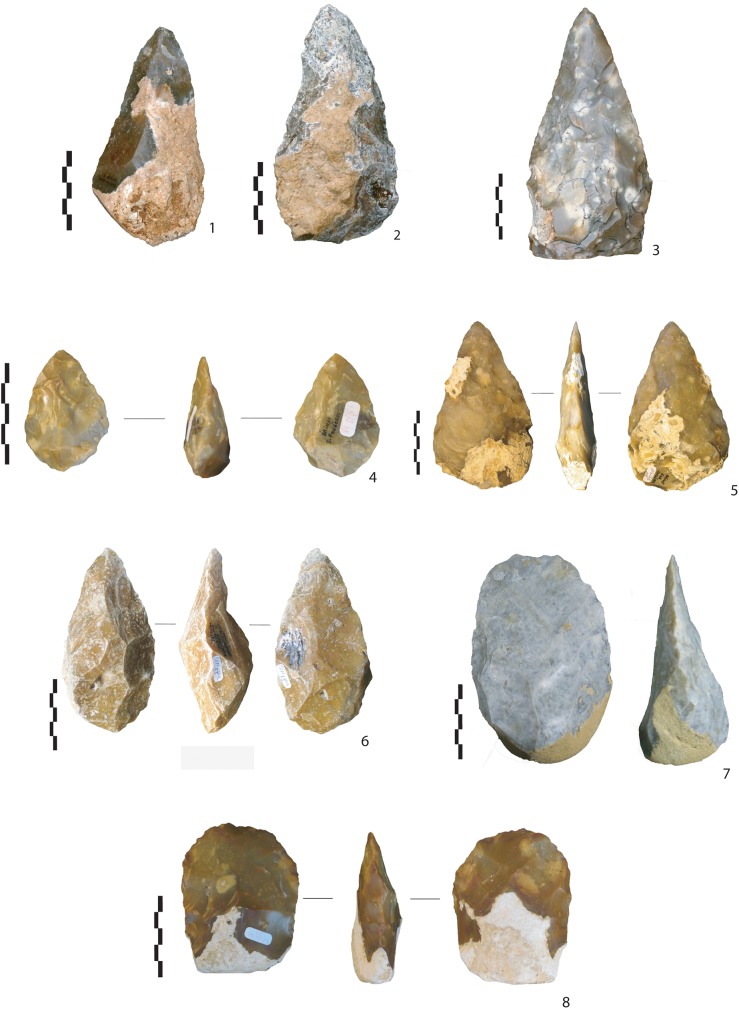
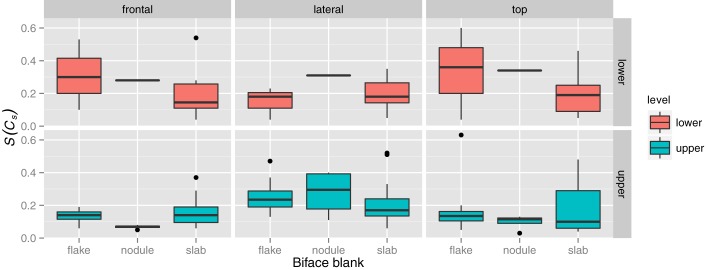
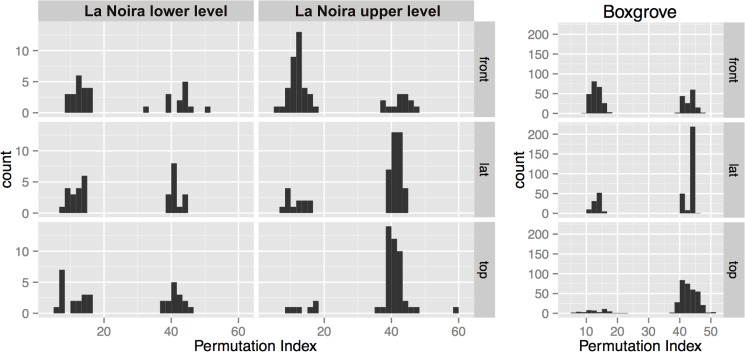
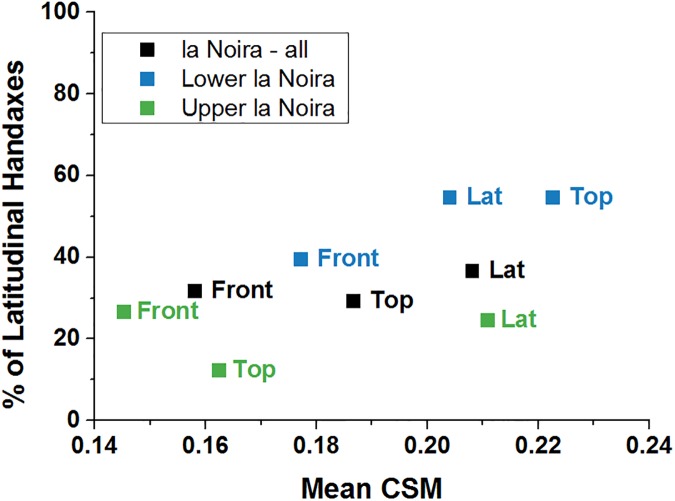
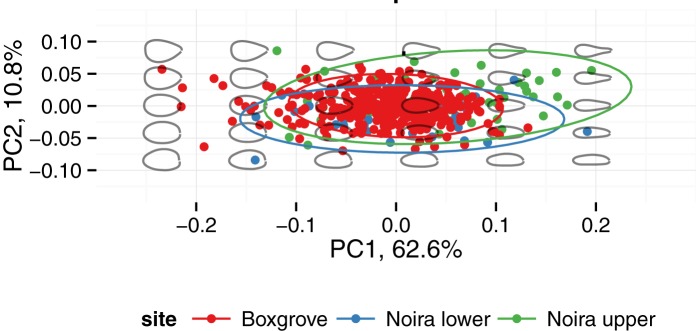
In the last few decades, new discoveries have pushed the beginning of the biface-rich European Acheulian from 500 thousand years (ka) ago back to at least 700 ka, and possibly to 1 million years (Ma) ago. It remains, however, unclear to date if handaxes arrived in Europe as a fully developed technology or if they evolved locally from core-and-flake industries. This issue is also linked with another long-standing debate on the existence and behavioral, cognitive, and social meaning of a possibly chronological trend for increased handaxe symmetry throughout the Lower Paleolithic. The newly discovered sites can provide a link between the much older Acheulian in Africa and the Levant and the well-known assemblages from the later European Acheulian, enabling a rigorous testing of these hypotheses using modern morphometric methods. Here we use the Continuous Symmetry Measure (CSM) method to quantify handaxe symmetry at la Noira, a newly excavated site in central France, which features two archaeological levels, respectively ca. 700 ka and 500 ka old. In order to provide a context for the new data, we use a large aggregate from the well-known 500 ka old site of Boxgrove, England. We show that handaxes from the oldest layer at la Noira, although on average less symmetric than both those from the younger layers at the same site and than those from Boxgrove, are nevertheless much more symmetric than other early Acheulian specimens evaluated using the CSM method. We also correlate trends in symmetry to degree of reduction, demonstrating that raw material availability and discard patterns may affect observed symmetry values. We conclude that it is likely that, by the time the Acheulian arrived in Europe, its makers were, from a cognitive and motor-control point of view, already capable of producing the symmetric variant of this technology.
在过去几十年里,新的发现已将富含双面器的欧洲阿舍利文化的起始时间从50万年前追溯至至少70万年前,甚至可能追溯到100万年前。然而,时至今日仍不清楚手斧是作为一项成熟的技术传入欧洲,还是从石核-石片工业在当地演化而来。这个问题还与另一个长期存在的争论相关,即关于整个旧石器时代早期手斧对称性增加这一可能按时间顺序排列的趋势的存在及其行为、认知和社会意义。新发现的遗址能够在年代更为久远的非洲和黎凡特阿舍利文化与欧洲晚期阿舍利文化中著名的组合之间建立起联系,从而能够运用现代形态测量方法对这些假说进行严格检验。在此,我们使用连续对称测量(CSM)方法来量化法国中部一个新发掘的名为拉努瓦的遗址中的手斧对称性,该遗址有两个考古层,分别约有70万年和50万年历史。为了给新数据提供背景,我们使用了来自英国著名的50万年历史的博克斯格罗夫遗址的大量集合数据。我们表明,拉努瓦最古老层的手斧,尽管平均对称性低于同一遗址较年轻层的手斧以及博克斯格罗夫的手斧,但仍比使用CSM方法评估的其他早期阿舍利标本对称得多。我们还将对称性趋势与剥片程度相关联,证明原材料的可用性和丢弃模式可能会影响观察到的对称值。我们得出结论,在阿舍利文化抵达欧洲时,从认知和运动控制的角度来看,其制造者很可能已经能够生产这种技术的对称变体。