Jakobsson Magnus E, Malecki Jedrzej, Nilges Benedikt S, Moen Anders, Leidel Sebastian A, Falnes Pål Ø
Department of Biosciences, Faculty of Mathematics and Natural Sciences, University of Oslo, Oslo 0316, Norway.
Max Planck Research Group for RNA Biology, Max Planck Institute for Molecular Biomedicine, 48149 Muenster, Germany.
Nucleic Acids Res. 2017 Aug 21;45(14):8239-8254. doi: 10.1093/nar/gkx432.
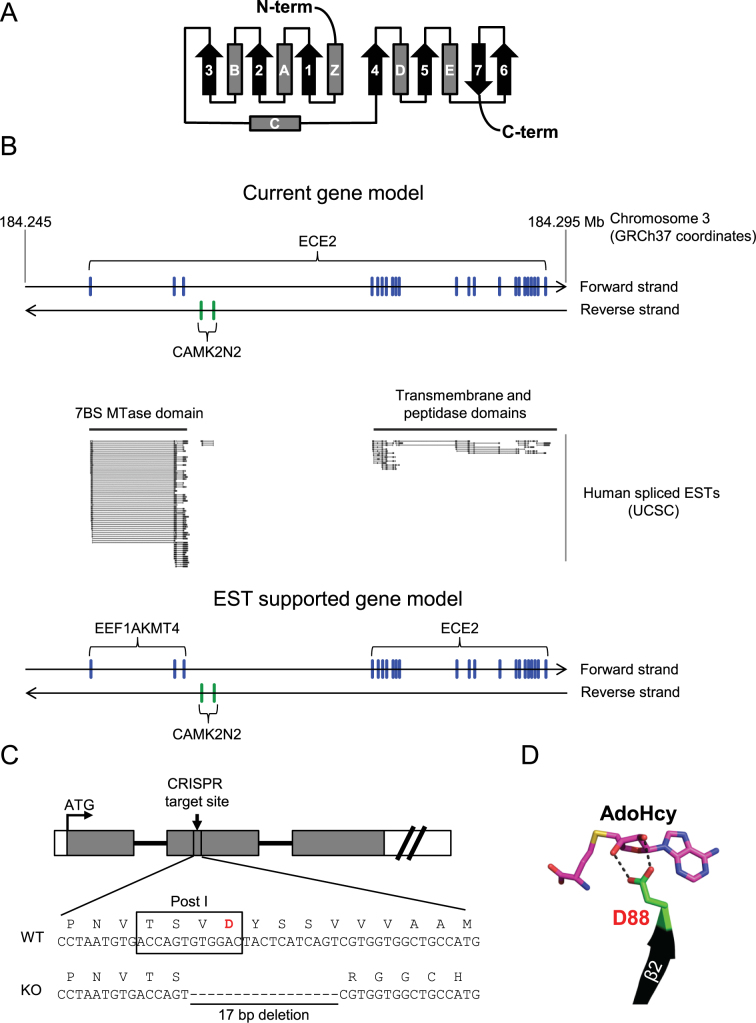
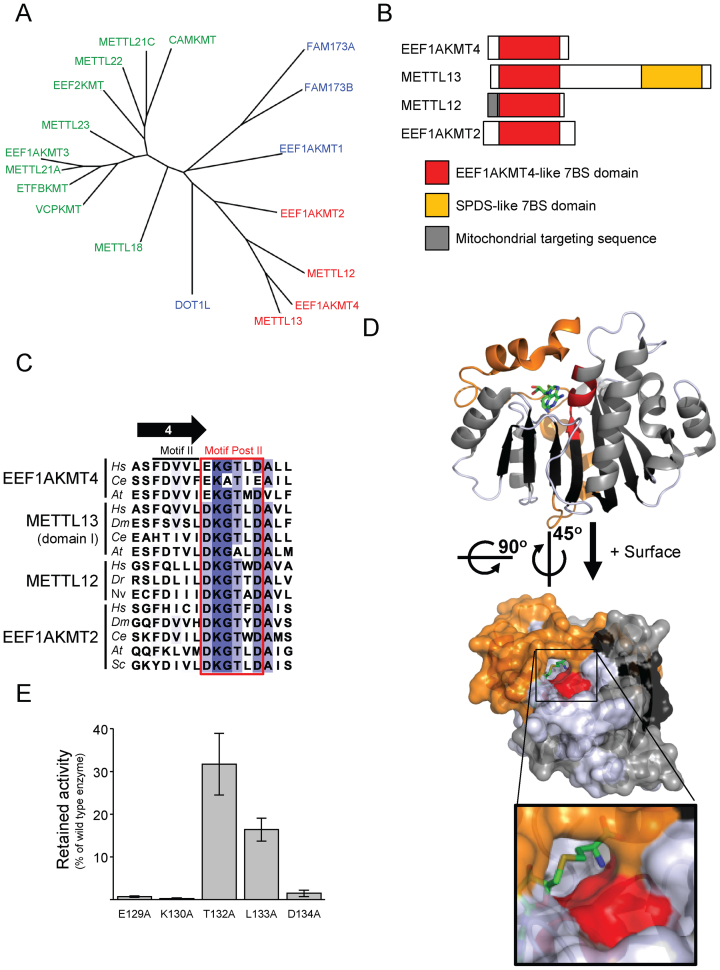
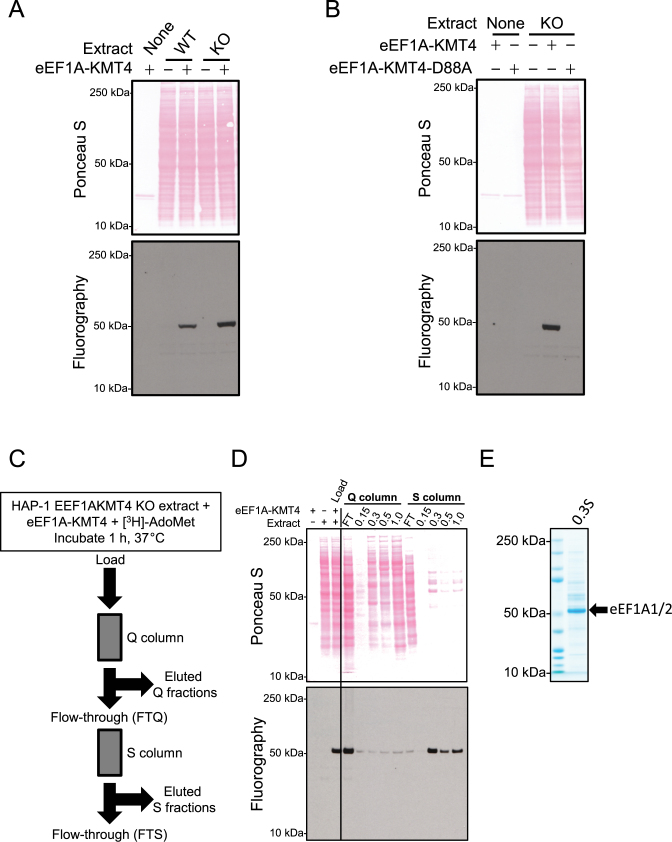
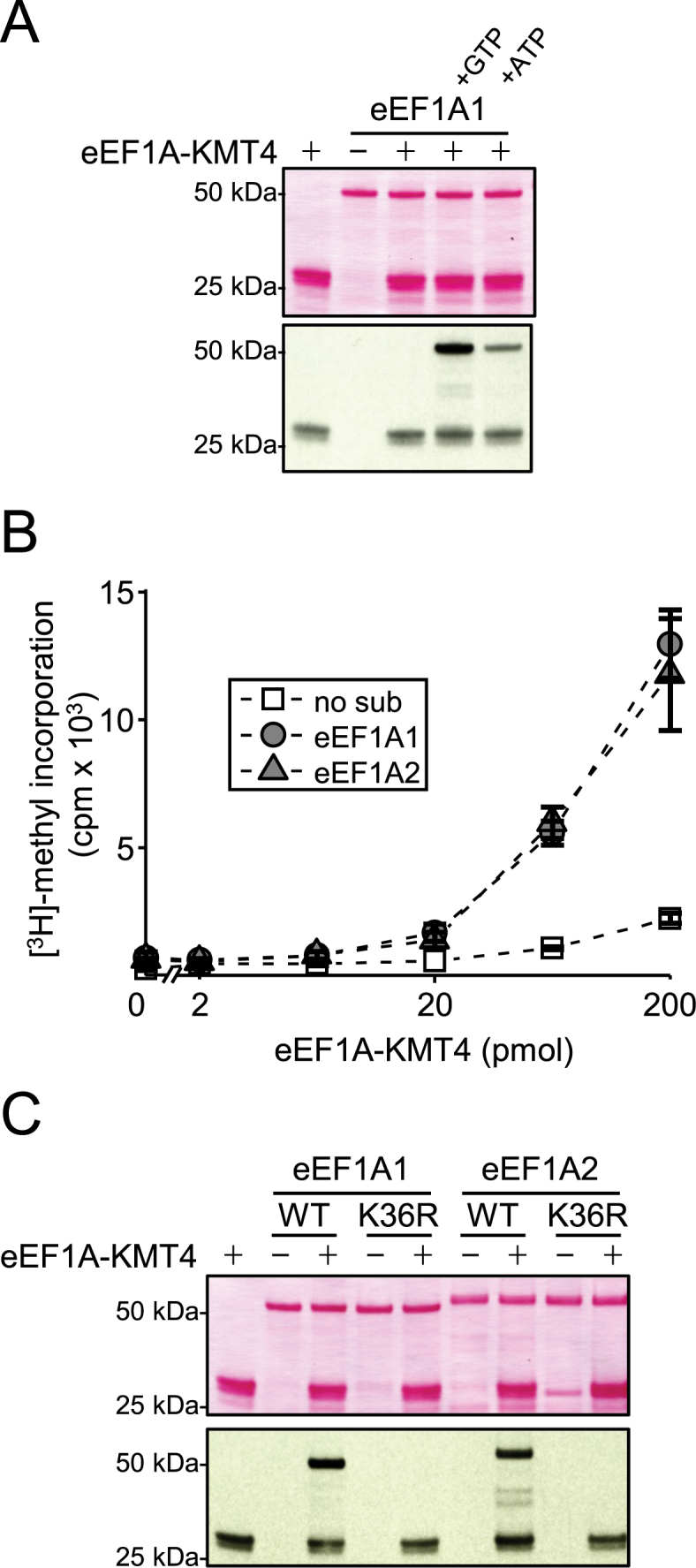
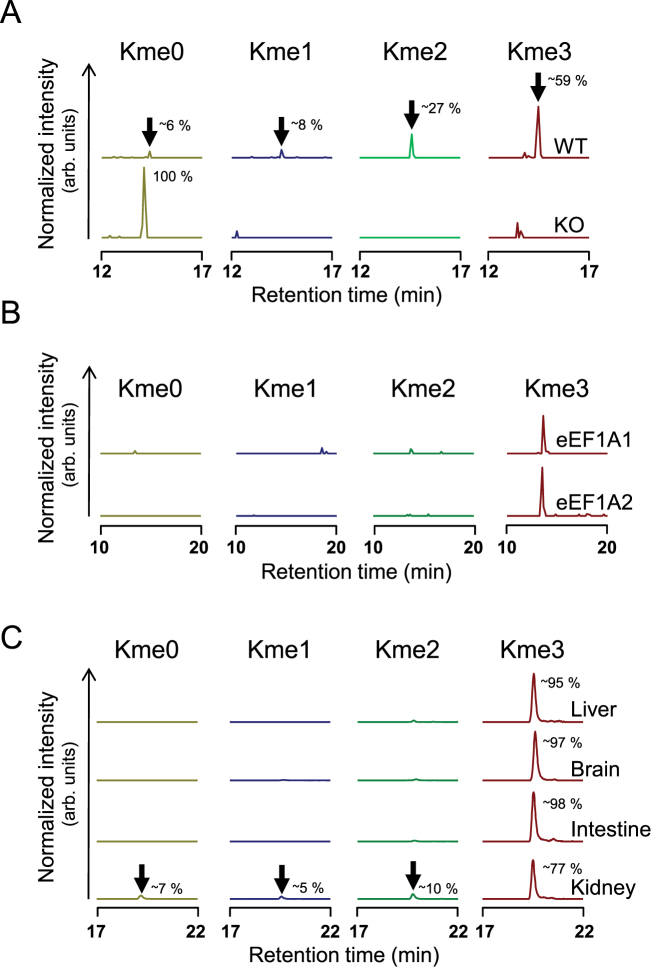
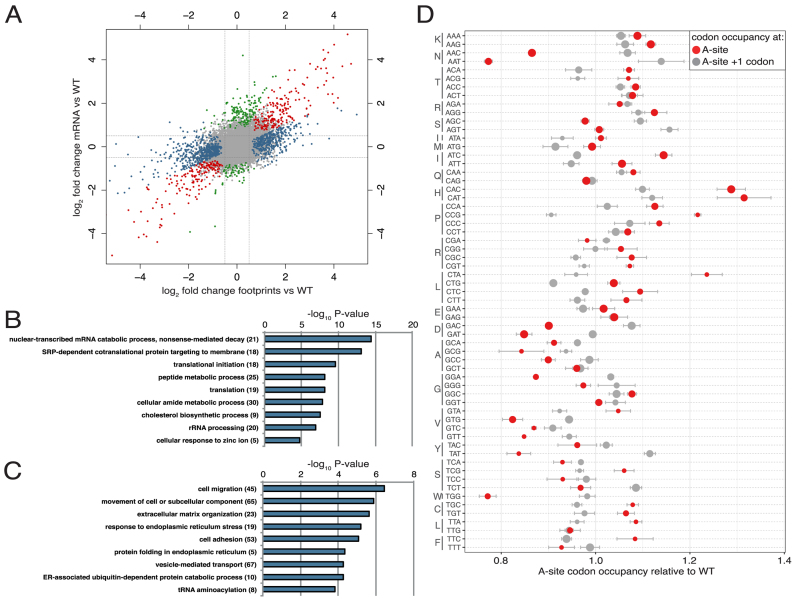
Many cellular proteins are methylated on lysine residues and this has been most intensively studied for histone proteins. Lysine methylations on non-histone proteins are also frequent, but in most cases the functional significance of the methylation event, as well as the identity of the responsible lysine (K) specific methyltransferase (KMT), remain unknown. Several recently discovered KMTs belong to the so-called seven-β-strand (7BS) class of MTases and we have here investigated an uncharacterized human 7BS MTase currently annotated as part of the endothelin converting enzyme 2, but which should be considered a separate enzyme. Combining in vitro enzymology and analyzes of knockout cells, we demonstrate that this MTase efficiently methylates K36 in eukaryotic translation elongation factor 1 alpha (eEF1A) in vitro and in vivo. We suggest that this novel KMT is named eEF1A-KMT4 (gene name EEF1AKMT4), in agreement with the recently established nomenclature. Furthermore, by ribosome profiling we show that the absence of K36 methylation affects translation dynamics and changes translation speed of distinct codons. Finally, we show that eEF1A-KMT4 is part of a novel family of human KMTs, defined by a shared sequence motif in the active site and we demonstrate the importance of this motif for catalytic activity.
许多细胞蛋白在赖氨酸残基上发生甲基化,其中对组蛋白的研究最为深入。非组蛋白上的赖氨酸甲基化也很常见,但在大多数情况下,甲基化事件的功能意义以及负责的赖氨酸(K)特异性甲基转移酶(KMT)的身份仍然未知。最近发现的几种KMT属于所谓的七β链(7BS)类甲基转移酶,我们在此研究了一种目前被注释为内皮素转化酶2一部分的未表征人类7BS甲基转移酶,但应将其视为一种单独的酶。结合体外酶学和基因敲除细胞分析,我们证明这种甲基转移酶在体外和体内均能有效地使真核翻译延伸因子1α(eEF1A)中的K36甲基化。我们建议根据最近建立的命名法,将这种新型KMT命名为eEF1A-KMT4(基因名EEF1AKMT4)。此外,通过核糖体分析,我们表明K36甲基化的缺失会影响翻译动力学并改变不同密码子的翻译速度。最后,我们表明eEF1A-KMT4是人类KMT新家族的一部分,该家族由活性位点中的共享序列基序定义,并且我们证明了该基序对催化活性的重要性。