Department of Biosciences, Faculty of Mathematics and Natural Sciences, University of Oslo, Oslo, Norway.
PLoS One. 2023 Jun 22;18(6):e0287558. doi: 10.1371/journal.pone.0287558. eCollection 2023.
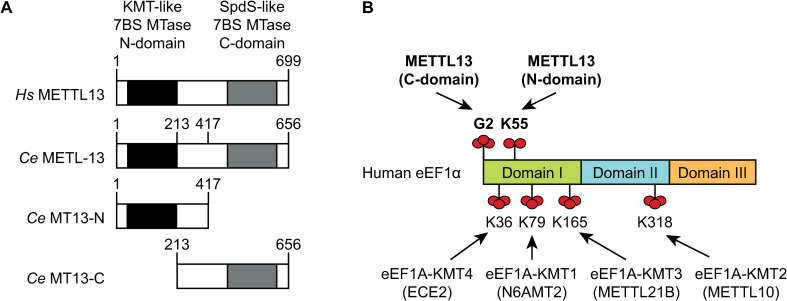
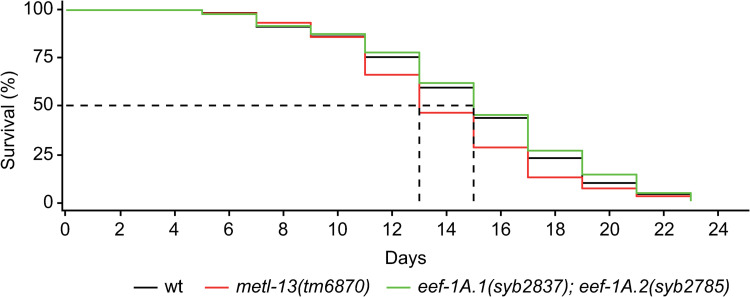
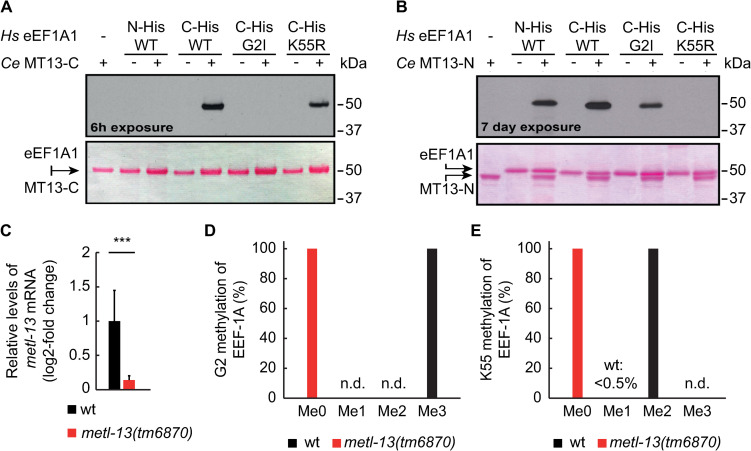
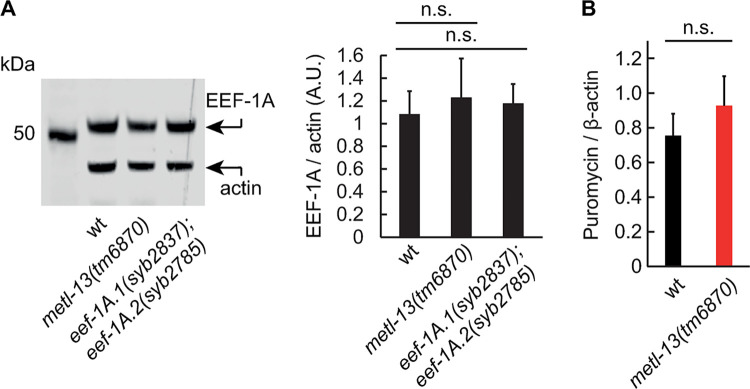
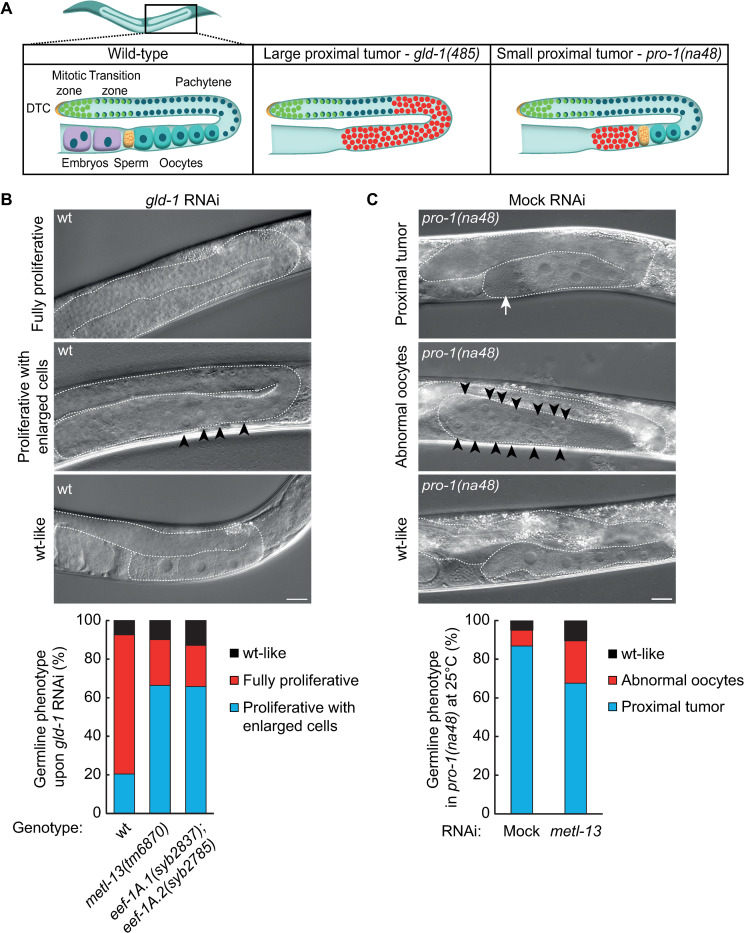
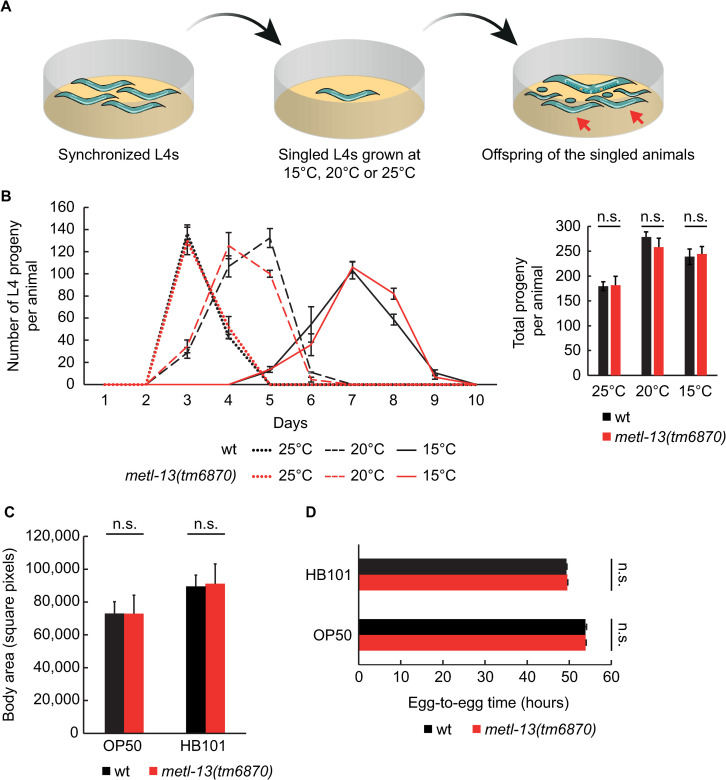
The methyltransferase-like protein 13 (METTL13) methylates the eukaryotic elongation factor 1 alpha (eEF1A) on two locations: the N-terminal amino group and lysine 55. The absence of this methylation leads to reduced protein synthesis and cell proliferation in human cancer cells. Previous studies showed that METTL13 is dispensable in non-transformed cells, making it potentially interesting for cancer therapy. However, METTL13 has not been examined yet in whole animals. Here, we used the nematode Caenorhabditis elegans as a simple model to assess the functions of METTL13. Using methyltransferase assays and mass spectrometry, we show that the C. elegans METTL13 (METL-13) methylates eEF1A (EEF-1A) in the same way as the human protein. Crucially, the cancer-promoting role of METL-13 is also conserved and depends on the methylation of EEF-1A, like in human cells. At the same time, METL-13 appears dispensable for animal growth, development, and stress responses. This makes C. elegans a convenient whole-animal model for studying METL13-dependent carcinogenesis without the complications of interfering with essential wild-type functions.
甲基转移酶样蛋白 13(METTL13)在两个位置上将真核延伸因子 1α(eEF1A)甲基化:N 端氨基和赖氨酸 55。这种甲基化的缺失导致人类癌细胞中的蛋白质合成和细胞增殖减少。先前的研究表明,METTL13 在未转化的细胞中是可有可无的,这使其成为癌症治疗的潜在靶点。然而,尚未在整个动物中检查 METTL13。在这里,我们使用线虫秀丽隐杆线虫作为简单的模型来评估 METTL13 的功能。使用甲基转移酶测定和质谱分析,我们表明秀丽隐杆线虫 METTL13(METL-13)以与人类蛋白相同的方式甲基化 eEF1A(EEF-1A)。至关重要的是,METL-13 的致癌作用也被保守,并且依赖于 EEF-1A 的甲基化,就像在人类细胞中一样。同时,METL-13 似乎对动物的生长、发育和应激反应是可有可无的。这使得秀丽隐杆线虫成为研究 METL13 依赖性致癌作用的方便的全动物模型,而不会干扰必需的野生型功能的复杂性。