Wu Qiong, Hu Qingqing, Hai Yanan, Li Yandong, Gao Yong
Department of Oncology, Shanghai East Hospital, School of Medicine, Tongji University, 150 Ji-Mo Rd., Shanghai, 200120, China.
Research Center for Translational Medicine, Shanghai East Hospital, School of Medicine, Tongji University, Shanghai, 200120, China.
J Cell Commun Signal. 2023 Mar;17(1):121-135. doi: 10.1007/s12079-022-00687-x. Epub 2022 Aug 4.
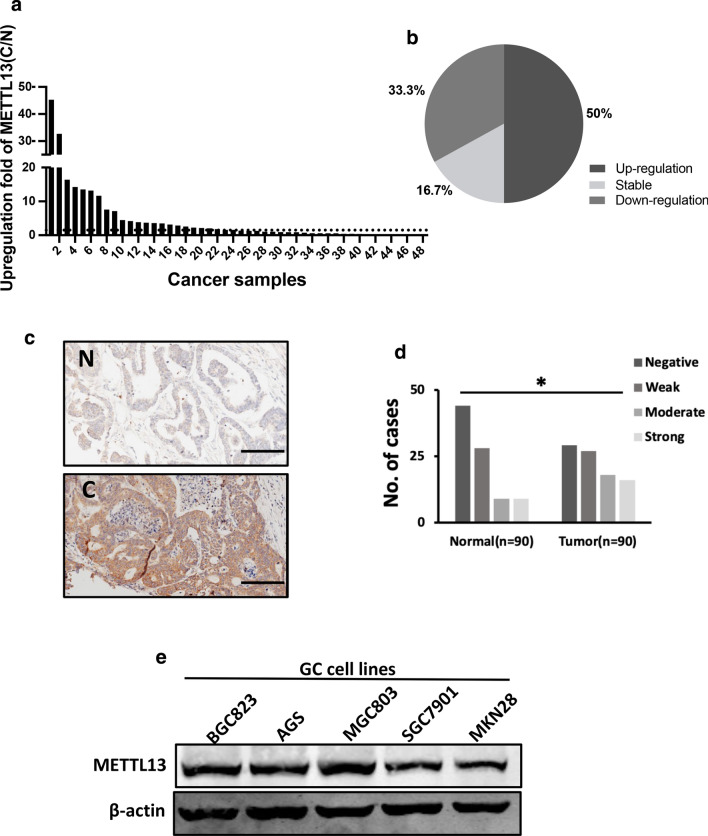
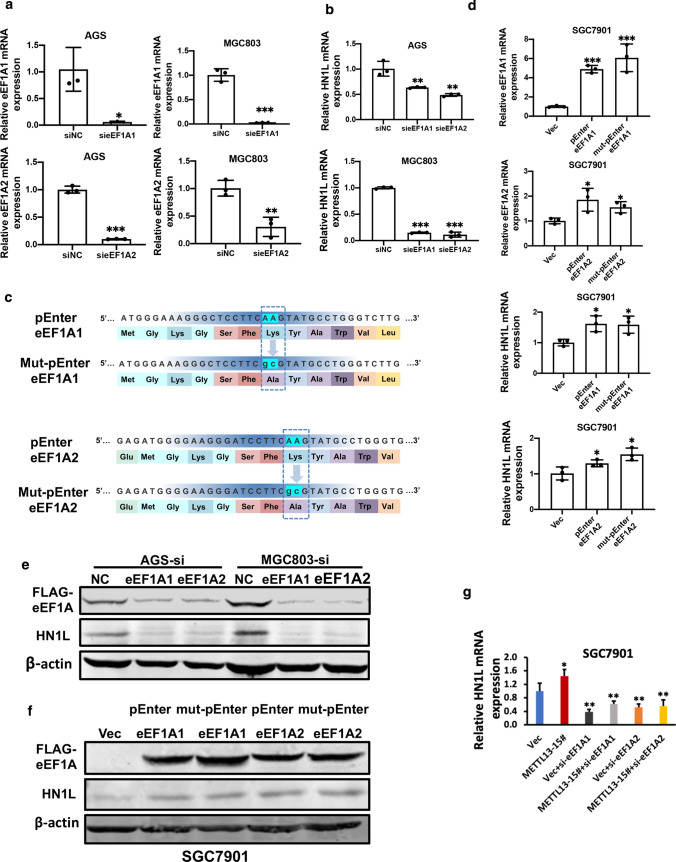
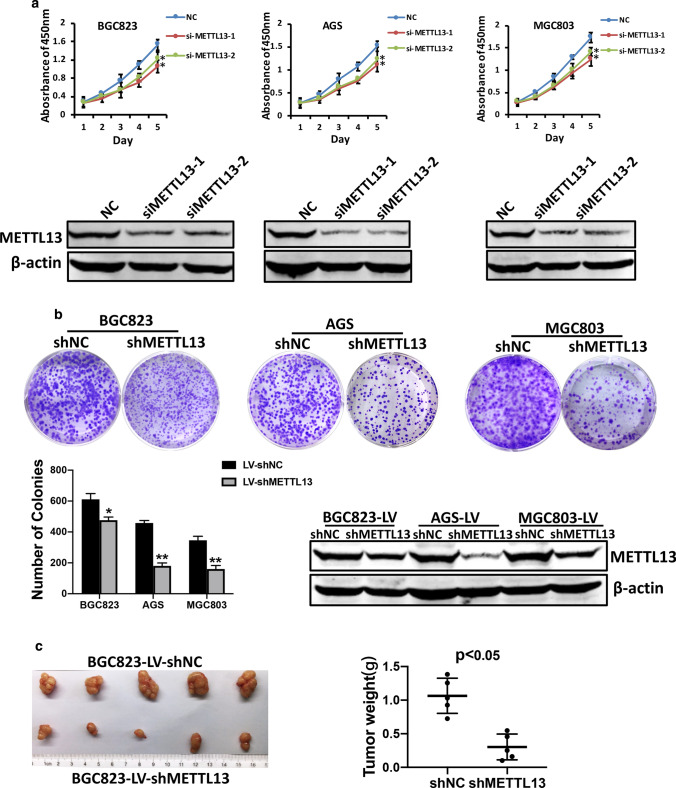
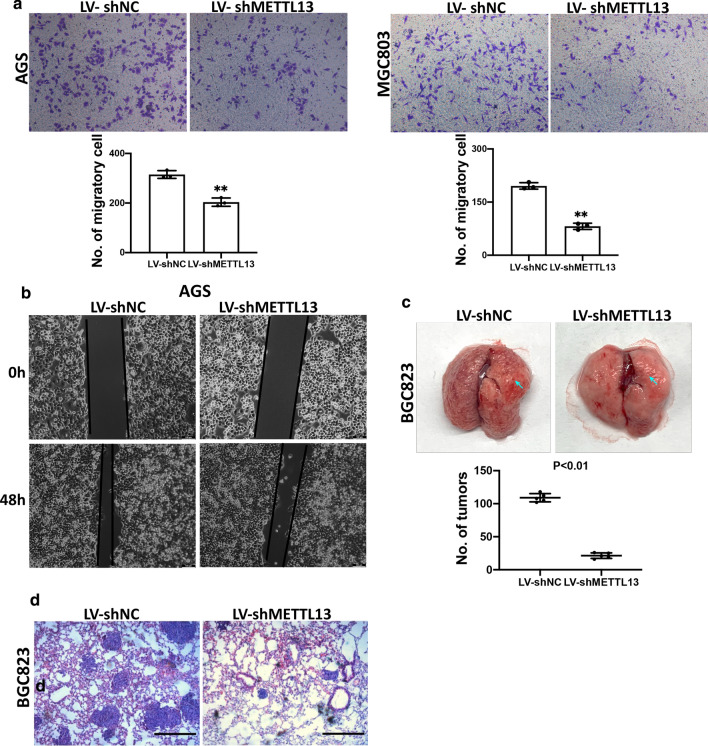
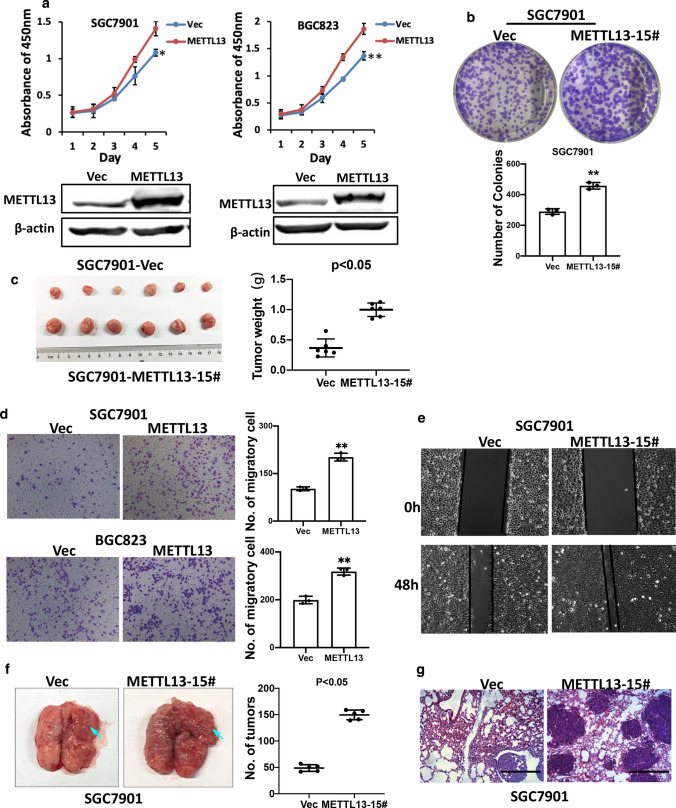
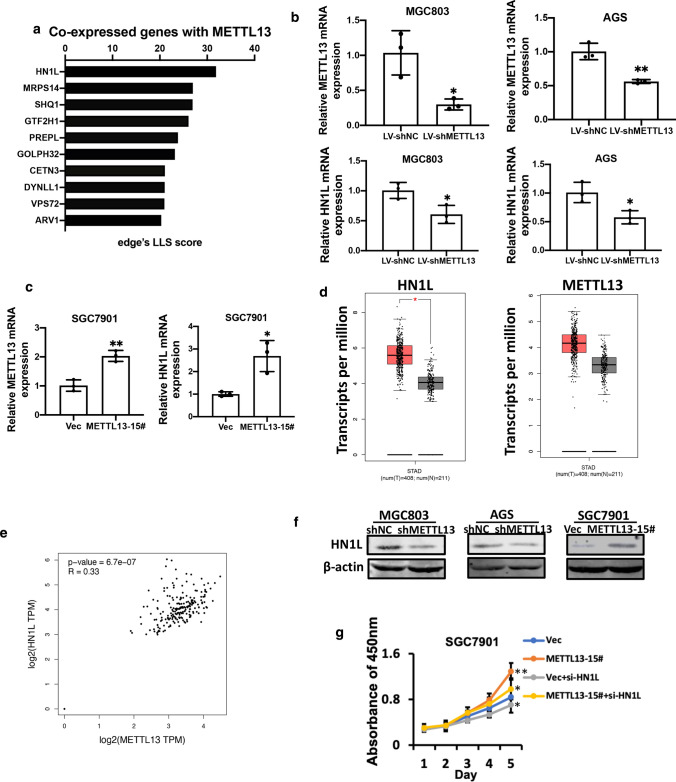
Although improved treatment could inhibit progression of gastric cancer (GC), the recurrence and metastasis remain challenging issues. Methyltransferase like 13 (METTL13) has been implicated in most human cancers, but its function and mechanism in GC remain elusive. In the present study, we evaluated its expression in GC samples and found it was aberrantly overexpressed in cancer tissues than that in normal stomach tissues. High expression of METTL13 was closely associated with age, tumor size and T classification. Biological experiments showed that silencing METTL13 suppressed gastric cancer cell proliferation and metastasis in vivo and vitro, whereas opposite effects were observed upon METTL13 overexpression. Further mechanistic explorations revealed that METTL13 regulated the expression of HN1L (Hematological and neurological expressed 1-like), which is reported to be an oncogene in various cancers. Knockdown of HN1L dampened gastric cancer cell growth induced by METTL13. Eukaryotic translation elongation factor-1A (eEF1A), the present sole methylation substrate of METTL13, was involved in the regulation of HN1L by METTL13 in a K55 methylation independent manner. In addition, we also found HN1L could facilitate METTL13 expression in GC cells consistent with a previous report in hepatocellular carcinoma. Thus, these findings demonstrate a METTL13/eEF1A/HN1L positive feedback circuit promoting gastric cancer development and metastasis. It will help develop promising diagnostic and therapeutic targets for this disease.
尽管改进的治疗方法可以抑制胃癌(GC)的进展,但复发和转移仍然是具有挑战性的问题。甲基转移酶样13(METTL13)已被证明与大多数人类癌症有关,但其在GC中的功能和机制仍不清楚。在本研究中,我们评估了其在GC样本中的表达,发现它在癌组织中异常高表达,高于正常胃组织。METTL13的高表达与年龄、肿瘤大小和T分期密切相关。生物学实验表明,沉默METTL13在体内和体外均抑制胃癌细胞的增殖和转移,而METTL13过表达则产生相反的效果。进一步的机制探索表明,METTL13调节HN1L(血液和神经表达1样)的表达,据报道HN1L在各种癌症中是一种癌基因。敲低HN1L可抑制METTL13诱导的胃癌细胞生长。真核翻译延伸因子-1A(eEF1A)是METTL13目前唯一的甲基化底物,以不依赖K55甲基化的方式参与METTL13对HN1L的调节。此外,我们还发现HN1L可以促进GC细胞中METTL13的表达,这与之前在肝细胞癌中的报道一致。因此,这些发现证明了一个METTL13/eEF1A/HN1L正反馈回路促进胃癌的发展和转移。这将有助于为这种疾病开发有前景的诊断和治疗靶点。