®Center for BrainHealth® School of Behavioral and Brain Sciences The University of Texas at Dallas Dallas TX USA.
Department of Psychiatry University of Texas Southwestern Medical Center Dallas TX USA.
Brain Behav. 2017 Apr 10;7(5):e00687. doi: 10.1002/brb3.687. eCollection 2017 May.
Prior studies have demonstrated training-induced changes in the healthy adult brain. Yet, it remains unclear how the injured brain responds to cognitive training months-to-years after injury.
Sixty individuals with chronic traumatic brain injury (TBI) were randomized into either strategy-based (= 31) or knowledge-based (= 29) training for 8 weeks. We measured cortical thickness and resting-state functional connectivity (rsFC) before training, immediately posttraining, and 3 months posttraining.
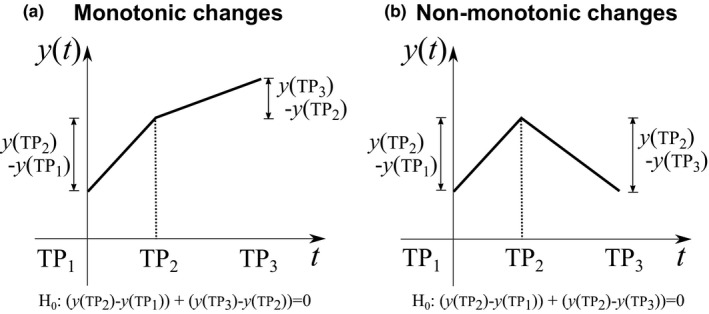
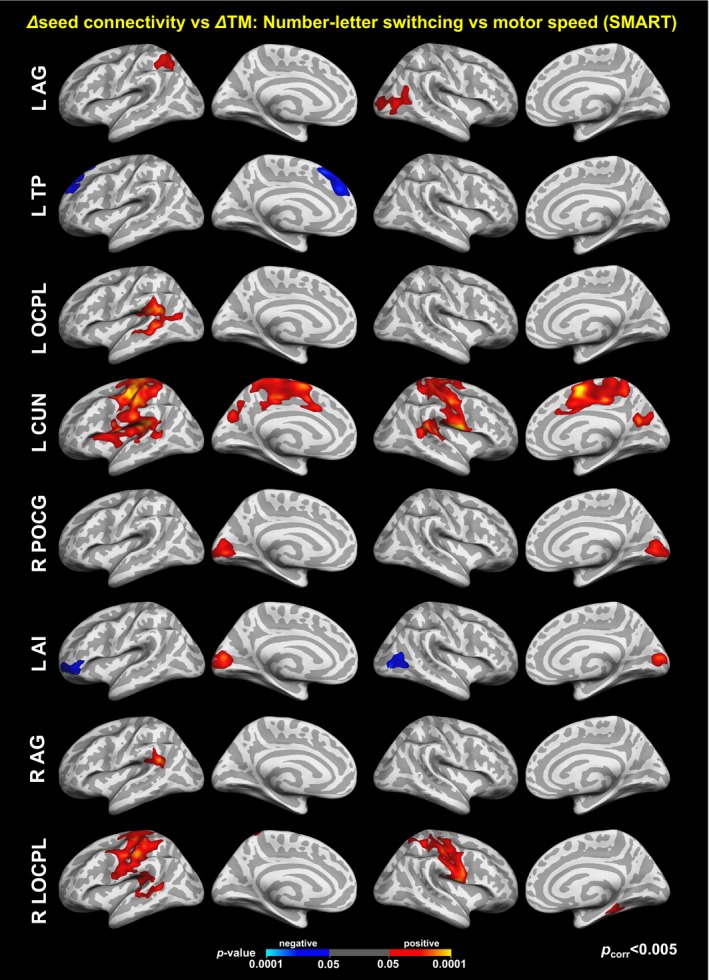
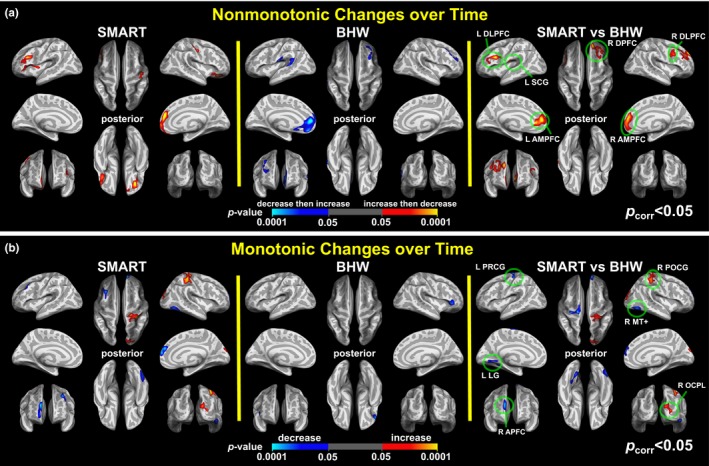
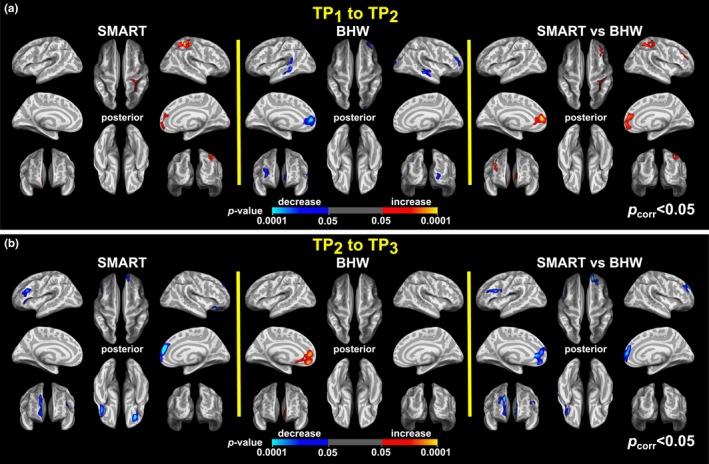
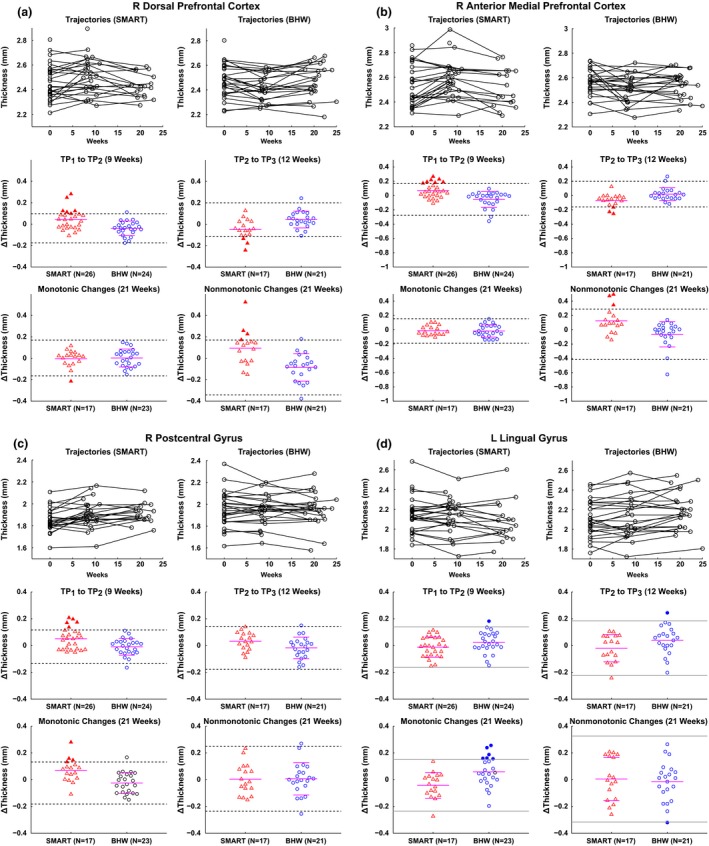
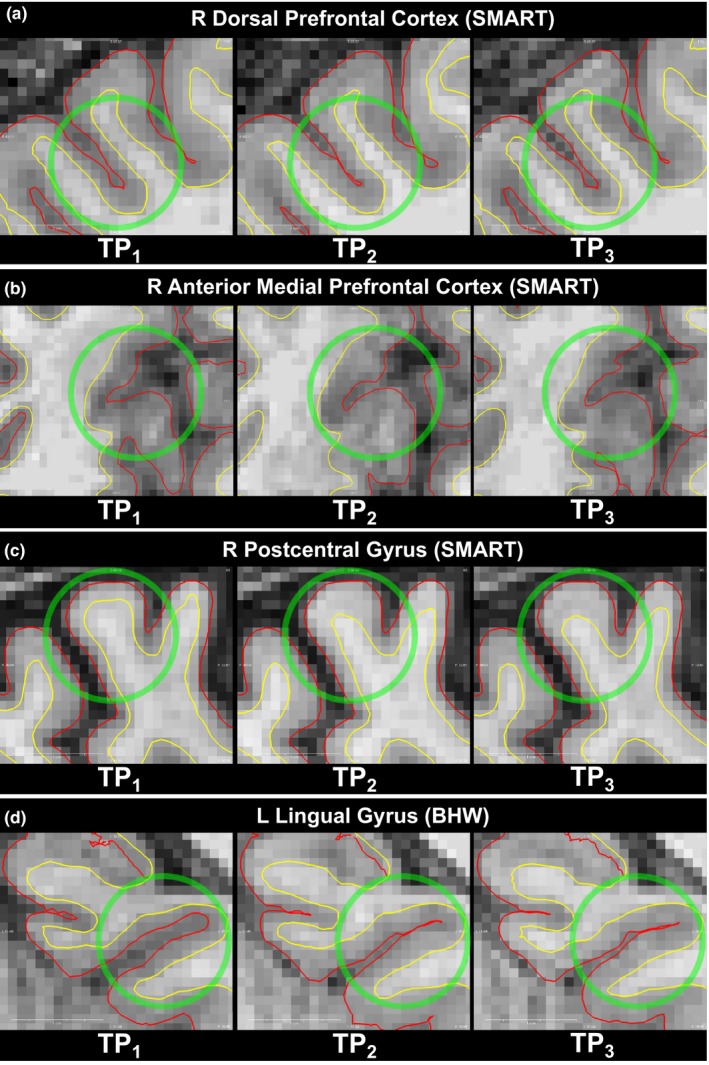
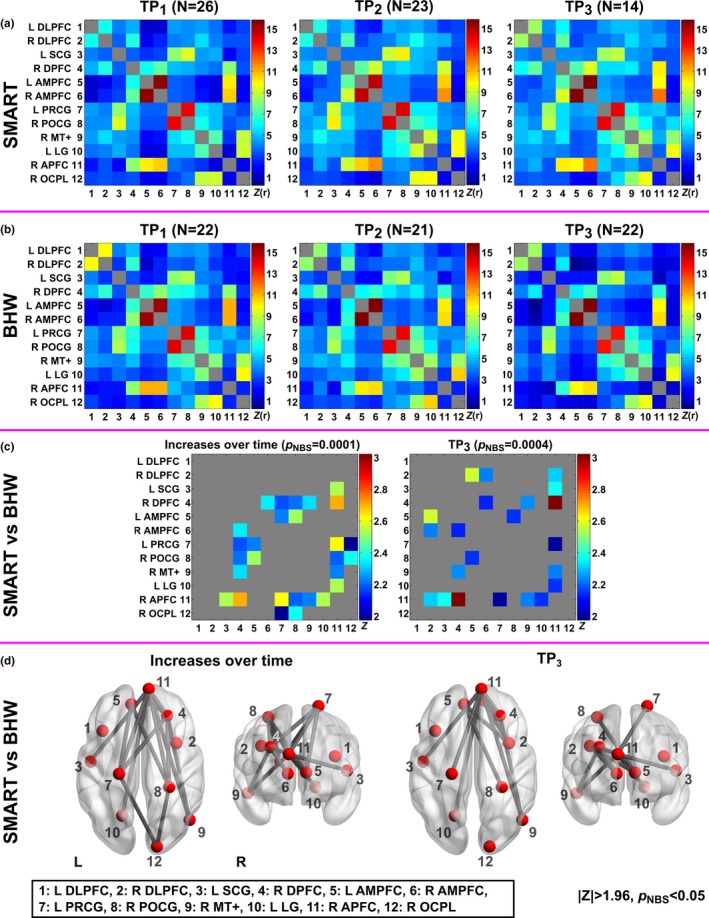
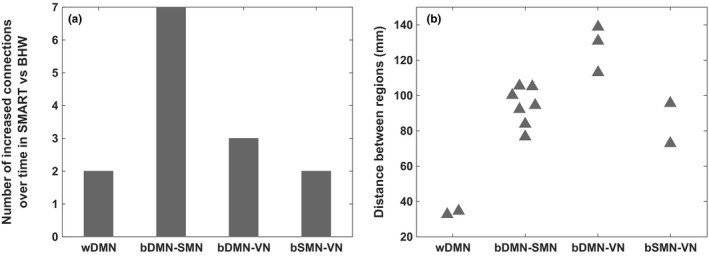
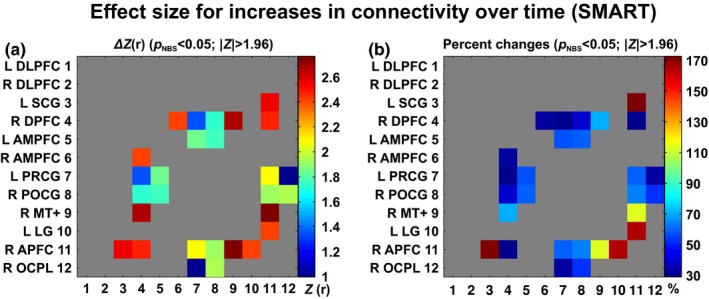
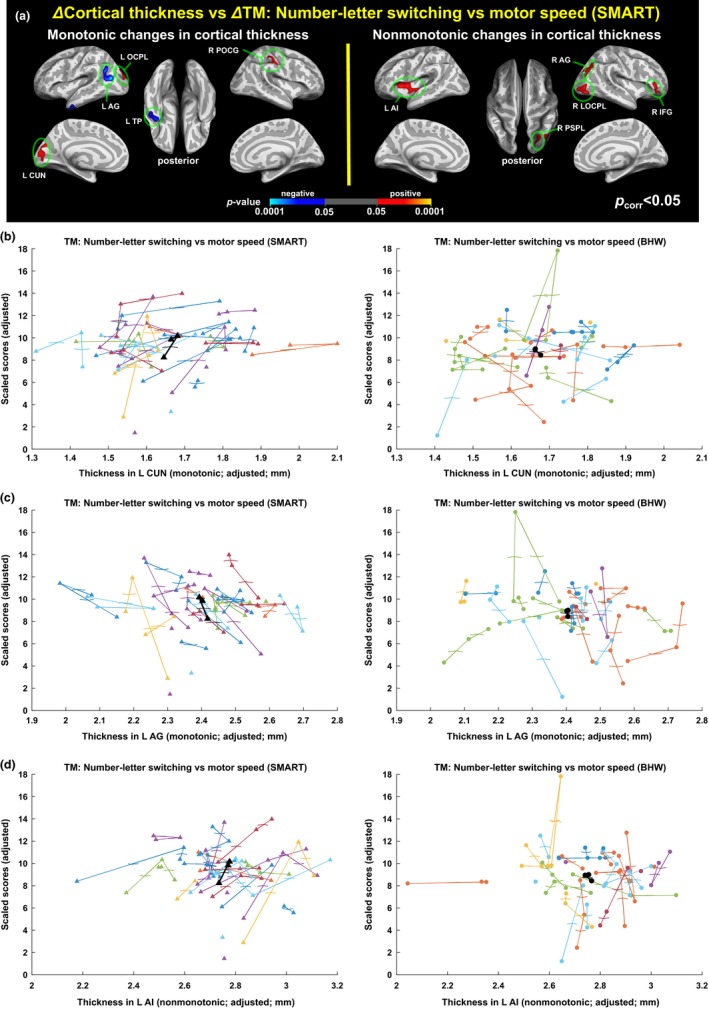
Relative to the knowledge-based training group, the cortical thickness of the strategy-based training group showed diverse temporal patterns of changes over multiple brain regions ( < .05, < .05): (1) increases followed by decreases, (2) monotonic increases, and (3) monotonic decreases. However, network-based statistics (NBS) analysis of rsFC among these regions revealed that the strategy-based training group induced only monotonic increases in connectivity, relative to the knowledge-based training group (|| > 1.96, < 0.05). Complementing the rsFC results, the strategy-based training group yielded monotonic improvement in scores for the trail-making test (<.05). Analyses of brain-behavior relationships revealed that improvement in trail-making scores were associated with training-induced changes in cortical thickness ( < .05, < .05) and rsFC ( < .05, < .005) within the strategy-based training group.
These findings suggest that training-induced brain plasticity continues through chronic phases of TBI and that brain connectivity and cortical thickness may serve as markers of plasticity.
先前的研究表明,健康成年人的大脑在经过训练后会发生变化。然而,受伤后的大脑在受伤数月至数年后对认知训练的反应如何仍不清楚。
60 名慢性创伤性脑损伤(TBI)患者被随机分为基于策略的(=31)或基于知识的(=29)训练组,进行 8 周的训练。我们在训练前、训练后即刻和 3 个月后测量了皮质厚度和静息态功能连接(rsFC)。
与基于知识的训练组相比,基于策略的训练组的多个脑区的皮质厚度呈现出多种不同的变化模式(<0.05,<0.05):(1)增加后减少,(2)单调增加,(3)单调减少。然而,这些区域之间的 rsFC 的基于网络的统计学(NBS)分析显示,与基于知识的训练组相比,基于策略的训练组仅诱导了连接的单调增加(||>1.96,<0.05)。补充 rsFC 结果,基于策略的训练组在 trail-making 测试中的分数得到了单调改善(<0.05)。大脑行为关系的分析表明,trail-making 分数的改善与基于策略的训练组的皮质厚度(<0.05,<0.05)和 rsFC(<0.05,<0.005)的训练诱导变化相关。
这些发现表明,训练诱导的大脑可塑性在 TBI 的慢性阶段持续存在,并且大脑连接和皮质厚度可能作为可塑性的标志物。