da Silva Meirelles Lindolfo, Simon Daniel, Regner Andrea
Programa de Pós-Graduação em Biologia Celular e Molecular Aplicada à Saúde, Universidade Luterana do Brasil (ULBRA), Canoas CEP 92425-900, Brazil.
Int J Mol Sci. 2017 May 18;18(5):1082. doi: 10.3390/ijms18051082.
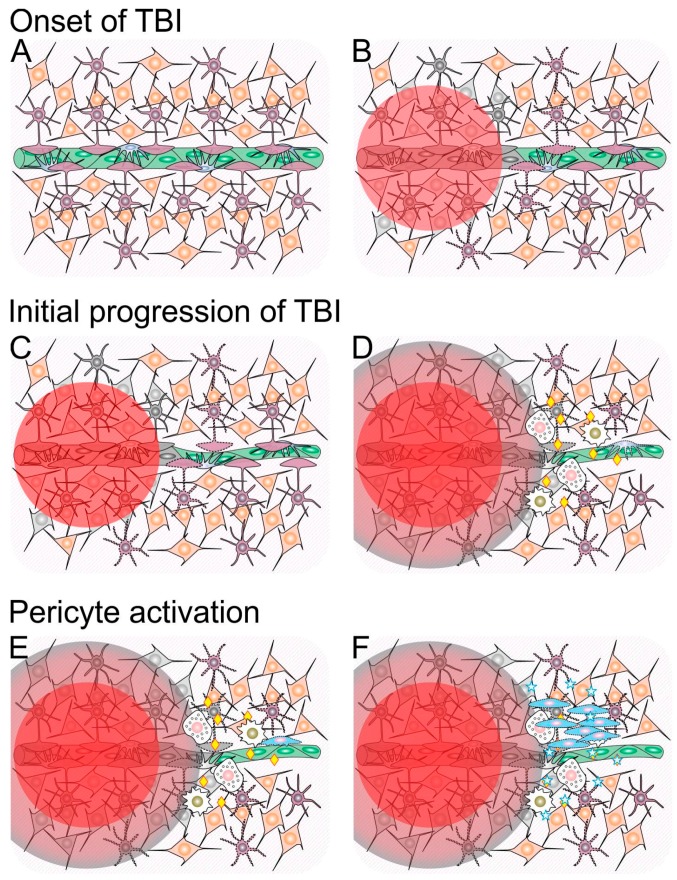
Traumatic brain injury (TBI) is a major cause of morbidity and mortality among young individuals worldwide. Understanding the pathophysiology of neurotrauma is crucial for the development of more effective therapeutic strategies. After the trauma occurs, immediate neurologic damage is produced by the traumatic forces; this primary injury triggers a secondary wave of biochemical cascades together with metabolic and cellular changes, called secondary neural injury. In the scenario of the acutely injured brain, the ongoing secondary injury results in ischemia and edema culminating in an uncontrollable increase in intracranial pressure. These areas of secondary injury progression, or areas of "traumatic penumbra", represent crucial targets for therapeutic interventions. Neurotrophins are a class of signaling molecules that promote survival and/or maintenance of neurons. They also stimulate axonal growth, synaptic plasticity, and neurotransmitter synthesis and release. Therefore, this review focuses on the role of neurotrophins in the acute post-injury response. Here, we discuss possible endogenous neuroprotective mechanisms of neurotrophins in the prevailing environment surrounding the injured areas, and highlight the crosstalk between neurotrophins and inflammation with focus on neurovascular unit cells, particularly pericytes. The perspective is that neurotrophins may represent promising targets for research on neuroprotective and neurorestorative processes in the short-term following TBI.
创伤性脑损伤(TBI)是全球年轻人发病和死亡的主要原因。了解神经创伤的病理生理学对于开发更有效的治疗策略至关重要。创伤发生后,创伤力会立即造成神经损伤;这种原发性损伤会引发一系列生化级联反应以及代谢和细胞变化的继发性浪潮,称为继发性神经损伤。在急性脑损伤的情况下,持续的继发性损伤会导致缺血和水肿,最终导致颅内压不可控制地升高。这些继发性损伤进展区域,即“创伤半暗带”区域,是治疗干预的关键靶点。神经营养因子是一类促进神经元存活和/或维持的信号分子。它们还能刺激轴突生长、突触可塑性以及神经递质的合成和释放。因此,本综述重点关注神经营养因子在损伤后急性期反应中的作用。在此,我们讨论神经营养因子在损伤区域周围主要环境中的可能内源性神经保护机制,并强调神经营养因子与炎症之间的相互作用,重点关注神经血管单元细胞,特别是周细胞。我们认为,神经营养因子可能是TBI后短期内神经保护和神经修复过程研究的有希望的靶点。