Department of Evolutionary Biology and Environmental Studies, University of Zurich, Winterthurerstrasse 190, Zurich CH-8057, Switzerland.
Swiss Institute of Bioinformatics, Quartier Sorge-Bâtiment Génopode, Lausanne 1015, Switzerland.
Nat Commun. 2017 May 19;8:15410. doi: 10.1038/ncomms15410.
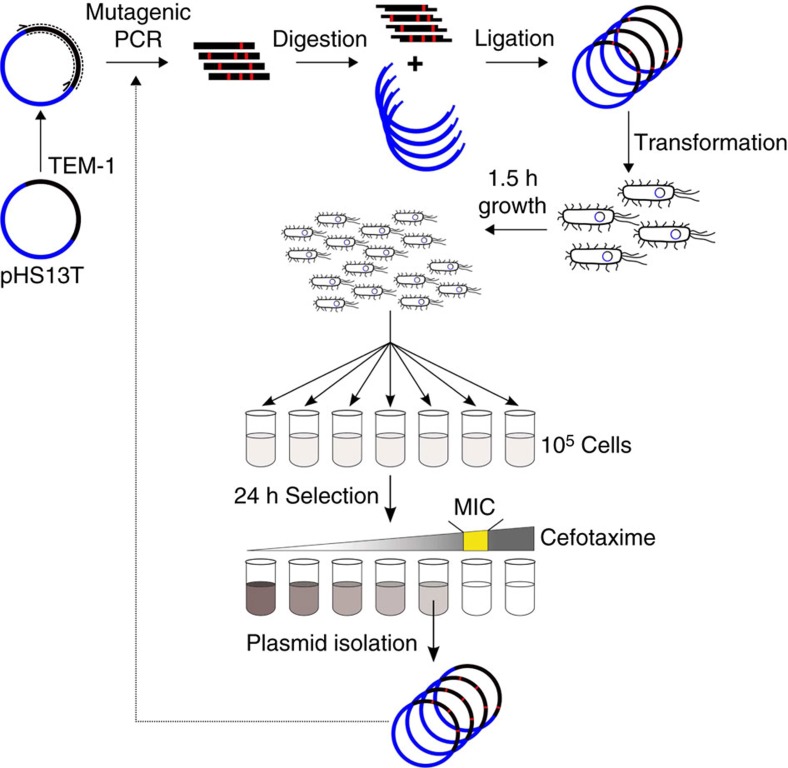
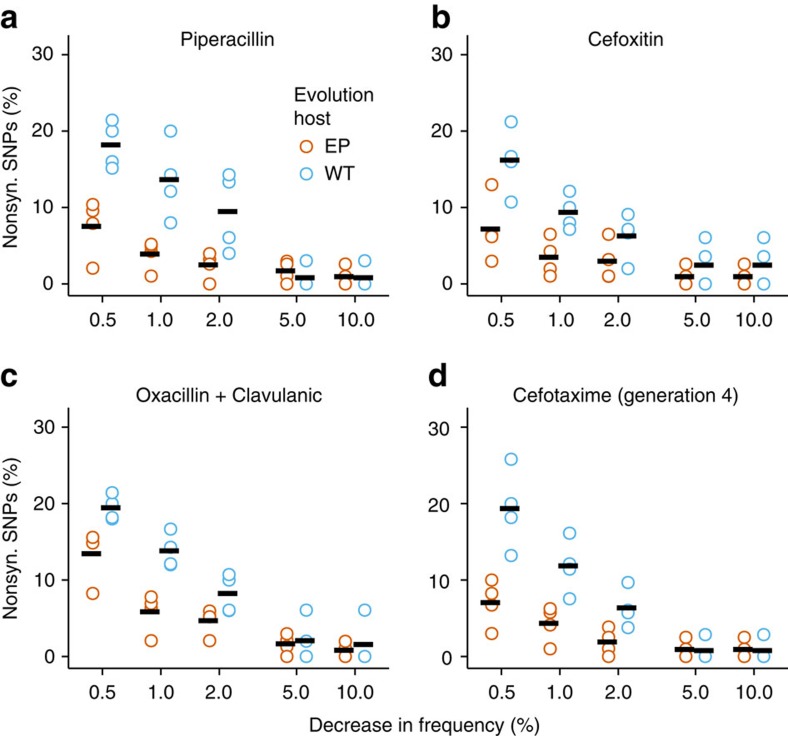
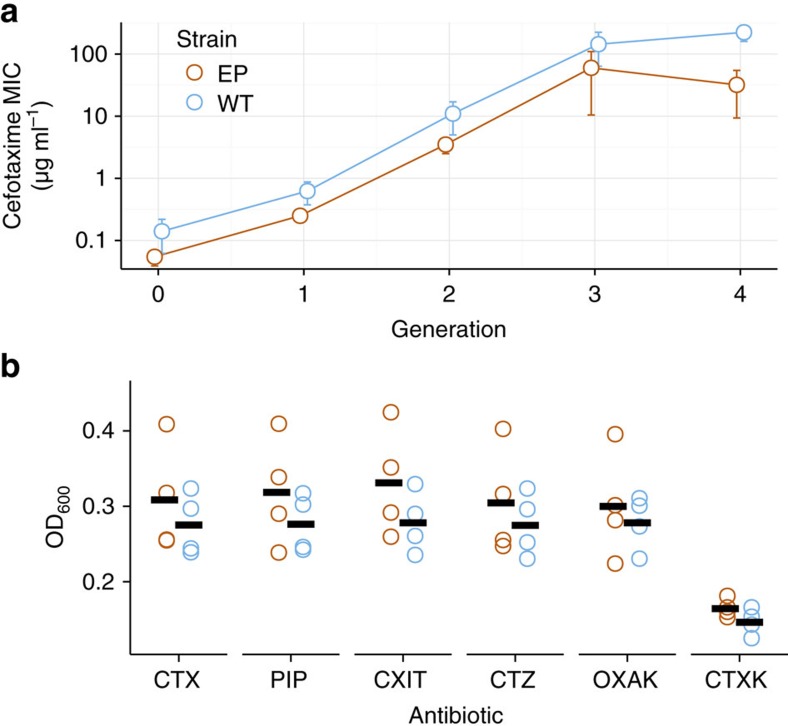
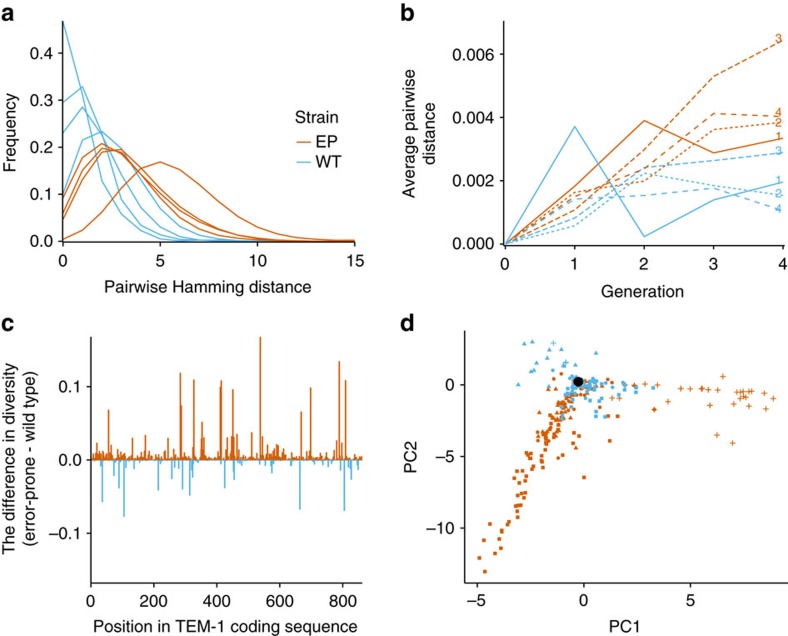
Phenotypic mutations are amino acid changes caused by mistranslation. How phenotypic mutations affect the adaptive evolution of new protein functions is unknown. Here we evolve the antibiotic resistance protein TEM-1 towards resistance on the antibiotic cefotaxime in an Escherichia coli strain with a high mistranslation rate. TEM-1 populations evolved in such strains endow host cells with a general growth advantage, not only on cefotaxime but also on several other antibiotics that ancestral TEM-1 had been unable to deactivate. High-throughput sequencing of TEM-1 populations shows that this advantage is associated with a lower incidence of weakly deleterious genotypic mutations. Our observations show that mistranslation is not just a source of noise that delays adaptive evolution. It could even facilitate adaptive evolution by exacerbating the effects of deleterious mutations and leading to their more efficient purging. The ubiquity of mistranslation and its effects render mistranslation an important factor in adaptive protein evolution.
表型突变是由翻译错误引起的氨基酸变化。表型突变如何影响新蛋白质功能的适应性进化尚不清楚。在这里,我们在一种具有高翻译错误率的大肠杆菌菌株中,使抗生素耐药蛋白 TEM-1 朝着对抗生素头孢噻肟的耐药性进化。在这种菌株中进化的 TEM-1 群体赋予宿主细胞普遍的生长优势,不仅在头孢噻肟上,而且在其他几种先前 TEM-1 无法失活的抗生素上也是如此。对 TEM-1 群体的高通量测序表明,这种优势与较弱的有害基因型突变的发生率较低有关。我们的观察结果表明,翻译错误不仅仅是延迟适应性进化的噪声源。它甚至可以通过加剧有害突变的影响并使其更有效地清除来促进适应性进化。翻译错误的普遍性及其影响使得翻译错误成为适应性蛋白质进化的一个重要因素。