Aakre Christopher Ansel, Kitson Jaben E, Li Man, Herasevich Vitaly
Mayo Clinic, Department of Medicine, Division of General Internal Medicine, Rochester, MN, United States.
Mayo Clinic, Department of Information Technology, Rochester, MN, United States.
JMIR Hum Factors. 2017 May 18;4(2):e14. doi: 10.2196/humanfactors.7567.
The new sepsis definition has increased the need for frequent sequential organ failure assessment (SOFA) score recalculation and the clerical burden of information retrieval makes this score ideal for automated calculation.
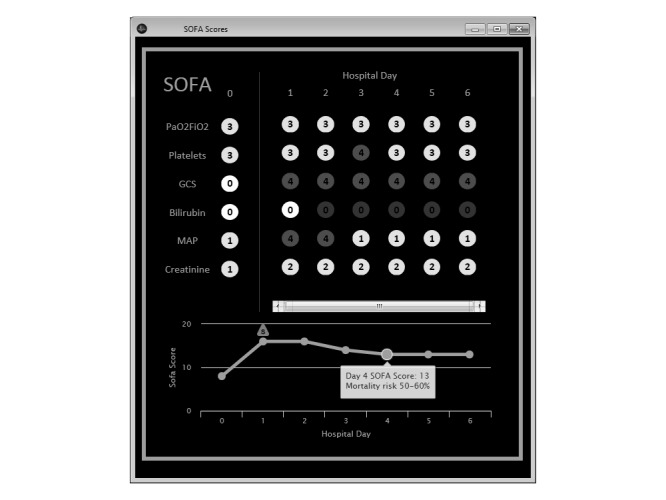
The aim of this study was to (1) estimate the clerical workload of manual SOFA score calculation through a time-motion analysis and (2) describe a user-centered design process for an electronic medical record (EMR) integrated, automated SOFA score calculator with subsequent usability evaluation study.
First, we performed a time-motion analysis by recording time-to-task-completion for the manual calculation of 35 baseline and 35 current SOFA scores by 14 internal medicine residents over a 2-month period. Next, we used an agile development process to create a user interface for a previously developed automated SOFA score calculator. The final user interface usability was evaluated by clinician end users with the Computer Systems Usability Questionnaire.
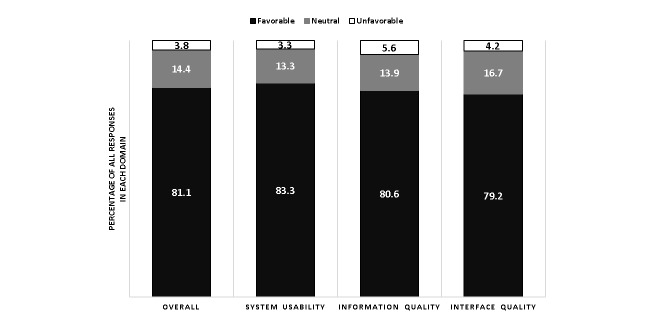
The overall mean (standard deviation, SD) time-to-complete manual SOFA score calculation time was 61.6 s (33). Among the 24% (12/50) usability survey respondents, our user-centered user interface design process resulted in >75% favorability of survey items in the domains of system usability, information quality, and interface quality.
Early stakeholder engagement in our agile design process resulted in a user interface for an automated SOFA score calculator that reduced clinician workload and met clinicians' needs at the point of care. Emerging interoperable platforms may facilitate dissemination of similarly useful clinical score calculators and decision support algorithms as "apps." A user-centered design process and usability evaluation should be considered during creation of these tools.
新的脓毒症定义增加了频繁重新计算序贯器官衰竭评估(SOFA)评分的需求,而信息检索的文书工作负担使得该评分非常适合自动计算。
本研究的目的是(1)通过时间动作分析估计手动计算SOFA评分的文书工作量,以及(2)描述一个以用户为中心的设计过程,用于开发一个集成在电子病历(EMR)中的自动SOFA评分计算器,并随后进行可用性评估研究。
首先,我们进行了一项时间动作分析,记录了14名内科住院医师在2个月内手动计算35个基线SOFA评分和35个当前SOFA评分的任务完成时间。接下来,我们使用敏捷开发过程为之前开发的自动SOFA评分计算器创建了一个用户界面。最终的用户界面可用性由临床终端用户使用计算机系统可用性问卷进行评估。
手动计算SOFA评分的总体平均(标准差,SD)完成时间为61.6秒(33)。在24%(12/50)的可用性调查受访者中,我们以用户为中心的用户界面设计过程在系统可用性、信息质量和界面质量领域的调查项目中获得了超过75%的好感度。
早期利益相关者参与我们的敏捷设计过程,产生了一个自动SOFA评分计算器的用户界面,该界面减少了临床医生的工作量,并在护理点满足了临床医生的需求。新兴的可互操作平台可能有助于将类似有用的临床评分计算器和决策支持算法作为“应用程序”进行传播。在创建这些工具时应考虑以用户为中心的设计过程和可用性评估。