Vadu Rural Health Program, KEM Hospital Research Centre, Pune, 411011, India.
Epidemiology and Global Health, Department of Public Health and Clinical Medicine, Umeå University, Umeå, Sweden.
Int J Biometeorol. 2017 Oct;61(10):1797-1804. doi: 10.1007/s00484-017-1363-8. Epub 2017 May 19.
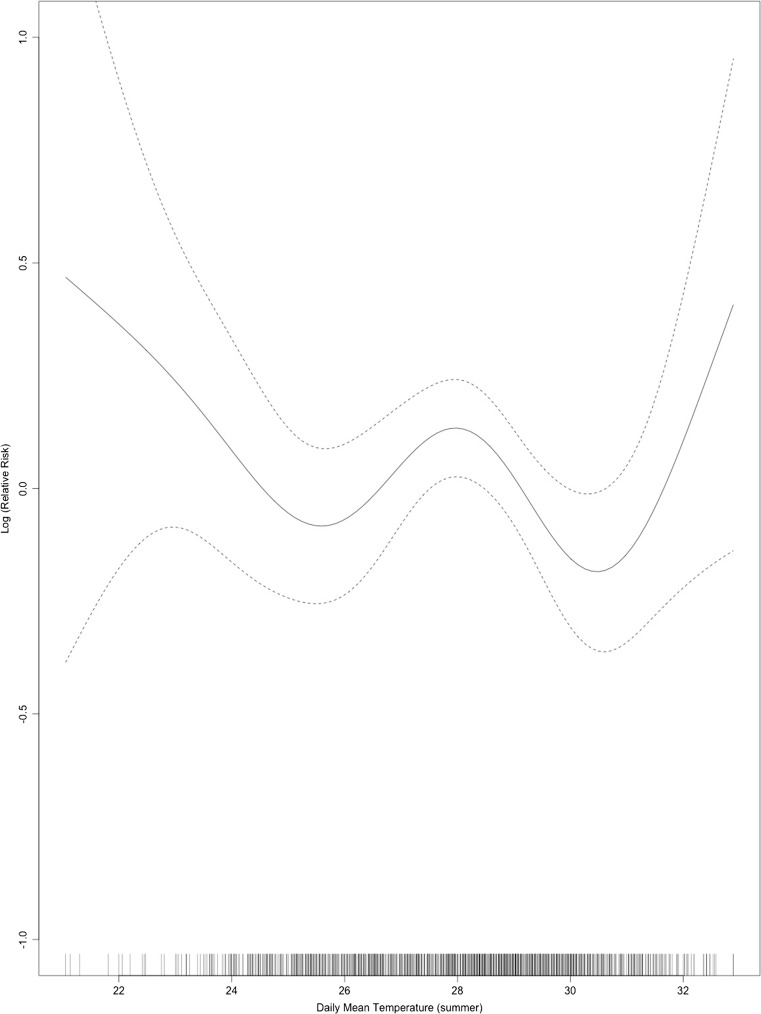
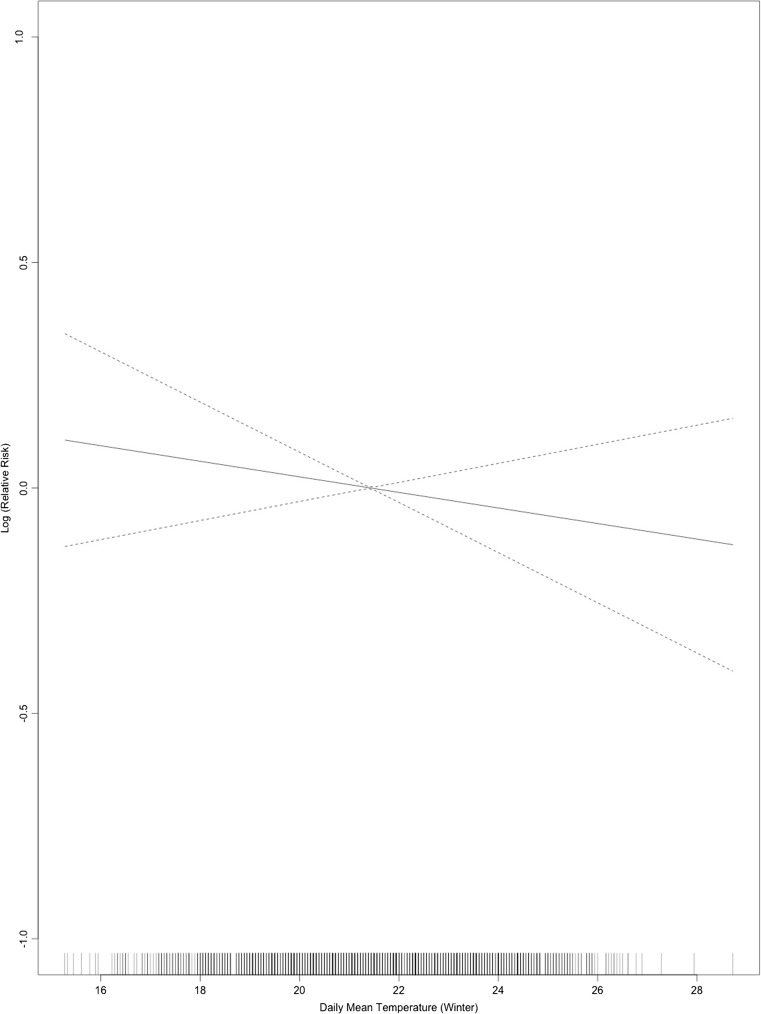
Ambient temperatures (heat and cold) are associated with mortality, but limited research is available about groups most vulnerable to these effects in rural populations. We estimated the effects of heat and cold on daily mortality among different sociodemographic groups in the Vadu HDSS area, western India. We studied all deaths in the Vadu HDSS area during 2004-2013. A conditional logistic regression model in a case-crossover design was used. Separate analyses were carried out for summer and winter season. Odds ratios (OR) and 95% confidence intervals (CI) were estimated for total mortality and population subgroups. Temperature above a threshold of 31 °C was associated with total mortality (OR 1.48, CI = 1.05-2.09) per 1 °C increase in daily mean temperature. Odds ratios were higher among females (OR 1.93; CI = 1.07-3.47), those with low education (OR 1.65; CI = 1.00-2.75), those owing larger agricultural land (OR 2.18; CI = 0.99-4.79), and farmers (OR 1.70; CI = 1.02-2.81). In winter, per 1 °C decrease in mean temperature, OR for total mortality was 1.06 (CI = 1.00-1.12) in lag 0-13 days. High risk of cold-related mortality was observed among people occupied in housework (OR = 1.09; CI = 1.00-1.19). Our study suggests that both heat and cold have an impact on mortality particularly heat, but also, to a smaller degree, cold have an impact. The effects may differ partly by sex, education, and occupation. These findings might have important policy implications in preventing heat and cold effects on particularly vulnerable groups of the rural populations in low and middle-income countries with hot semi-arid climate.
环境温度(热和冷)与死亡率有关,但关于农村人口中最易受这些影响的群体的研究有限。我们估计了印度西部 Vadu 人口与健康动态监测系统(HDSS)地区不同社会人口群体中热和冷对每日死亡率的影响。我们研究了 2004 年至 2013 年期间 Vadu HDSS 地区的所有死亡情况。采用病例交叉设计的条件逻辑回归模型进行了分析。分别在夏季和冬季进行了分析。总死亡率和人口亚组的比值比(OR)和 95%置信区间(CI)。每日平均温度每升高 1°C,高于 31°C 的温度与总死亡率相关(OR 1.48,CI=1.05-2.09)。女性(OR 1.93;CI=1.07-3.47)、教育程度低的人群(OR 1.65;CI=1.00-2.75)、拥有更多农业用地的人群(OR 2.18;CI=0.99-4.79)和农民(OR 1.70;CI=1.02-2.81)的比值比更高。在冬季,平均温度每降低 1°C,总死亡率的 OR 在滞后 0-13 天为 1.06(CI=1.00-1.12)。从事家务的人(OR=1.09;CI=1.00-1.19)面临与寒冷相关的高死亡风险。我们的研究表明,热和冷都会对死亡率产生影响,特别是热,但也会对农村人口中较脆弱的群体产生较小的影响。这些影响可能因性别、教育程度和职业而异。这些发现可能对预防热和冷对中低收入国家炎热半干旱气候中农村人口中特别脆弱群体的影响具有重要的政策意义。