Britton Oliver J, Bueno-Orovio Alfonso, Virág László, Varró András, Rodriguez Blanca
Department of Computer Science, University of OxfordOxford, UK.
Department of Pharmacology and Pharmacotherapy, Faculty of Medicine, University of SzegedSzeged, Hungary.
Front Physiol. 2017 May 5;8:278. doi: 10.3389/fphys.2017.00278. eCollection 2017.
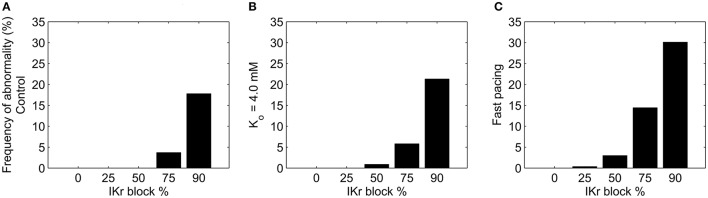
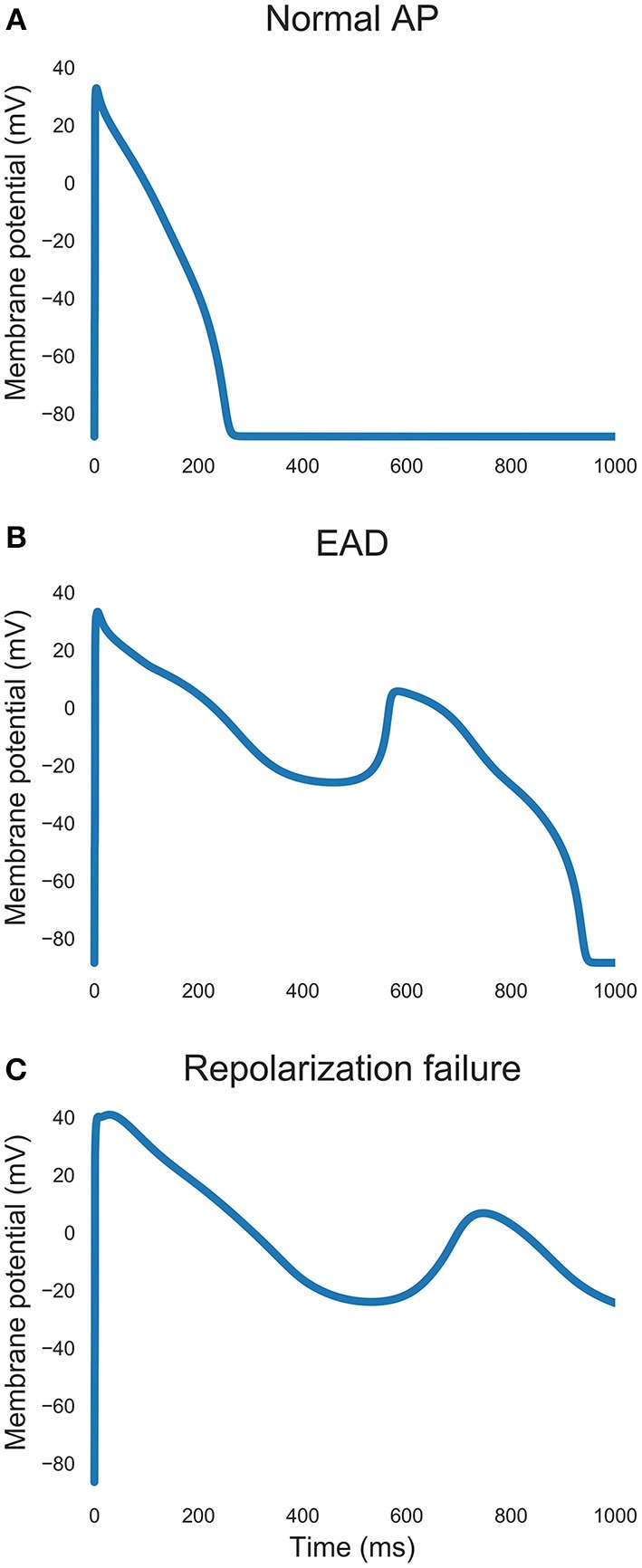
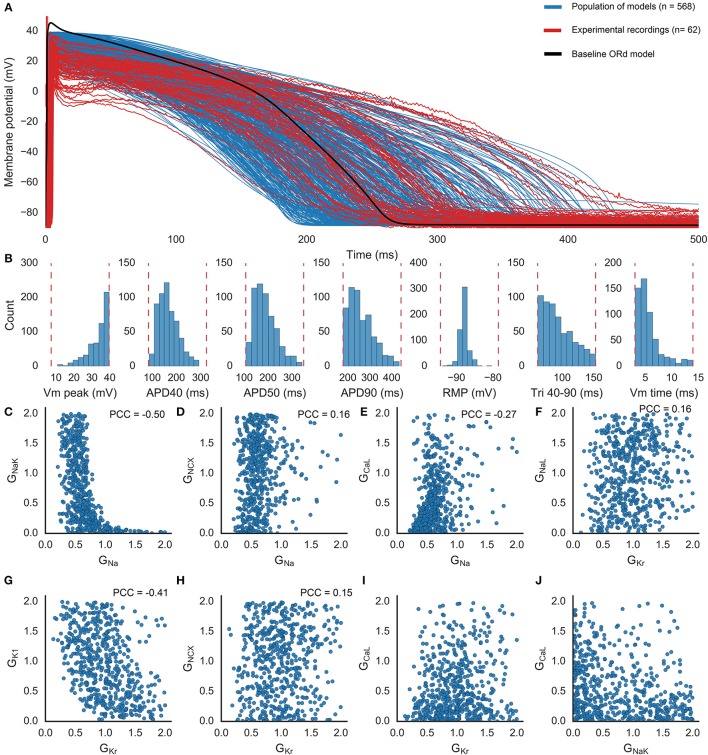
Cellular repolarization abnormalities occur unpredictably due to disease and drug effects, and can occur even in cardiomyocytes that exhibit normal action potentials (AP) under control conditions. Variability in ion channel densities may explain differences in this susceptibility to repolarization abnormalities. Here, we quantify the importance of key ionic mechanisms determining repolarization abnormalities following ionic block in human cardiomyocytes yielding normal APs under control conditions. Sixty two AP recordings from non-diseased human heart preparations were used to construct a population of human ventricular models with normal APs and a wide range of ion channel densities. Multichannel ionic block was applied to investigate susceptibility to repolarization abnormalities. I block was necessary for the development of repolarization abnormalities. Models that developed repolarization abnormalities over the widest range of blocks possessed low Na/K pump conductance below 50% of baseline, and I conductance above 70% of baseline. Furthermore, I made the second largest contribution to repolarizing current in control simulations and the largest contribution under 75% I block. Reversing intracellular Na overload caused by reduced I was not sufficient to prevent abnormalities in models with low Na/K pump conductance, while returning Na/K pump conductance to normal substantially reduced abnormality occurrence, indicating I is an important repolarization current. I is an important determinant of repolarization abnormality susceptibility in human ventricular cardiomyocytes, through its contribution to repolarization current rather than homeostasis. While we found I block to be necessary for repolarization abnormalities to occur, I decrease, as in disease, may amplify the pro-arrhythmic risk of drug-induced I block in humans.
由于疾病和药物作用,细胞复极化异常会不可预测地发生,甚至在对照条件下表现出正常动作电位(AP)的心肌细胞中也可能出现。离子通道密度的变化可能解释了这种对复极化异常易感性的差异。在这里,我们量化了在对照条件下产生正常AP的人类心肌细胞中,离子阻断后决定复极化异常的关键离子机制的重要性。使用来自非患病人类心脏标本的62个AP记录来构建具有正常AP和广泛离子通道密度的人类心室模型群体。应用多通道离子阻断来研究对复极化异常的易感性。I阻断是复极化异常发生所必需的。在最广泛的阻断范围内出现复极化异常的模型,其钠钾泵电导低于基线的50%,I电导高于基线的70%。此外,在对照模拟中,I对复极电流的贡献第二大,在75% I阻断下贡献最大。由I降低引起的细胞内钠超载的逆转不足以预防钠钾泵电导低的模型中的异常,而将钠钾泵电导恢复正常可显著降低异常的发生,表明I是一种重要的复极电流。I是人类心室心肌细胞复极化异常易感性的重要决定因素,通过其对复极电流的贡献而非内环境稳态。虽然我们发现I阻断是复极化异常发生所必需的,但I降低(如在疾病中)可能会放大药物诱导的I阻断在人类中的促心律失常风险。