Wang Jiaqi, Ye Huamao, Zhang Dandan, Cheng Kai, Hu Yijun, Yu Xiya, Lu Lei, Hu Jingjing, Zuo Changjing, Qian Baohua, Yu Yongwei, Liu Shupeng, Liu Geng, Mao Chuanbin, Liu Shanrong
Changhai Hospital, Second Military Medical University, Shanghai 200433, China.
MOE Key Laboratory of Model Animal for Disease Study, Model Animal Research Center of Nanjing University, Nanjing 210061 China.
Theranostics. 2017 Mar 24;7(6):1407-1421. doi: 10.7150/thno.18262. eCollection 2017.
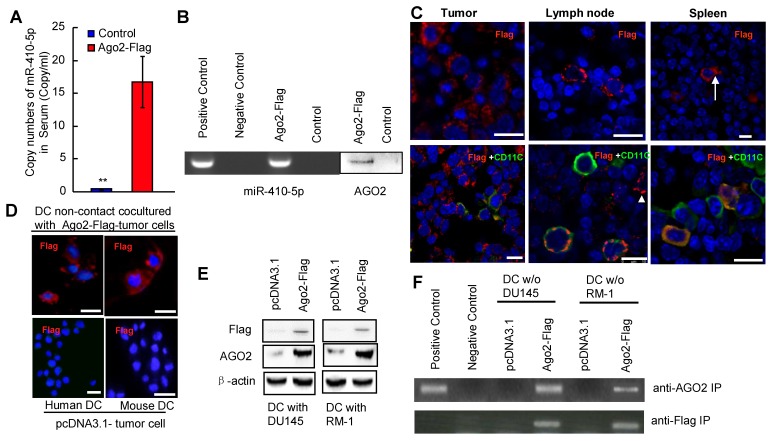
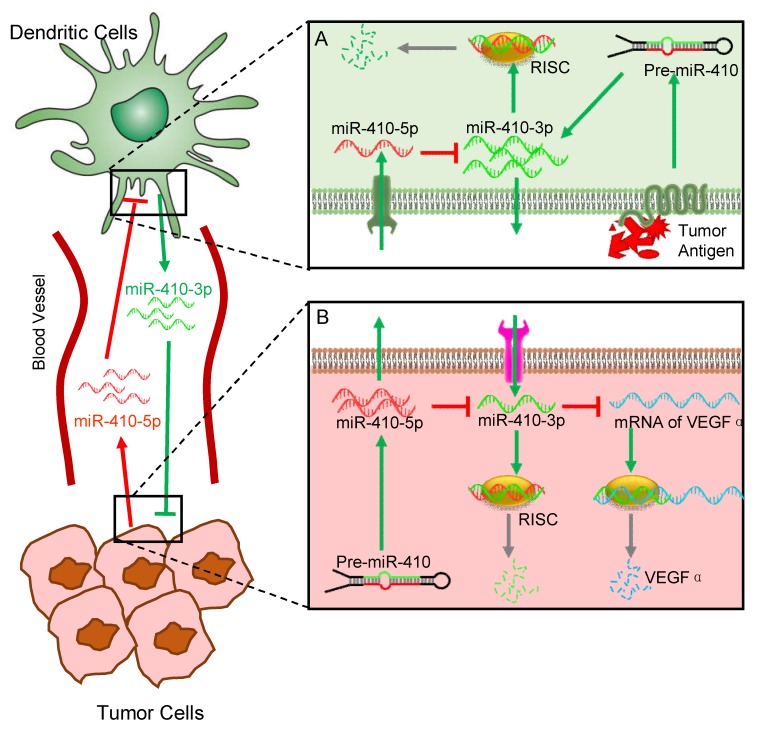
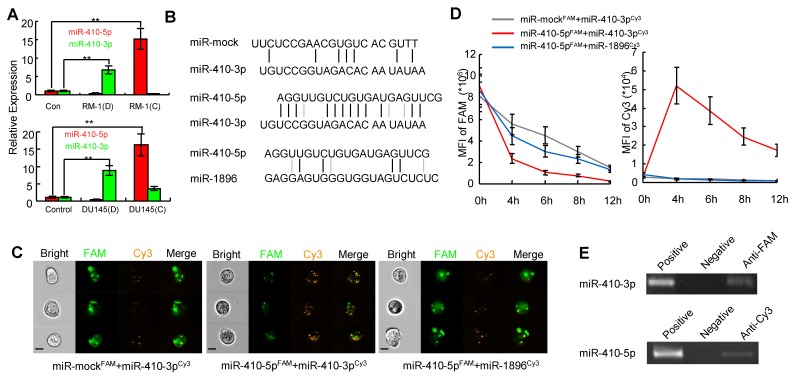
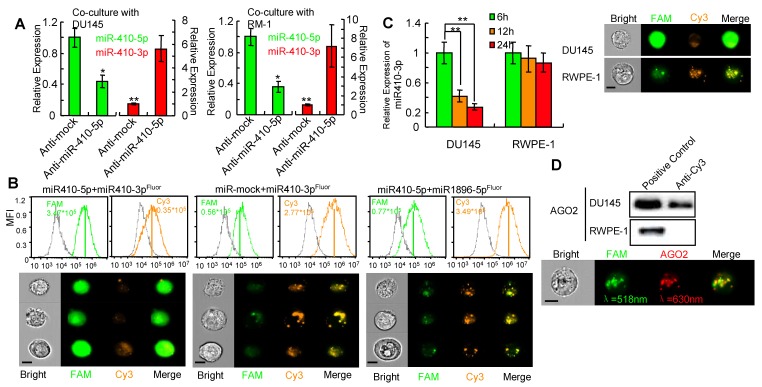
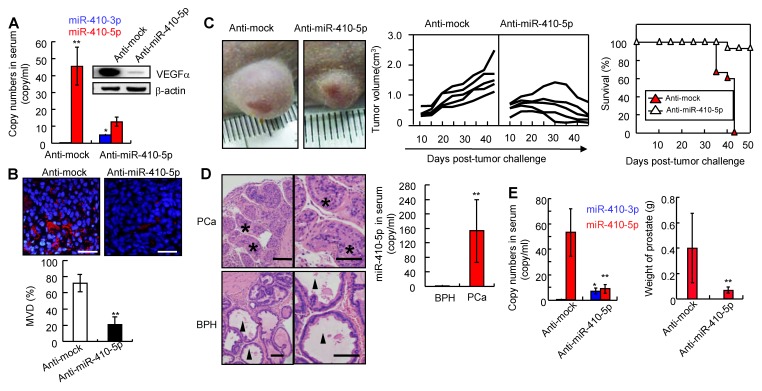
Understanding the interaction between cancer cells and immunocytes will inspire new cancer therapy strategies. However, how cancer-derived circulating miRNAs modulate such interaction remains unclear. Here we discovered that circulating miR-410-5p, secreted by prostate cancer cells, entered dendritic cells (DCs), with the aid of argonaute-2 protein. The cancer cell antigens stimulated the DCs to produce miR-410-3p, a highly complementary counterpart of miR-410-5p derived from pre-miR-410. The DC-internalized miR-410-5p degraded the miR-410-3p by base pairing and thus inhibited its function in suppressing tumor angiogenesis, promoting tumor growth. Furthermore, blockade of the miR-410-5p upregulated the miR-410-3p to inhibit tumor growth. Our work suggests a new miRNA-mediated role of immunocytes in cancer progression and a new strategy of cancer therapy through suppressing circulating miRNAs.
了解癌细胞与免疫细胞之间的相互作用将启发新的癌症治疗策略。然而,癌症衍生的循环miRNA如何调节这种相互作用仍不清楚。在这里,我们发现前列腺癌细胞分泌的循环miR-410-5p在AGO2蛋白的帮助下进入树突状细胞(DC)。癌细胞抗原刺激DC产生miR-410-3p,它是源自pre-miR-410的miR-410-5p的高度互补对应物。DC内化的miR-410-5p通过碱基配对降解miR-410-3p,从而抑制其在抑制肿瘤血管生成、促进肿瘤生长方面的功能。此外,阻断miR-410-5p可上调miR-410-3p以抑制肿瘤生长。我们的工作揭示了免疫细胞在癌症进展中一种新的miRNA介导的作用,以及一种通过抑制循环miRNA进行癌症治疗的新策略。