James Michelle L, Belichenko Nadia P, Shuhendler Adam J, Hoehne Aileen, Andrews Lauren E, Condon Christina, Nguyen Thuy-Vi V, Reiser Vladimer, Jones Paul, Trigg William, Rao Jianghong, Gambhir Sanjiv S, Longo Frank M
Department of Radiology, Stanford University, Stanford, 94305, USA.
Department of Neurology and Neurological Sciences, Stanford University, Stanford, 94305, USA.
Theranostics. 2017 Mar 24;7(6):1422-1436. doi: 10.7150/thno.17666. eCollection 2017.
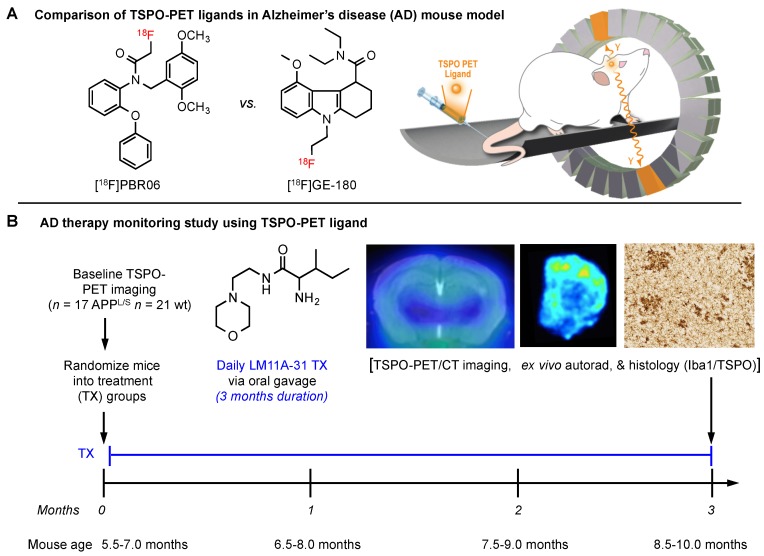
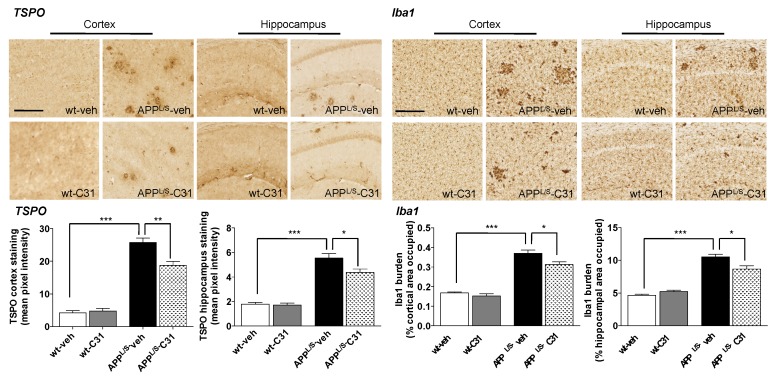
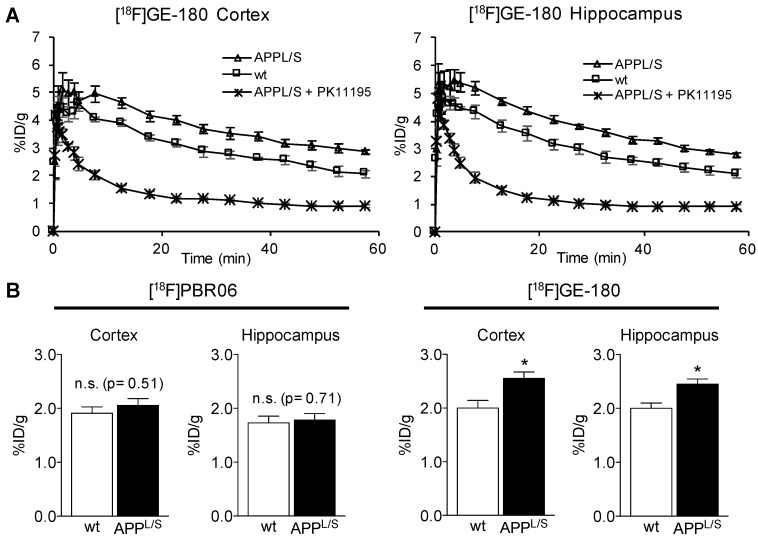
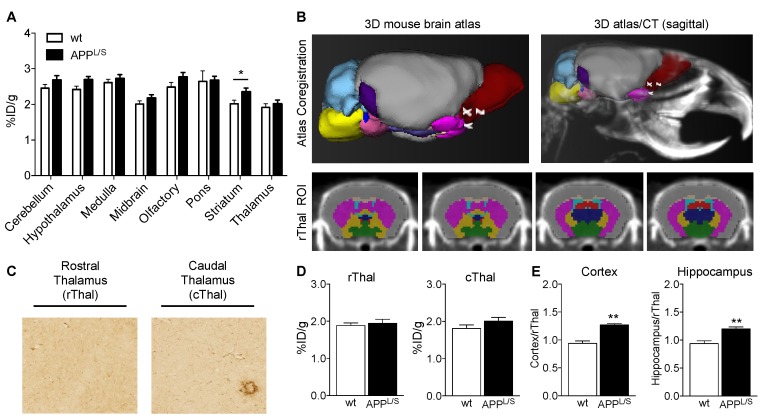
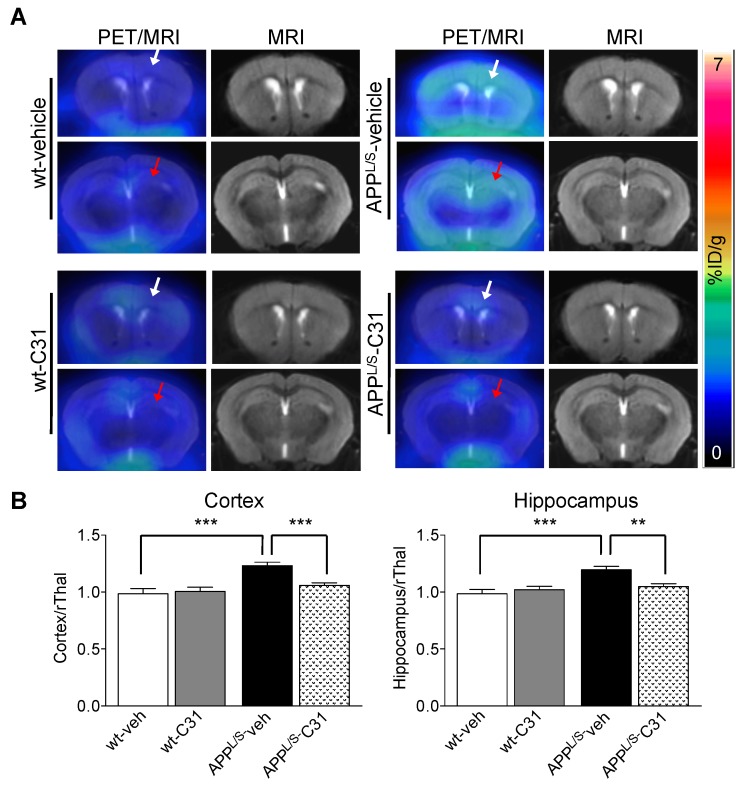
Microglial activation is a key pathological feature of Alzheimer's disease (AD). PET imaging of translocator protein 18 kDa (TSPO) is a strategy to detect microglial activation . Here we assessed flutriciclamide ([F]GE-180), a new second-generation TSPO-PET radiotracer, for its ability to monitor response to LM11A-31, a novel AD therapeutic in clinical trials. AD mice displaying pathology were treated orally with LM11A-31 for 3 months. Subsequent [F]GE-180-PET imaging revealed significantly lower signal in cortex and hippocampus of LM11A-31-treated AD mice compared to those treated with vehicle, corresponding with decreased levels of TSPO immunostaining and microglial Iba1 immunostaining. In addition to detecting decreased microglial activation following LM11A-31 treatment, [F]GE-180 identified activated microglia in AD mice with greater sensitivity than another second-generation TSPO radiotracer, [F]PBR06. Together, these data demonstrate the promise of [F]GE-180 as a potentially sensitive tool for tracking neuroinflammation in AD mice and for monitoring therapeutic modulation of microglial activation.
小胶质细胞激活是阿尔茨海默病(AD)的关键病理特征。18 kDa转运蛋白(TSPO)的PET成像 是检测小胶质细胞激活的一种方法。在此,我们评估了新型第二代TSPO-PET放射性示踪剂氟曲西酰胺([F]GE-180)监测对LM11A-31(一种正在进行临床试验的新型AD治疗药物)反应的能力。对出现病变的AD小鼠口服给予LM11A-31,持续3个月。随后的[F]GE-180-PET成像显示,与给予赋形剂治疗的小鼠相比,接受LM11A-31治疗的AD小鼠的皮质和海马区信号显著降低,这与TSPO免疫染色和小胶质细胞Iba1免疫染色水平降低相一致。除了检测到LM11A-31治疗后小胶质细胞激活减少外,[F]GE-180比另一种第二代TSPO放射性示踪剂[F]PBR06更灵敏地识别出AD小鼠中激活的小胶质细胞。总之,这些数据证明了[F]GE-180有望成为一种潜在的灵敏工具,用于追踪AD小鼠的神经炎症以及监测小胶质细胞激活的治疗调节。