Rietman André B, Oostenbrink Rianne, Bongers Sanne, Gaukema Eddy, van Abeelen Sandra, Hendriksen Jos G, Looman Caspar W N, de Nijs Pieter F A, de Wit Marie-Claire
Department of Child and Adolescent Psychiatry/Psychology, ENCORE NF1 Expertise Centre for Neurodevelopmental Disorders, Erasmus Medical Centre-Sophia Children's Hospital, Rotterdam, The Netherlands.
Department of Child and Adolescent Psychiatry/Psychology, Sophia Children's Hospital, Room Sp 2478, P.O. Box 2060, 3000 CB Rotterdam, The Netherlands.
J Neurodev Disord. 2017 May 19;9:19. doi: 10.1186/s11689-017-9198-5. eCollection 2017.
Children with the neurogenetic disorder neurofibromatosis type 1 (NF1) often have problems with learning and behaviour. In both parent reports and neuropsychological assessment, motor problems are reported in approximately one third to one half of the children with NF1. Studies using broad motor performance test batteries with relatively large groups of children with NF1 are limited. The aim of this cross-sectional observational study was to describe the severity of motor problems in children with NF1 and to explore the predictive value of demographics, intelligence, and behavioural problems.
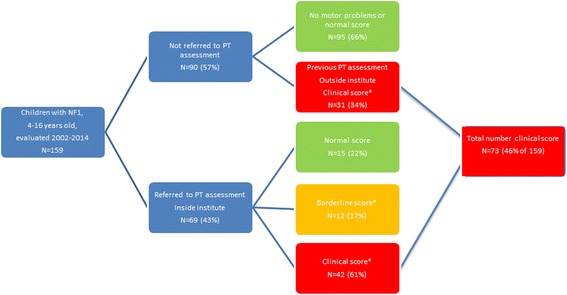
From 2002 to 2014, 69 children with NF1, aged 4 to 16 years (age = 9.5 ± 2.8 years; 29 girls) had a motor, psychological, and neurological evaluation in an NF1 expertise centre. Data were collected about (1) motor performance (M-ABC: Movement Assessment Battery for Children), (2) intelligence, and (3) emotional and behavioural problems as rated by parents.
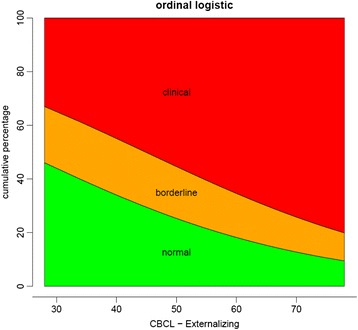
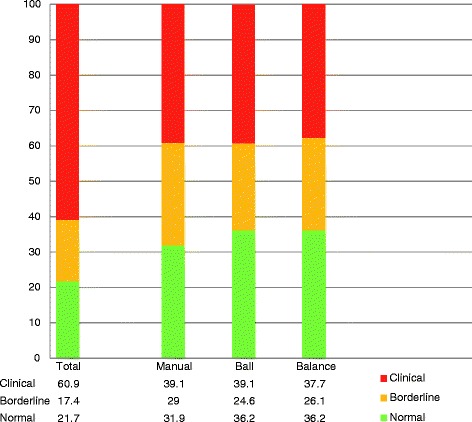
Sixty-one percent of these children scored within the clinical range of the M-ABC. In ordinal logistic regression analyses, motor problems were associated with symptoms of attention-deficit/hyperactivity disorder (ADHD), symptoms of autism spectrum disorder (ASD), and externalising behavioural problems. Motor outcome was not predicted by age, intelligence, scoliosis, hypotonia, nor hypermobility.
Motor problems are among the most common comorbid developmental problems in children with NF1, and these problems do not diminish with age. Because of their impact on daily functioning, motor problems need to be specifically addressed in diagnosis, follow-up, and treatment of NF1.
患有神经遗传性疾病1型神经纤维瘤病(NF1)的儿童经常存在学习和行为问题。在家长报告和神经心理学评估中,约三分之一至二分之一的NF1儿童被报告存在运动问题。使用广泛的运动表现测试组合对相对较大规模的NF1儿童群体进行研究的情况有限。这项横断面观察性研究的目的是描述NF1儿童运动问题的严重程度,并探讨人口统计学、智力和行为问题的预测价值。
2002年至2014年期间,69名年龄在4至16岁(年龄=9.5±2.8岁;29名女孩)的NF1儿童在一个NF1专业中心接受了运动、心理和神经学评估。收集了以下方面的数据:(1)运动表现(儿童运动评估量表:M-ABC),(2)智力,以及(3)家长评定的情绪和行为问题。
这些儿童中有61%在M-ABC的临床范围内得分。在有序逻辑回归分析中,运动问题与注意力缺陷多动障碍(ADHD)症状、自闭症谱系障碍(ASD)症状及外化行为问题相关。年龄、智力、脊柱侧弯、肌张力减退或关节活动过度均不能预测运动结果。
运动问题是NF1儿童最常见的共病发育问题之一,且这些问题不会随年龄增长而减轻。由于其对日常功能的影响,在NF1的诊断、随访和治疗中需要特别关注运动问题。