Zakaria Norashikin, Satar Nazilah Abdul, Abu Halim Noor Hanis, Ngalim Siti Hawa, Yusoff Narazah Mohd, Lin Juntang, Yahaya Badrul Hisham
Regenerative Medicine Cluster, Advanced Medical and Dental Institute (AMDI), Universiti Sains Malaysia, Kepala Batas, Penang, Malaysia.
College of Life Science and Technology, Xinxiang Medical University (XXMU), Xinxiang, China.
Front Oncol. 2017 May 5;7:80. doi: 10.3389/fonc.2017.00080. eCollection 2017.
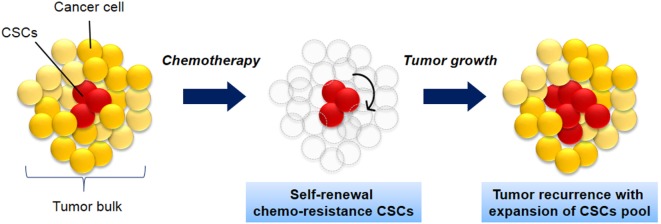
Lung cancer is the most common cancer worldwide, accounting for 1.8 million new cases and 1.6 million deaths in 2012. Non-small cell lung cancer (NSCLC), which is one of two types of lung cancer, accounts for 85-90% of all lung cancers. Despite advances in therapy, lung cancer still remains a leading cause of death. Cancer relapse and dissemination after treatment indicates the existence of a niche of cancer cells that are not fully eradicated by current therapies. These chemoresistant populations of cancer cells are called cancer stem cells (CSCs) because they possess the self-renewal and differentiation capabilities similar to those of normal stem cells. Targeting the niche of CSCs in combination with chemotherapy might provide a promising strategy to eradicate these cells. Thus, understanding the characteristics of CSCs has become a focus of studies of NSCLC therapies.
肺癌是全球最常见的癌症,2012年有180万新发病例和160万人死亡。非小细胞肺癌(NSCLC)是肺癌的两种类型之一,占所有肺癌的85% - 90%。尽管治疗取得了进展,但肺癌仍然是主要的死亡原因。治疗后癌症复发和扩散表明存在未被当前疗法完全根除的癌细胞龛。这些具有化疗抗性的癌细胞群体被称为癌症干细胞(CSCs),因为它们具有与正常干细胞相似的自我更新和分化能力。将针对癌症干细胞龛与化疗相结合可能提供一种有前景的策略来根除这些细胞。因此,了解癌症干细胞的特征已成为非小细胞肺癌治疗研究的一个重点。