Owen David R, Narayan Nehal, Wells Lisa, Healy Luke, Smyth Erica, Rabiner Eugenii A, Galloway Dylan, Williams John B, Lehr Joshua, Mandhair Harpreet, Peferoen Laura An, Taylor Peter C, Amor Sandra, Antel Jack P, Matthews Paul M, Moore Craig S
1 Division of Brain Sciences, Department of Medicine Hammersmith Hospital, Imperial College London, London, UK.
2 Nuffield Department of Orthopaedics, Rheumatology & Musculoskeletal Sciences, Botnar Research Centre, University of Oxford, Oxford, UK.
J Cereb Blood Flow Metab. 2017 Aug;37(8):2679-2690. doi: 10.1177/0271678X17710182. Epub 2017 May 22.
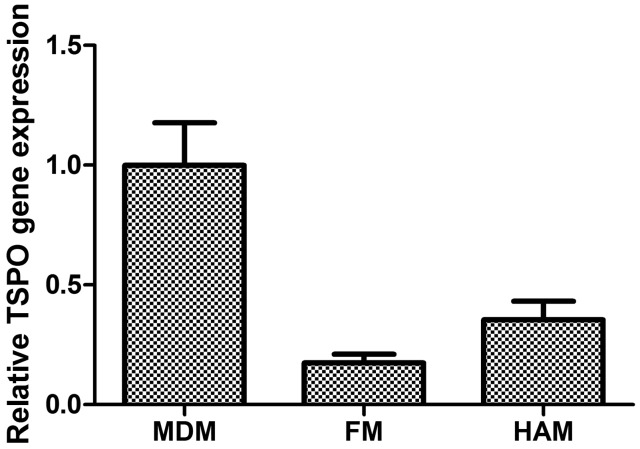
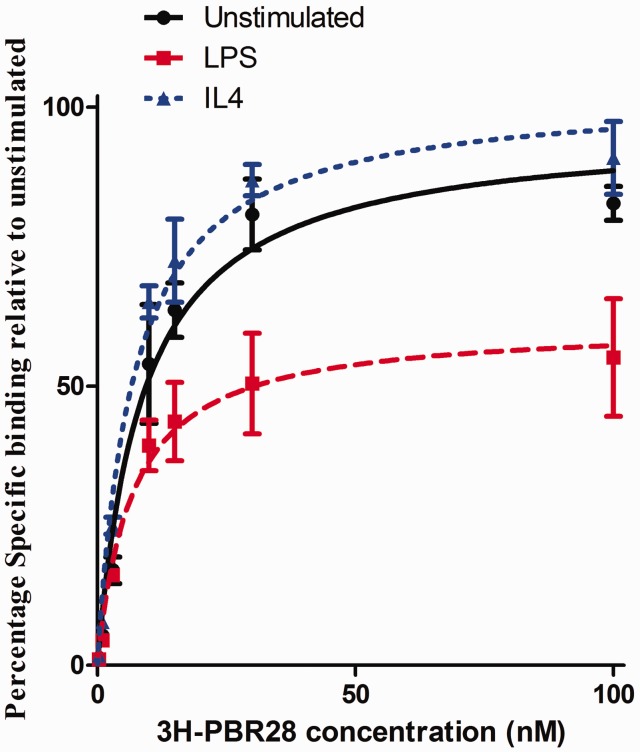
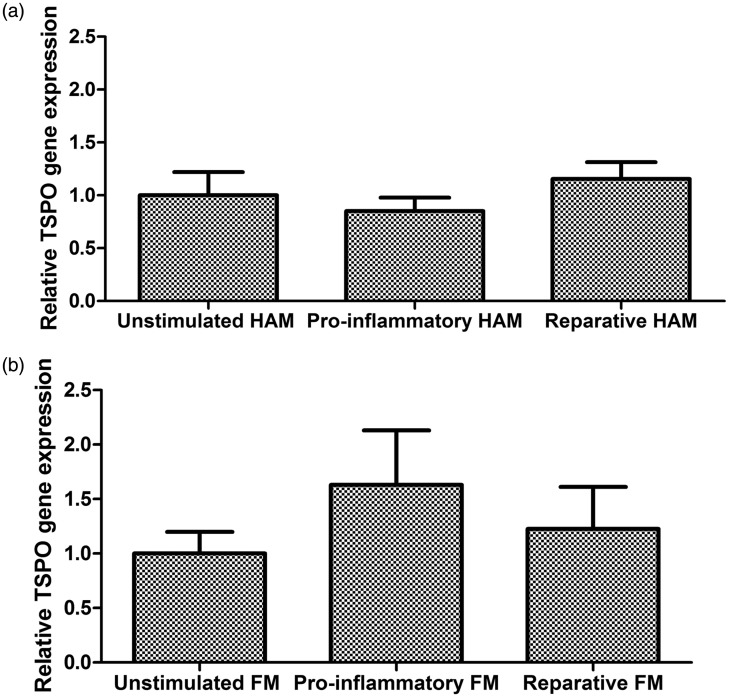
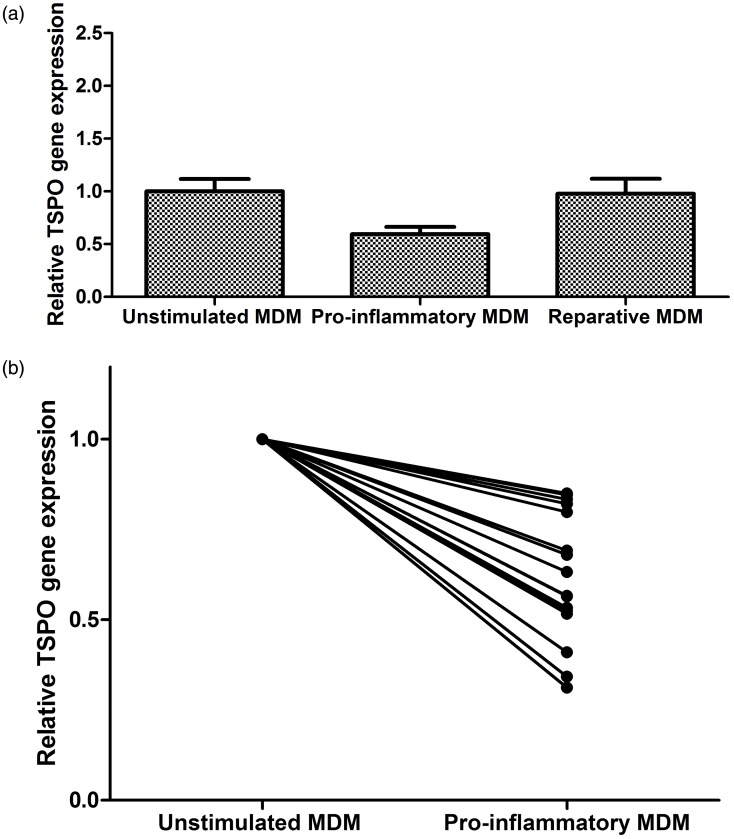
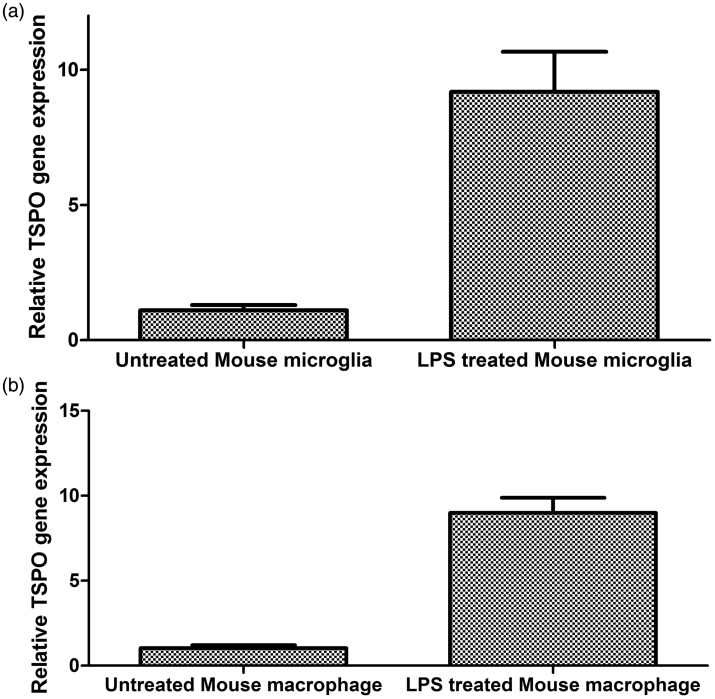
The 18kDa Translocator Protein (TSPO) is the most commonly used tissue-specific marker of inflammation in positron emission tomography (PET) studies. It is expressed in myeloid cells such as microglia and macrophages, and in rodent myeloid cells expression increases with cellular activation. We assessed the effect of myeloid cell activation on TSPO gene expression in both primary human and rodent microglia and macrophages in vitro, and also measured TSPO radioligand binding with H-PBR28 in primary human macrophages. As observed previously, we found that TSPO expression increases (∼9-fold) in rodent-derived macrophages and microglia upon pro-inflammatory stimulation. However, TSPO expression does not increase with classical pro-inflammatory activation in primary human microglia (fold change 0.85 [95% CI 0.58-1.12], p = 0.47). In contrast, pro-inflammatory activation of human monocyte-derived macrophages is associated with a reduction of both TSPO gene expression (fold change 0.60 [95% CI 0.45-0.74], p = 0.02) and TSPO binding site abundance (fold change 0.61 [95% CI 0.49-0.73], p < 0.0001). These findings have important implications for understanding the biology of TSPO in activated macrophages and microglia in humans. They are also clinically relevant for the interpretation of PET studies using TSPO targeting radioligands, as they suggest changes in TSPO expression may reflect microglial and macrophage density rather than activation phenotype.
18kDa转位蛋白(TSPO)是正电子发射断层扫描(PET)研究中最常用的炎症组织特异性标志物。它在小胶质细胞和巨噬细胞等髓系细胞中表达,在啮齿动物的髓系细胞中,其表达随细胞激活而增加。我们在体外评估了髓系细胞激活对原代人及啮齿动物小胶质细胞和巨噬细胞中TSPO基因表达的影响,还在原代人巨噬细胞中测量了TSPO放射性配体与H-PBR28的结合。如先前观察到的,我们发现促炎刺激后,啮齿动物来源的巨噬细胞和小胶质细胞中TSPO表达增加(约9倍)。然而,原代人小胶质细胞经经典促炎激活后,TSPO表达并未增加(倍数变化0.85 [95%置信区间0.58 - 1.12],p = 0.47)。相反,人单核细胞衍生巨噬细胞的促炎激活与TSPO基因表达降低(倍数变化0.60 [95%置信区间0.45 - 0.74],p = 0.02)和TSPO结合位点丰度降低(倍数变化0.61 [95%置信区间0.49 - 0.73],p < 0.0001)相关。这些发现对于理解人类激活的巨噬细胞和小胶质细胞中TSPO的生物学特性具有重要意义。它们在临床上对于解释使用TSPO靶向放射性配体的PET研究也具有相关性,因为它们表明TSPO表达的变化可能反映小胶质细胞和巨噬细胞的密度而非激活表型。