Dewhirst Rebecca A, Clarkson Graham J J, Rothwell Steve D, Fry Stephen C
The Edinburgh Cell Wall Group, Institute of Molecular Plant Sciences, The University of Edinburgh, Daniel Rutherford Building, The King's Buildings, Max Born Crescent, Edinburgh EH9 3BF, UK; wildFIRE Lab, Hatherly Laboratories, University of Exeter, Prince of Wales Road, Exeter EX4 4PS, UK(1).
Vitacress, Lower Link Farm, St Mary Bourne, Andover, Hampshire SP11 6DB, UK; Edward Vinson Ltd, 4 Ewell Barn, Graveney Rd, Faversham ME13 8UP, UK(1).
Food Chem. 2017 Oct 15;233:237-246. doi: 10.1016/j.foodchem.2017.04.082. Epub 2017 Apr 17.
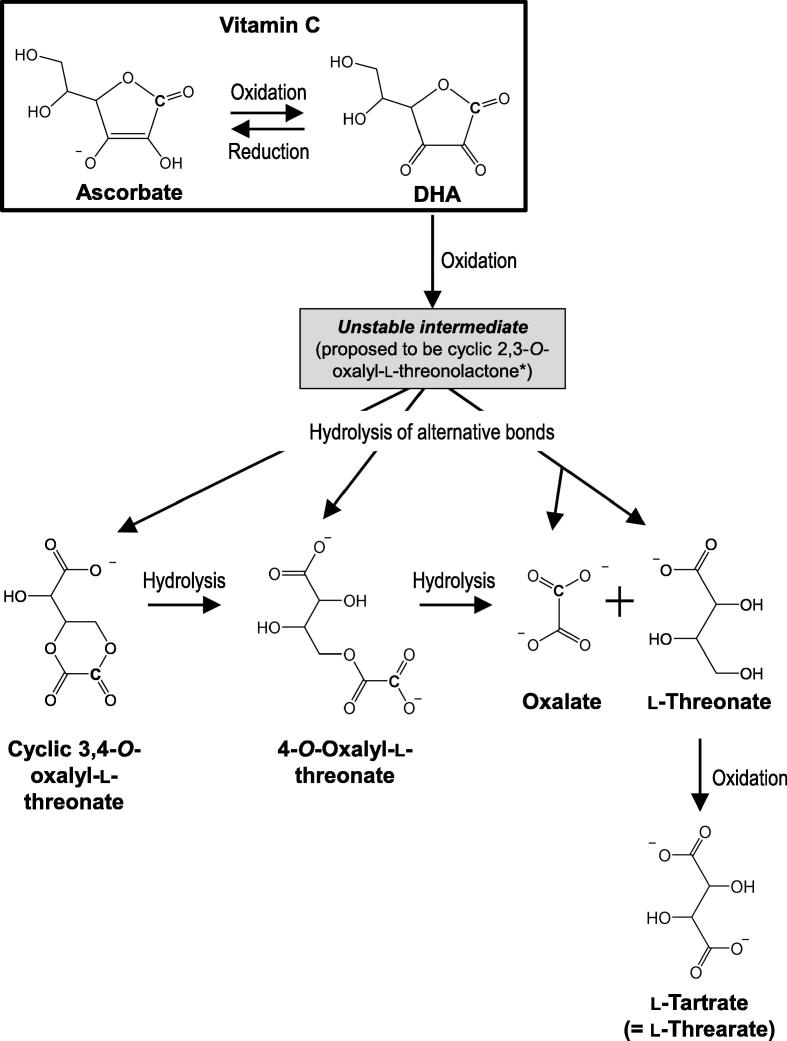
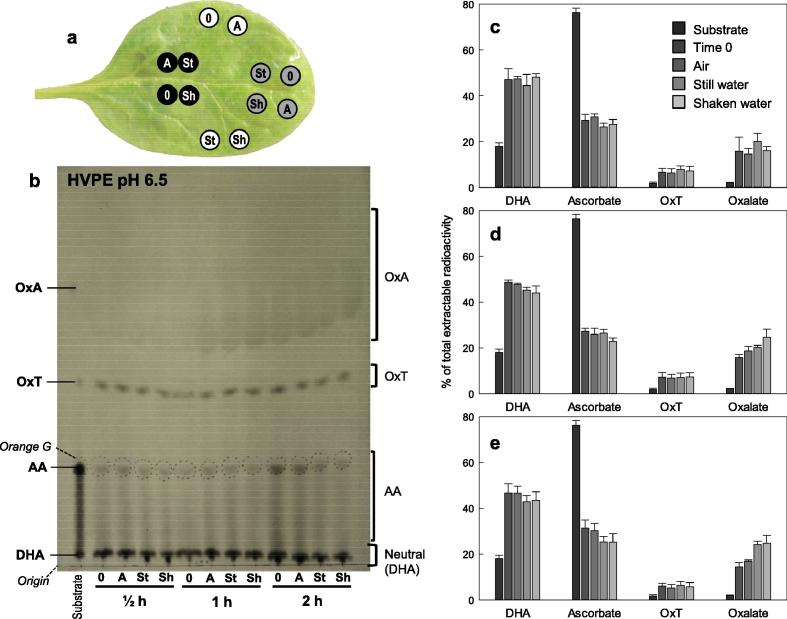
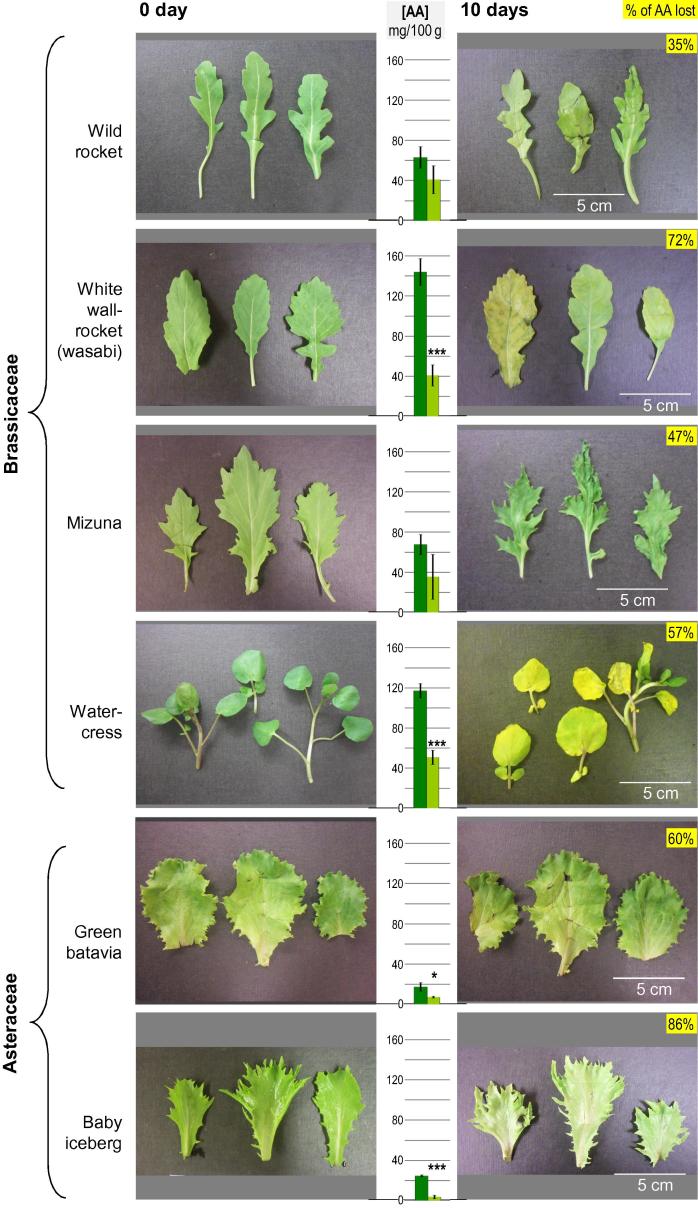
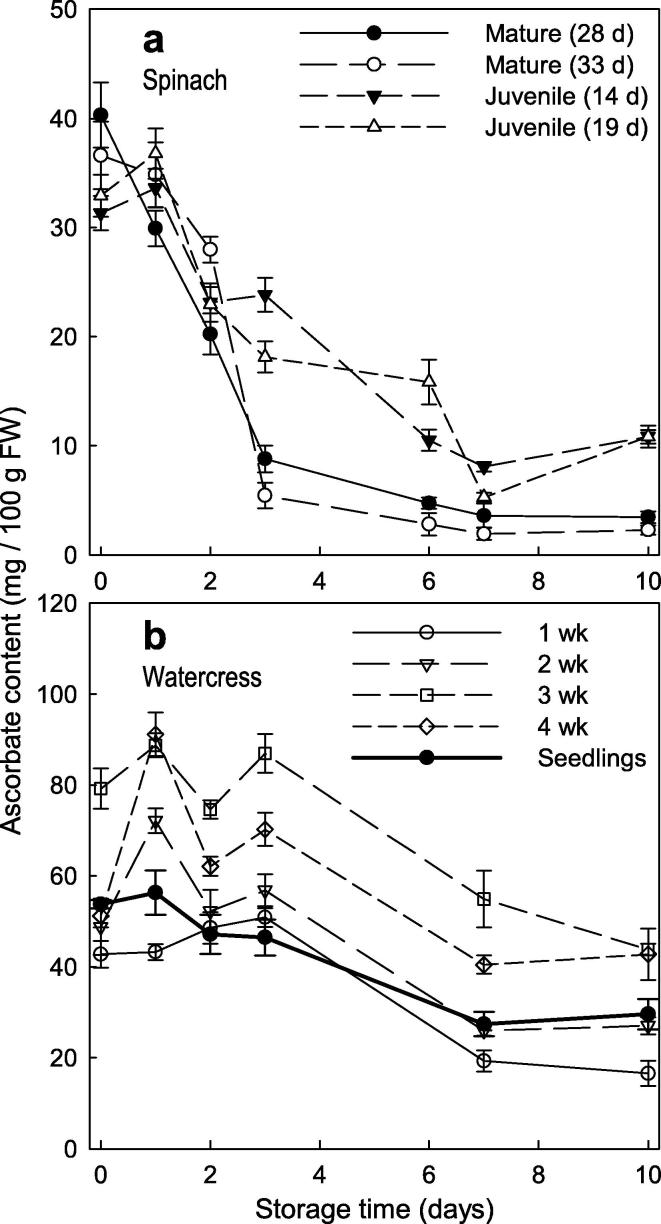
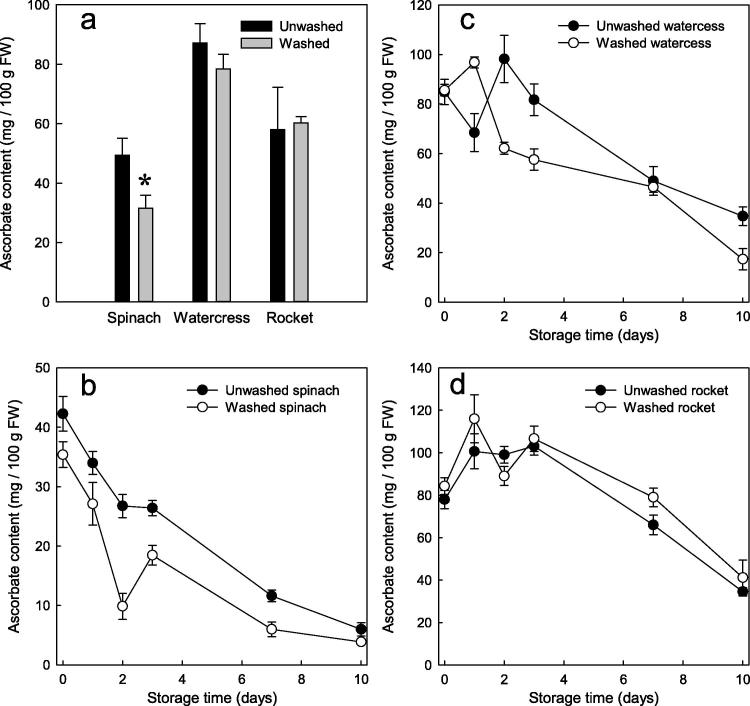
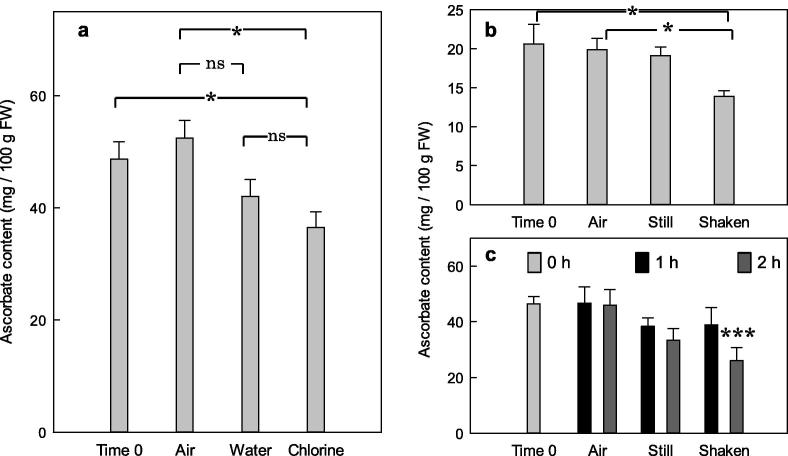
Post-harvest treatments of pre-packaged salad leaves potentially cause l-ascorbate loss, but the mechanisms of ascorbate degradation remain incompletely understood, especially in planta. We explored the extent and pathways of ascorbate loss in variously washed and stored salad leaves. Ascorbate was assayed by 2,6-dichlorophenolindophenol titration, and pathways were monitored by C-radiolabelling followed by high-voltage electrophoresis. All leaves tested showed ascorbate loss during storage: lettuce showed the greatest percentage loss, wild rocket the least. Spinach leaves were particularly prone to losing ascorbate during washing, especially with simultaneous mechanical agitation; however, washing in the presence of hypochlorite did not significantly increase ascorbate loss. In spinach, [C]oxalate was the major product of [C]ascorbate degradation, suggesting that commercial washing causes oxidative stress. This study highlights that ascorbate/dehydroascorbic acid are lost via the oxidative pathway during washing and post-harvest storage of salad leaves. Thus changes to washing procedures could potentially increase the post-harvest retention of ascorbate.
预包装生菜叶的采后处理可能会导致L-抗坏血酸损失,但抗坏血酸降解的机制仍未完全了解,尤其是在植物体内。我们探究了不同洗涤和储存方式下生菜叶中抗坏血酸损失的程度和途径。通过2,6-二氯酚靛酚滴定法测定抗坏血酸,并通过碳放射性标记随后进行高压电泳监测其途径。所有测试的叶子在储存期间均显示出抗坏血酸损失:生菜的损失百分比最大,野生芝麻菜最小。菠菜叶在洗涤过程中尤其容易损失抗坏血酸,尤其是在同时进行机械搅拌时;然而,在次氯酸盐存在下洗涤并不会显著增加抗坏血酸损失。在菠菜中,[C]草酸盐是[C]抗坏血酸降解的主要产物,表明商业洗涤会导致氧化应激。这项研究强调,在生菜叶的洗涤和采后储存过程中,抗坏血酸/脱氢抗坏血酸是通过氧化途径损失的。因此,改变洗涤程序可能会提高采后抗坏血酸的保留率。