Bakaeva Margarita, Chetverikov Sergey, Starikov Sergey, Kendjieva Aliya, Khudaygulov Gaisar, Chetverikova Darya
Ufa Institute of Biology, Ufa Federal Research Centre, Russian Academy of Sciences, 450054 Ufa, Russia.
J Xenobiot. 2024 Jan 2;14(1):79-95. doi: 10.3390/jox14010005.
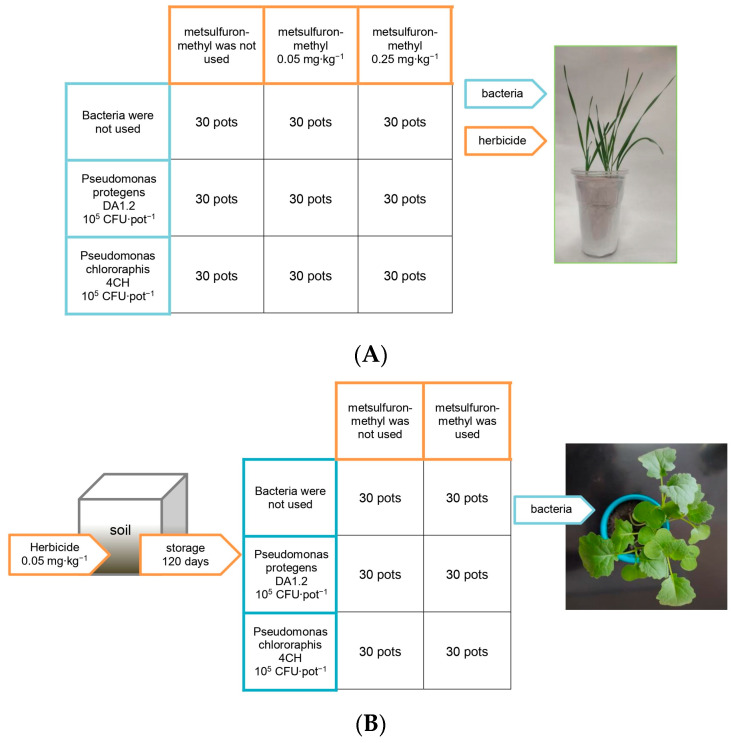
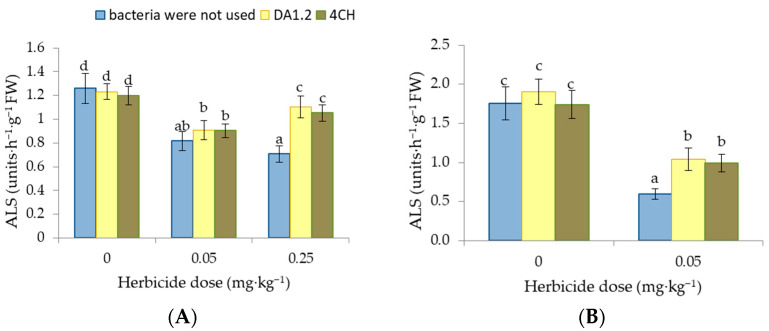
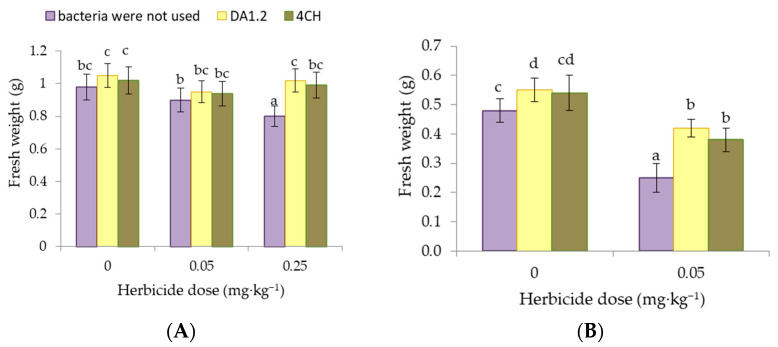
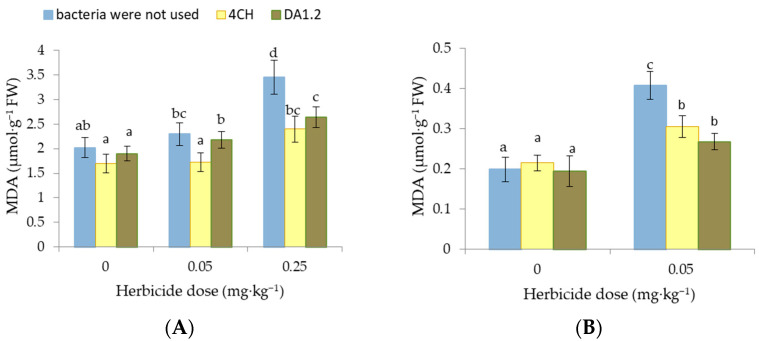
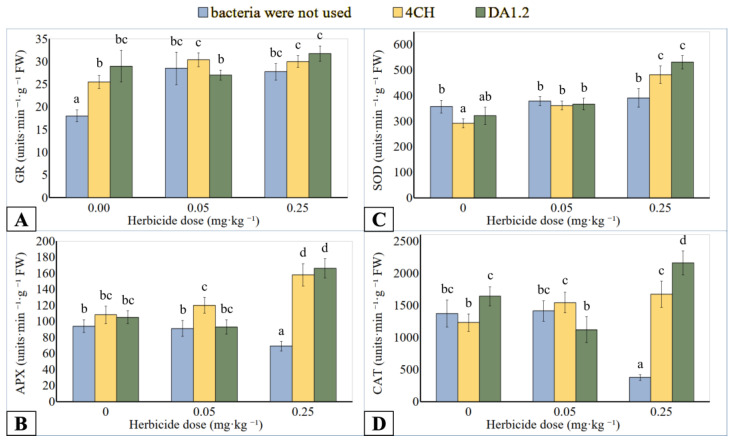
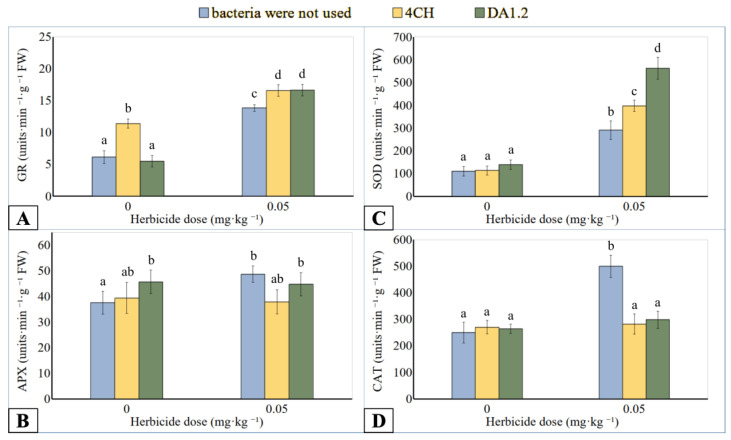
Metsulfuron-methyl, a widely used herbicide, could cause damage to the sensitive plants in crop-rotation systems at extremely low levels in the soil. The potential of plant growth-promoting bacteria (PGPB) for enhancing the resistance of plants against herbicide stress has been discovered recently. Therefore, it is poorly understood how physiological processes occur in plants, while PGPB reduce the phytotoxicity of herbicides for agricultural crops. In greenhouse studies, the effect of strains DA1.2 and 4CH on oxidative damage, acetolactate synthase (ALS), enzymatic and non-enzymatic antioxidants in canola ( L.), and wheat ( L.) were investigated under two levels (0.05 and 0.25 mg∙kg) of metsulfuron-methyl using spectrophotometric assays. The inoculation of herbicide-exposed wheat with bacteria significantly increased the shoots fresh weight (24-28%), amount of glutathione GSH (60-73%), and flavonoids (5-14%), as well as activity of ascorbate peroxidase (129-140%), superoxide dismutase SOD (35-49%), and ALS (50-57%). Bacterial treatment stimulated the activity of SOD (37-94%), ALS (65-73%), glutathione reductase (19-20%), and the accumulation of GSH (61-261%), flavonoids (17-22%), and shoots weight (27-33%) in herbicide-exposed canola. Simultaneous inoculation prevented lipid peroxidation induced by metsulfuron-methyl in sensitive plants. Based on the findings, it is possible that the protective role of bacterial strains against metsulfuron-metil is linked to antioxidant system activation.
甲基磺草酮是一种广泛使用的除草剂,即使在土壤中含量极低,也可能对轮作系统中的敏感植物造成损害。近年来,人们发现了具有促进植物生长作用的细菌(PGPB)增强植物抗除草剂胁迫的潜力。然而,目前对于PGPB如何降低除草剂对农作物的植物毒性,以及植物体内生理过程是如何发生的,我们还知之甚少。在温室研究中,使用分光光度法测定了在两种甲基磺草酮水平(0.05和0.25毫克∙千克)下,菌株DA1.2和4CH对油菜(L.)和小麦(L.)的氧化损伤、乙酰乳酸合成酶(ALS)、酶促和非酶促抗氧化剂的影响。用细菌接种暴露于除草剂的小麦,显著增加了地上部鲜重(24%-28%)、谷胱甘肽(GSH)含量(60%-73%)、类黄酮含量(5%-14%),以及抗坏血酸过氧化物酶活性(129%-140%)、超氧化物歧化酶(SOD)活性(35%-49%)和ALS活性(50%-57%)。细菌处理刺激了暴露于除草剂的油菜中SOD活性(37%-94%)、ALS活性(65%-73%)、谷胱甘肽还原酶活性(19%-20%),以及GSH积累(61%-261%)、类黄酮积累(17%-22%)和地上部重量(27%-33%)。同时接种可防止甲基磺草酮在敏感植物中诱导的脂质过氧化。基于这些发现,细菌菌株对甲基磺草酮的保护作用可能与抗氧化系统的激活有关。