Afzali Behdad, Grönholm Juha, Vandrovcova Jana, O'Brien Charlotte, Sun Hong-Wei, Vanderleyden Ine, Davis Fred P, Khoder Ahmad, Zhang Yu, Hegazy Ahmed N, Villarino Alejandro V, Palmer Ira W, Kaufman Joshua, Watts Norman R, Kazemian Majid, Kamenyeva Olena, Keith Julia, Sayed Anwar, Kasperaviciute Dalia, Mueller Michael, Hughes Jason D, Fuss Ivan J, Sadiyah Mohammed F, Montgomery-Recht Kim, McElwee Joshua, Restifo Nicholas P, Strober Warren, Linterman Michelle A, Wingfield Paul T, Uhlig Holm H, Roychoudhuri Rahul, Aitman Timothy J, Kelleher Peter, Lenardo Michael J, O'Shea John J, Cooper Nichola, Laurence Arian D J
Lymphocyte Cell Biology Section (Molecular Immunology and Inflammation Branch), Biodata Mining and Discovery Section and Protein Expression Laboratory, National Institute of Arthritis and Musculoskeletal and Skin Diseases, National Institutes of Health, Bethesda, Maryland, USA.
MRC Centre for Transplantation, King's College London, London, UK.
Nat Immunol. 2017 Jul;18(7):813-823. doi: 10.1038/ni.3753. Epub 2017 May 22.
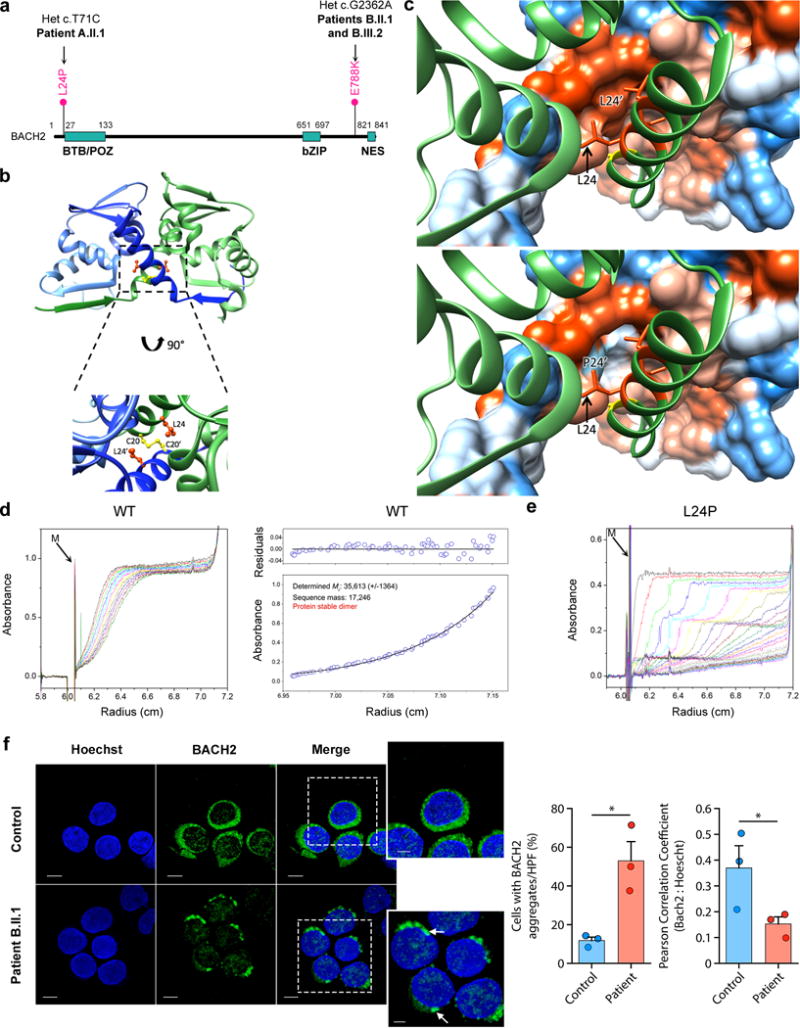
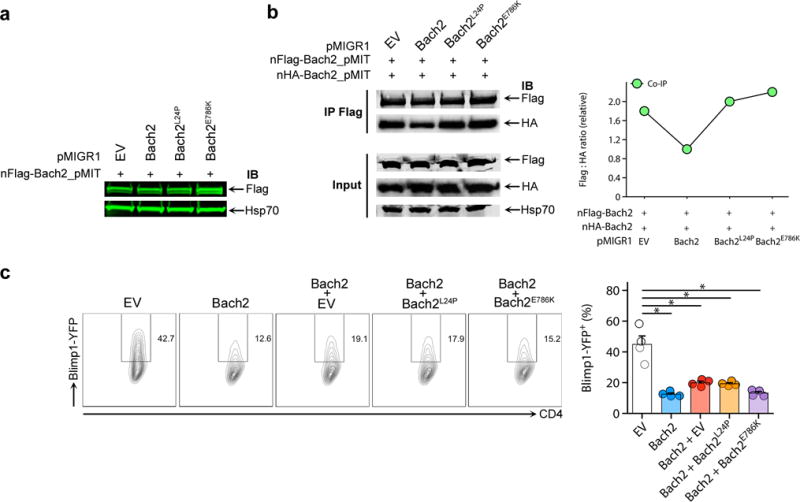
The transcriptional programs that guide lymphocyte differentiation depend on the precise expression and timing of transcription factors (TFs). The TF BACH2 is essential for T and B lymphocytes and is associated with an archetypal super-enhancer (SE). Single-nucleotide variants in the BACH2 locus are associated with several autoimmune diseases, but BACH2 mutations that cause Mendelian monogenic primary immunodeficiency have not previously been identified. Here we describe a syndrome of BACH2-related immunodeficiency and autoimmunity (BRIDA) that results from BACH2 haploinsufficiency. Affected subjects had lymphocyte-maturation defects that caused immunoglobulin deficiency and intestinal inflammation. The mutations disrupted protein stability by interfering with homodimerization or by causing aggregation. We observed analogous lymphocyte defects in Bach2-heterozygous mice. More generally, we observed that genes that cause monogenic haploinsufficient diseases were substantially enriched for TFs and SE architecture. These findings reveal a previously unrecognized feature of SE architecture in Mendelian diseases of immunity: heterozygous mutations in SE-regulated genes identified by whole-exome/genome sequencing may have greater significance than previously recognized.
指导淋巴细胞分化的转录程序取决于转录因子(TFs)的精确表达和时间调控。TF BACH2对T和B淋巴细胞至关重要,且与一个典型的超级增强子(SE)相关。BACH2基因座中的单核苷酸变异与多种自身免疫性疾病相关,但此前尚未鉴定出导致孟德尔单基因原发性免疫缺陷的BACH2突变。在此,我们描述了一种由BACH2单倍体不足引起的BACH2相关免疫缺陷和自身免疫综合征(BRIDA)。受影响的个体存在淋巴细胞成熟缺陷,导致免疫球蛋白缺乏和肠道炎症。这些突变通过干扰同型二聚化或导致聚集来破坏蛋白质稳定性。我们在Bach2杂合小鼠中观察到了类似的淋巴细胞缺陷。更普遍地说,我们观察到导致单基因单倍体不足疾病的基因在TFs和SE结构方面显著富集。这些发现揭示了孟德尔免疫疾病中SE结构一个此前未被认识到的特征:通过全外显子组/基因组测序鉴定出的SE调控基因中的杂合突变可能比此前认为的具有更大的意义。