Chidambaran Vidya, Zhang Xue, Martin Lisa J, Ding Lili, Weirauch Matthew T, Geisler Kristie, Stubbeman Bobbie L, Sadhasivam Senthilkumar, Ji Hong
Department of Anesthesiology.
Department of Pediatrics.
Pharmgenomics Pers Med. 2017 May 9;10:157-168. doi: 10.2147/PGPM.S132691. eCollection 2017.
The perioperative pain experience shows great interindividual variability and is difficult to predict. The mu-1 opioid receptor gene () is known to play an important role in opioid-pain pathways. Since deoxyribonucleic acid (DNA) methylation is a potent repressor of gene expression, DNA methylation was evaluated at the promoter, as a predictor of preoperative, acute, and chronic postsurgical pain (CPSP).
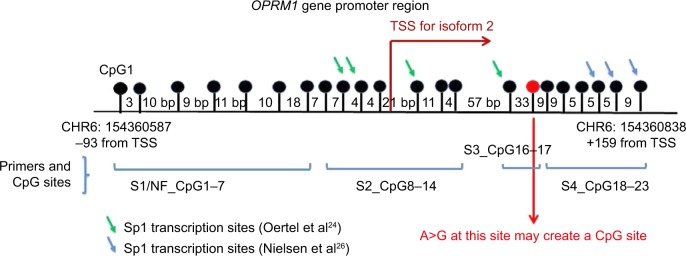
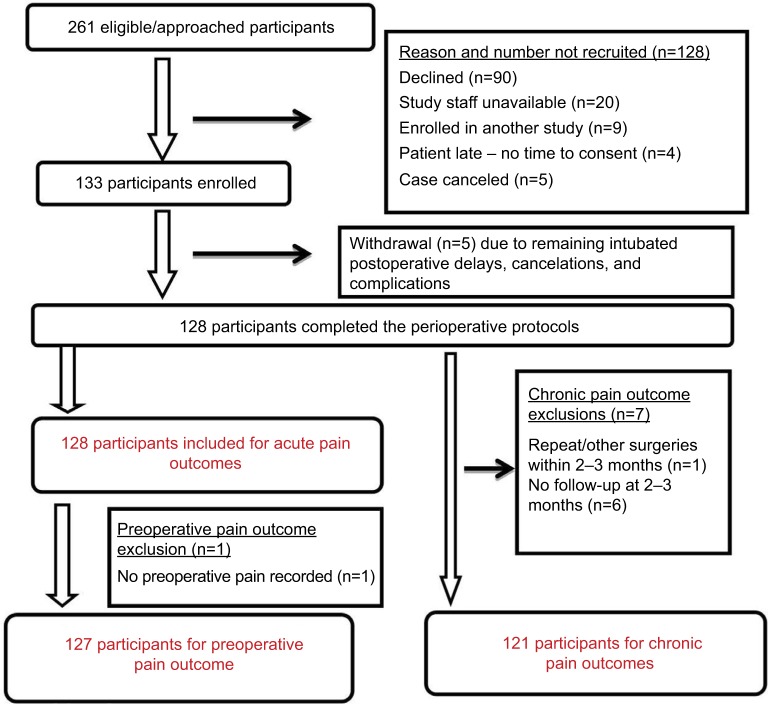
A prospective observational cohort study was conducted in 133 adolescents with idiopathic scoliosis undergoing spine fusion under standard protocols. Data regarding pain, opioid consumption, anxiety, and catastrophizing (using validated questionnaires) were collected before and 2-3 months postsurgery. Outcomes evaluated were preoperative pain, acute postoperative pain (area under curve [AUC] for pain scores over 48 hours), and CPSP (numerical rating scale >3/10 at 2-3 months postsurgery). Blood samples collected preoperatively were analyzed for DNA methylation by pyrosequencing of 22 CpG sites at the gene promoter. The association of each pain outcome with the methylation percentage of each CpG site was assessed using multivariable regression, adjusting for significant (<0.05) nongenetic variables.
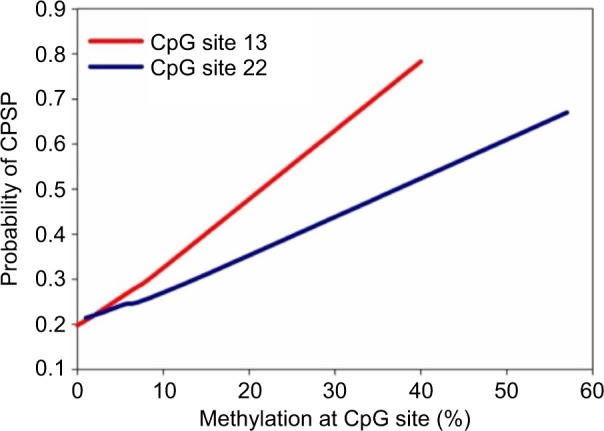
Majority (83%) of the patients reported no pain preoperatively, while CPSP occurred in 36% of the subjects (44/121). Regression on dichotomized preoperative pain outcome showed association with methylation at six CpG sites (1, 3, 4, 9, 11, and 17) (<0.05). Methylation at CpG sites 4, 17, and 18 was associated with higher AUC after adjusting for opioid consumption and preoperative pain score (<0.05). After adjusting for postoperative opioid consumption and preoperative pain score, methylation at CpG sites 13 and 22 was associated with CPSP (<0.05).
Novel CPSP biomarkers were identified in an active regulatory region of the gene that binds multiple transcription factors. Inhibition of binding by DNA methylation potentially decreases the gene expression, leading to a decreased response to endogenous and exogenous opioids, and an increased pain experience.
围手术期疼痛体验存在很大的个体差异,且难以预测。已知μ-1阿片受体基因()在阿片-疼痛通路中起重要作用。由于脱氧核糖核酸(DNA)甲基化是基因表达的有效抑制因子,因此对该基因启动子处的DNA甲基化进行评估,作为术前、急性和慢性术后疼痛(CPSP)的预测指标。
对133例接受标准方案脊柱融合术的特发性脊柱侧凸青少年进行前瞻性观察队列研究。在术前和术后2 - 3个月收集有关疼痛、阿片类药物消耗、焦虑和灾难化思维(使用经过验证的问卷)的数据。评估的结果包括术前疼痛、急性术后疼痛(48小时内疼痛评分的曲线下面积[AUC])和CPSP(术后2 - 3个月数字评分量表>3/10)。通过对该基因启动子处22个CpG位点进行焦磷酸测序,分析术前采集的血样中的DNA甲基化情况。使用多变量回归评估每个疼痛结果与每个CpG位点甲基化百分比的关联,并对显著(<0.05)的非遗传变量进行校正。
大多数(83%)患者术前无疼痛,而36%的受试者(44/121)发生了CPSP。对二分法术前疼痛结果的回归分析显示,与6个CpG位点(1、3、4、9、11和17)的甲基化有关(<0.05)。在调整阿片类药物消耗和术前疼痛评分后,CpG位点4、17和18的甲基化与较高的AUC有关(<0.05)。在调整术后阿片类药物消耗和术前疼痛评分后,CpG位点13和22的甲基化与CPSP有关(<0.05)。
在该基因的一个与多种转录因子结合的活性调控区域中鉴定出了新的CPSP生物标志物。DNA甲基化对结合的抑制可能会降低该基因的表达,导致对内源性和外源性阿片类药物的反应降低,以及疼痛体验增加。