Sun Yuan, Sahbaie Peyman, Liang DeYong, Li Wenwu, Shi Xiaoyou, Kingery Paige, Clark J David
Department of Anesthesiology, Stanford University School of Medicine, Stanford, California, United States of America.
Department of Anesthesiology, Veterans Affairs Palo Alto Health Care System, Palo Alto, California, United States of America.
PLoS One. 2015 Nov 4;10(11):e0142046. doi: 10.1371/journal.pone.0142046. eCollection 2015.
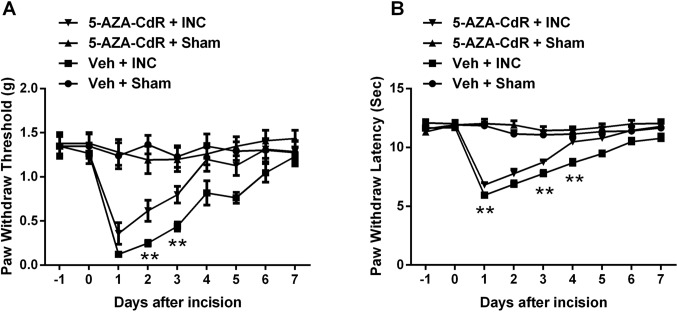
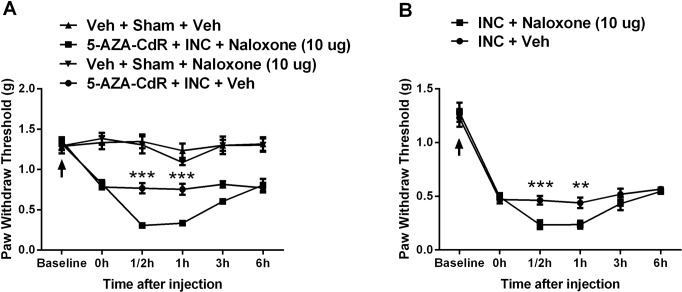
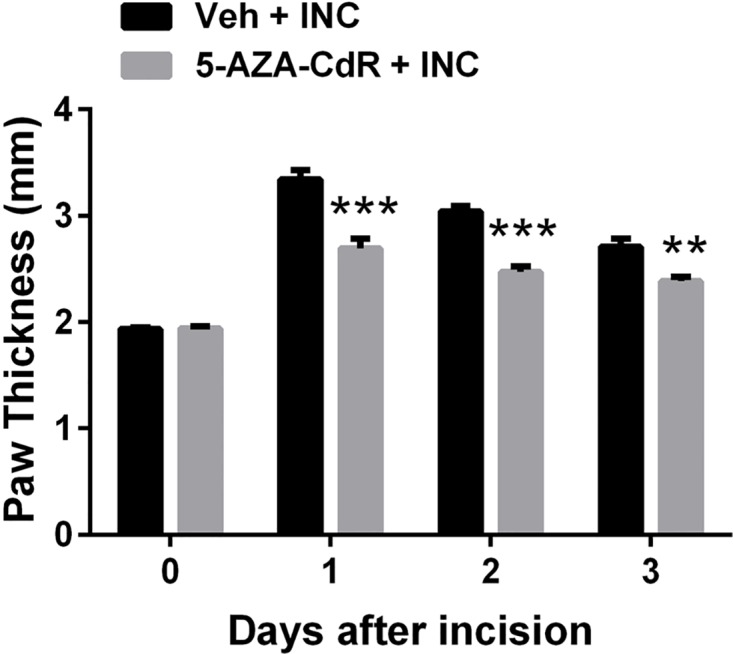
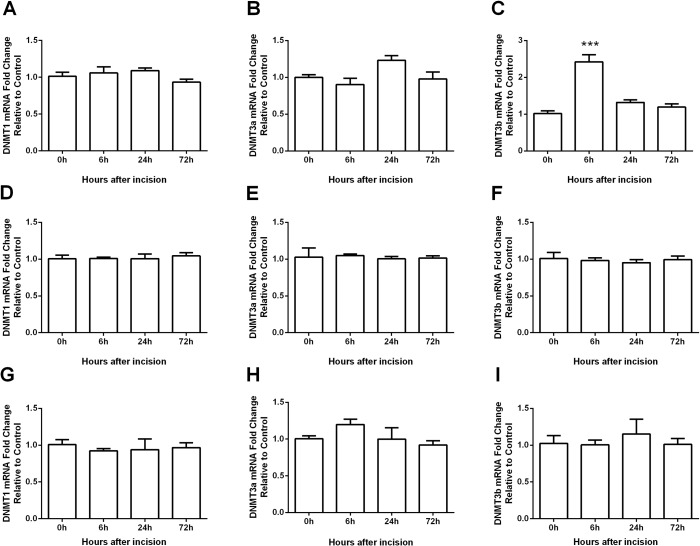
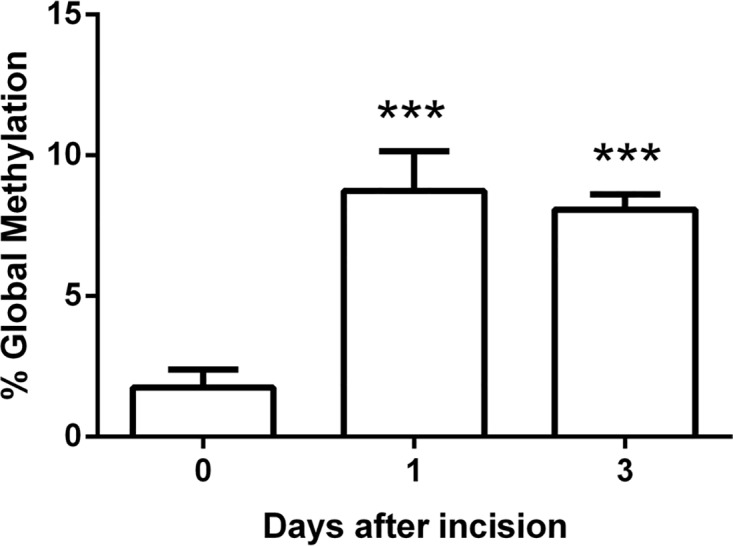
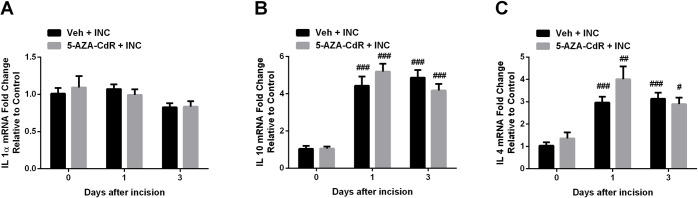
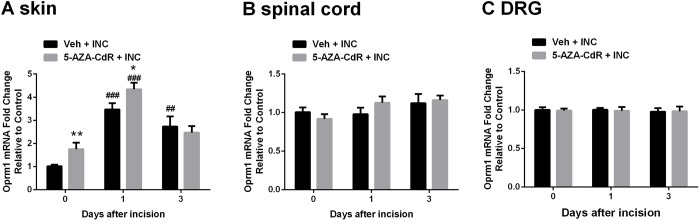
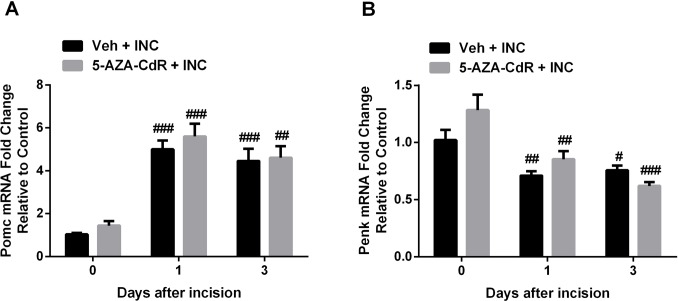
DNA methylation is a key epigenetic mechanism controlling DNA accessibility and gene expression. Blockade of DNA methylation can significantly affect pain behaviors implicated in neuropathic and inflammatory pain. However, the role of DNA methylation with regard to postoperative pain has not yet been explored. In this study we sought to investigate the role of DNA methylation in modulating incisional pain and identify possible targets under DNA methylation and contributing to incisional pain. DNA methyltranferase (DNMT) inhibitor 5-Aza-2'-deoxycytidine significantly reduced incision-induced mechanical allodynia and thermal sensitivity. Aza-2'-deoxycytidine also reduced hindpaw swelling after incision, suggesting an anti-inflammatory effect. Global DNA methylation and DNMT3b expression were increased in skin after incision, but none of DNMT1, DNMT3a or DNMT3b was altered in spinal cord or DRG. The expression of proopiomelanocortin Pomc encoding β-endorphin and Oprm1 encoding the mu-opioid receptor were upregulated peripherally after incision; moreover, Oprm1 expression was further increased under DNMT inhibitor treatment. Finally, local peripheral injection of the opioid receptor antagonist naloxone significantly exacerbated incision-induced mechanical hypersensitivity. These results suggest that DNA methylation is functionally relevant to incisional nociceptive sensitization, and that mu-opioid receptor signaling might be one methylation regulated pathway controlling sensitization after incision.
DNA甲基化是一种控制DNA可及性和基因表达的关键表观遗传机制。DNA甲基化的阻断可显著影响与神经性疼痛和炎性疼痛相关的疼痛行为。然而,DNA甲基化在术后疼痛方面的作用尚未得到探索。在本研究中,我们试图研究DNA甲基化在调节切口疼痛中的作用,并确定DNA甲基化作用下可能导致切口疼痛的靶点。DNA甲基转移酶(DNMT)抑制剂5-氮杂-2'-脱氧胞苷显著降低了切口诱导的机械性异常性疼痛和热敏感性。5-氮杂-2'-脱氧胞苷还减轻了切口后后爪的肿胀,提示其具有抗炎作用。切口后皮肤中的整体DNA甲基化和DNMT3b表达增加,但脊髓或背根神经节(DRG)中的DNMT1、DNMT3a或DNMT3b均未改变。编码β-内啡肽的阿片促黑激素皮质素原(Pomc)和编码μ-阿片受体的Oprm1的表达在切口后外周上调;此外,在DNMT抑制剂处理下,Oprm1表达进一步增加。最后,局部外周注射阿片受体拮抗剂纳洛酮显著加剧了切口诱导的机械性超敏反应。这些结果表明,DNA甲基化在功能上与切口伤害性感受敏化相关,并且μ-阿片受体信号通路可能是控制切口后敏化的一种甲基化调节途径。