Ryff Carol D, Heller Aaron S, Schaefer Stacey M, van Reekum Carien, Davidson Richard J
Institute on Aging/Psychology, University of Wisconsin-Madison.
Psychology, University of Miami.
Curr Behav Neurosci Rep. 2016 Dec;3(4):318-327. doi: 10.1007/s40473-016-0096-z. Epub 2016 Oct 22.
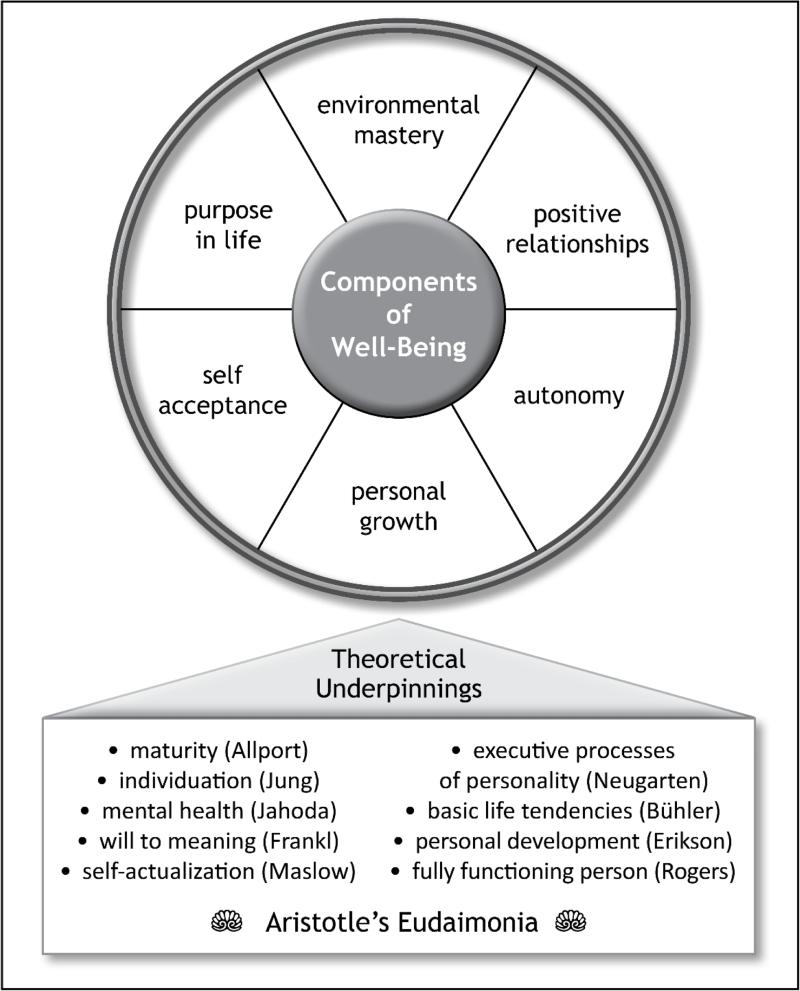
Research on psychological well-being in later life has identified strengths and vulnerabilities that occur with aging. We review the conceptual and philosophical foundations of a eudaimonic model of well-being and its empirical translation into six key dimensions of positive functioning. We also consider its implications for health, broadly defined.
Numerous findings from national longitudinal samples of U.S. adults are described. They show declining scores on purpose in life and personal growth with aging, but also underscore the notable variability among older persons in these patterns. Recently, health benefits have been identified among older adults who maintain high levels of a particular aspect of well-being, namely, purposeful life engagement. These benefits include extended longevity, reduced risk for various disease outcomes, reduced physiological dysregulation, and gene expression linked to better inflammatory profiles. The brain mechanisms that underlie such outcomes are also examined via a focus on affective style. Adults with higher levels of purpose in life show more rapid recovery from negative stimulus provocation, whereas those with higher well-being overall show sustained activation of reward circuitry in response to positive stimuli, and this pattern is associated with lower diurnal cortisol output. Volumetric findings (right insular gray matter volume) have also been linked with eudaimonic well-being.
Eudaimonic well-being predicts better health and longer lives, and thus constitutes an important direction for future research and practice. Intervention studies designed to promote well-being, including among those suffering from psychological disorders, are briefly described.
对晚年心理幸福感的研究已经确定了衰老过程中出现的优势和脆弱性。我们回顾了幸福论模型的概念和哲学基础,以及将其实证转化为积极功能的六个关键维度。我们还考虑了它对广义健康的影响。
描述了来自美国成年人全国纵向样本的大量研究结果。这些结果表明,随着年龄增长,生活目的和个人成长得分下降,但也凸显了老年人在这些模式上的显著差异。最近,在保持高水平幸福感(即有目的的生活参与)的老年人中发现了健康益处。这些益处包括延长寿命、降低各种疾病结局的风险、减少生理失调以及与更好的炎症特征相关的基因表达。还通过关注情感风格来研究这些结果背后的大脑机制。生活目的水平较高的成年人从负面刺激挑衅中恢复得更快,而总体幸福感较高的成年人在面对积极刺激时奖励回路持续激活,这种模式与较低的日间皮质醇分泌有关。体积测量结果(右侧岛叶灰质体积)也与幸福论幸福感有关。
幸福论幸福感预示着更好的健康和更长的寿命,因此构成了未来研究和实践的一个重要方向。简要描述了旨在促进幸福感的干预研究,包括对患有心理障碍者的研究。