Gao Xianfeng, Zhu Xiaobo, Sun Yang, Liu Jingwei
Department of Neurosurgery, The First Hospital of Jilin University, Changchun, Jilin 130021, P.R. China.
Mol Med Rep. 2017 Jul;16(1):167-173. doi: 10.3892/mmr.2017.6598. Epub 2017 May 17.
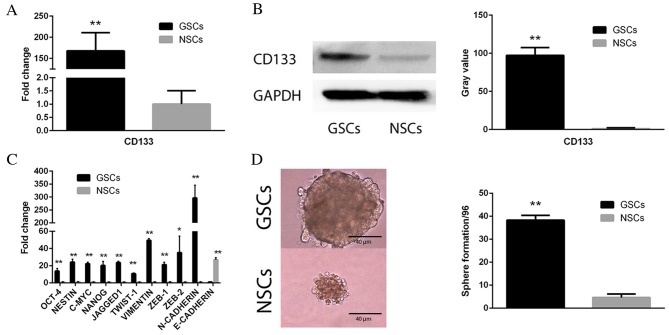
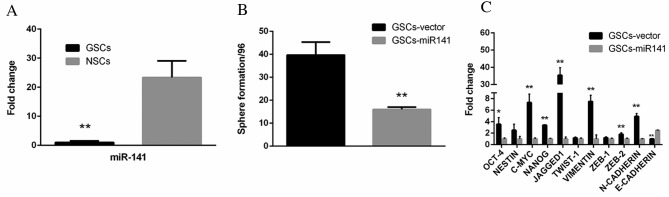
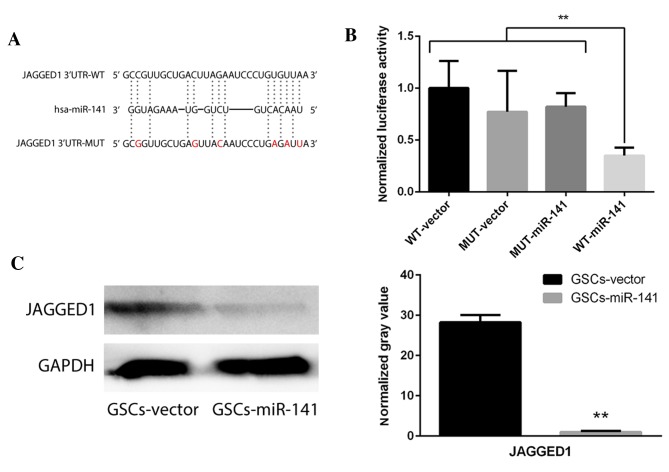
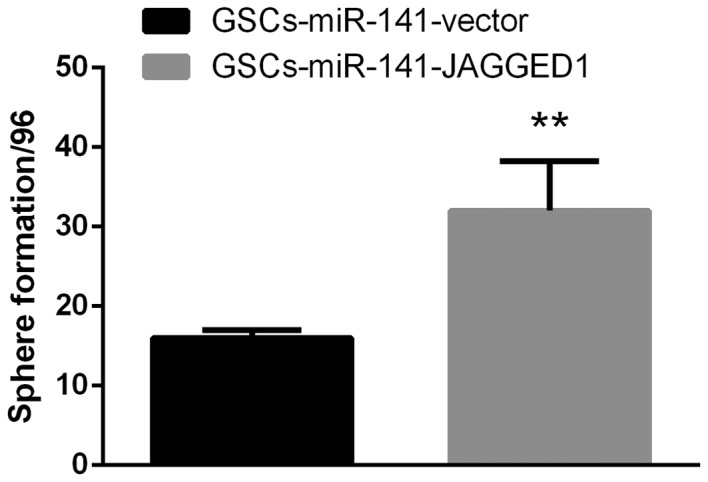
Glioblastoma multiforme is one of the most lethal types of brain cancer. With limited success from conventional therapies, the cancer stem cell theory was developed, and investigation into microRNAs (miRs) has facilitated understanding of this theory. The present study demonstrated that miR‑141 is suppressed in sorted cluster of differentiation (CD) 133(+) glioblastoma stem cells (GSCs) compared with CD133(‑) non‑glioblastoma stem cells (NSCs) from patient samples. In addition, miR‑141 overexpression inhibited the sphere formation ability of GSCs in vitro and in vivo. Furthermore, Jagged1 may reverse the effect of miR‑141; miR‑141 was revealed to target the 3'‑untranslated region of Jagged1, thereby inhibiting the stemness of GSCs. Thus, miR‑141 may serve as a potent antioncomir targeting cancer stem cells, and may facilitate the development of therapeutic targets to prolong the overall survival of patients with glioblastoma.
多形性胶质母细胞瘤是最致命的脑癌类型之一。由于传统疗法成效有限,癌症干细胞理论应运而生,而对微小RNA(miR)的研究有助于理解这一理论。本研究表明,与来自患者样本的分化簇(CD)133(-)非胶质母细胞瘤干细胞(NSC)相比,miR-141在分选的CD133(+)胶质母细胞瘤干细胞(GSC)中受到抑制。此外,miR-141过表达在体外和体内均抑制了GSC的成球能力。此外,锯齿状蛋白1(Jagged1)可能会逆转miR-141的作用;研究发现miR-141靶向Jagged1的3'非翻译区,从而抑制GSC的干性。因此,miR-1